by Ann at Go West Gardener | Updated: May 20, 2026 | Flower Garden Basics, Western Container Gardening With Flowers
So, you’re dashing into Costco, and what grabs your eye?
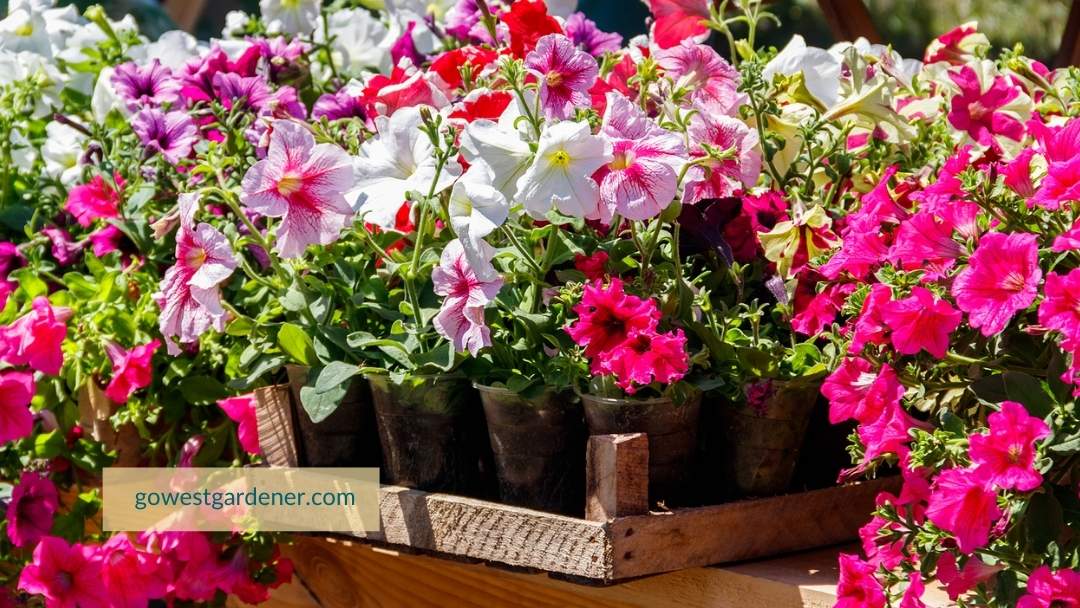
Colorful, happy flowers just waiting for you to give them a new home, like a litter of fluffy puppies. Eeek!
You can’t help but walk over and take a closer look. After a long, drab winter, the flowers look so colorful and ALIVE.
But …
Is now even a good time to buy and plant flowers for your summer garden??
When IS a good time?
Those cute, lil’ flowers continue to stare up at you with their puppy dog eyes, and your doubts melt away.
You think, “Screw it, I’m buying them. Who cares about timing anyway?”

So, about that…
If you buy your summer flowers too early, you’ll have to protect your plant babies. Many of them don’t like frosts, snow or chilly temps.
If you don’t protect them, they can struggle and may even die.
(Not exactly the summer vibe you’re going for, right?)
In this tip, you’ll get the scoop on 3 misconceptions about when to buy and plant summer flowers.
You’ll discover how to:
- Be a smarter shopper
- Create less work for yourself
- Get your flower season off to an awesome start (yesss!)
To keep things simple, I’m going to focus on “annuals.”
Annuals are the extroverts at the party.
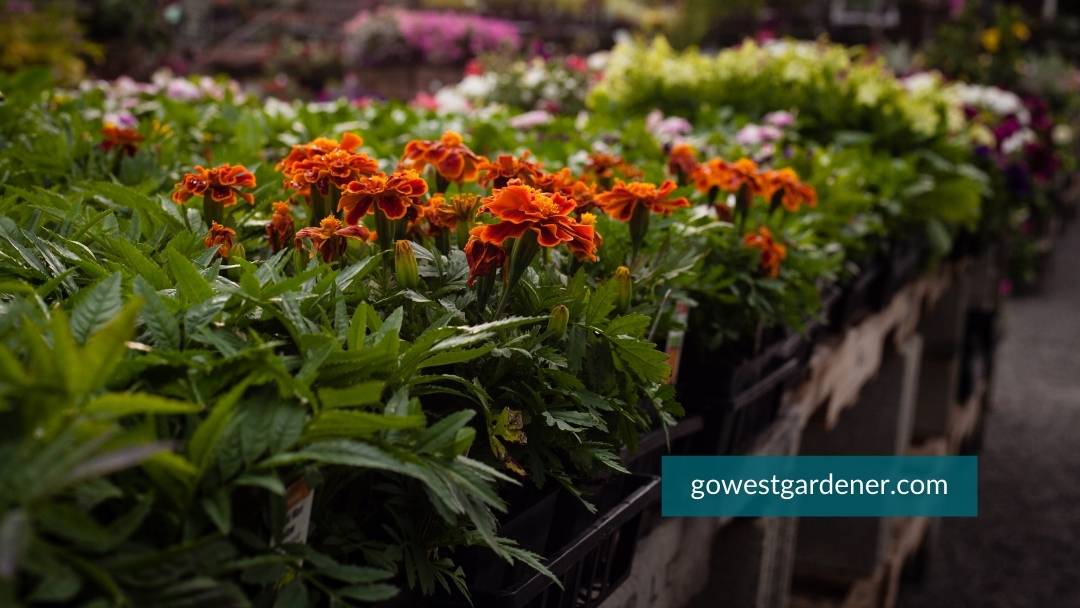
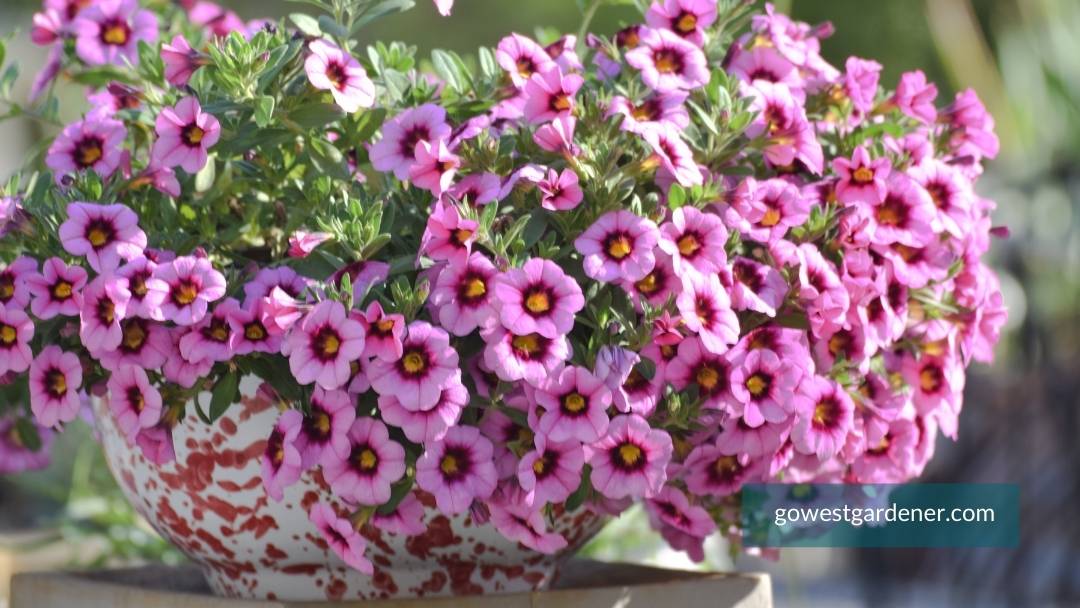
They’re the showy flowers you often see for sale as you dash into the grocery store. Annuals give you pretty color for one growing season, but then they’re done. They’re popular flowers for flowerpots. You can plant them in the ground too.
Misconception 1:
As soon as you start seeing colorful flowers at the store, you’re in the clear to plant them.
Imagine, for a moment, that you have friends visiting from San Diego.
It’s 50 degrees outside. You’re debating whether to wear shorts… and your friends want to put on parkas.
Many of your summer flowers are like your warm-blooded friends.
These flowers don’t like frosts AT ALL.
And many struggle in chilly temps. They want it to be at least 50 degrees outside — including temperatures at night. There’s a saying that these flowers like to have “warm feet.” They need warm soil to grow.
Yep, these tender flowers like sandals weather. Frosts, chilly temps and cold soils can stunt your flowers, so your flowers don’t grow. (It’s like the poor lil’ dudes are in shock!) Or worse, your new flowers may die.
Instead of using when you see flowers at the store as your signal to start planting, it’s more helpful to consider:
- When are your chances for frost really low?
- When are your temperatures consistently above 50 degrees?
If you buy your summer flowers early, it’s okay! But hold off on planting them. And be ready to protect your flowers from the cold for a while. (Translation: You’ll have a bit more work.)
Misconception 2:
The flowers in your summer pots can grow as long as temperatures are 32 degrees or warmer.
Let me start out by saying, there are some flowers that don’t mind cooler temperatures. Pansies are an awesome example. These cold-hardy flowers are like your relatives from Minnesota. A lil’ cold doesn’t phase them!
If you live someplace with hot summers, these flowers can be awesome for your spring and fall flowerpots because they can handle chilly temps and light frosts — and they don’t like heat.
And if you live someplace with cooler summers and chances for frosts (like in mountain towns), these flowers can be a great choice.
But as I mentioned in Misconception #1, your summer flowers are usually happier with warm air and warm soil.
If you aren’t sure whether a flower prefers warm or cool temperatures, I’d err on the side of caution.
For your summer flowers, 50 degrees can be a more helpful guideline than 32 degrees.
Are you working on your garden lingo? “Tender annuals” are your flowers that prefer warm air and warm soil to grow. “Half-hardy annuals” are usually okay in cooler temps, but typically not frost. “Hardy annuals” are very resistant to chilly temps and can usually tolerate a little frost. They don’t like hot weather.
Misconception 3:
Mother’s Day is the perfect day to buy and plant flowers.
You’ll hear this one A LOT.
I heard it where I grew up in the Midwest, and I hear it where I live in Colorado.
Mother’s Day is the day the squirrels come dancing out of trees, and a chorus of robins starts singing, and gardeners emerge from hibernation like hungry bears. 🙂 I get it. It’s hard to resist planting when we’ve all been cooped up for so long!!
I’m sure there are some places where Mother’s Day works as a reliable planting date. And there may be years when Mother’s Day works where you live too.
But there are a few tricky things about using Mother’s Day as a gardening guideline:
- One, the date for Mother’s Day changes every year, from early-May to mid-May.
- Two, it really depends on your weather, which can be unpredictable in the Intermountain West. In recent years in Colorado, for example, we’ve been getting chilly blasts later and later in the spring. Denver has gotten snow on or after Mother’s Day in 7 of the last 15 years!!
You may be thinking, “But, Ann, I heard Mother’s Day at the store.”
Yep, that happens.
Keep in mind that stores have a pony in the race. If you get flowers on Mother’s Day, those flowers happen to die and you have to buy new flowers, they come out ahead.
The bottom line?
While it depends on where you live, Mother’s Day is often a touch early for planting summer flowers in many parts of the Intermountain West — including much of the Front Range of Colorado.
Rather than using Mother’s Day as your planting guide, it’s more helpful to plant your summer flowers when:
- Your chances for frost are really low
- Your temperatures are consistently above 50 degrees
For example, in the Front Range of Colorado, this is often late May.
Can you buy your summer flowers by Mother’s Day?
Absolutely!
Just keep in mind that you’ll need to protect your plant babies if we get chilly temps, frosts, freezes or snow.
It’s going to take a little more effort.
Related topics that may interest you:

by Ann at Go West Gardener | Updated: May 20, 2026 | Best Flowers for Colorado, Utah & Similar States, Waterwise Gardening in the Intermountain West
Looking for waterwise plants? You don’t have to plant cacti or turn your yard into a desert! There are lots of beautiful, low water plants for Colorado, Utah, Idaho, and the semi-arid West. They just may not be the flowers and shrubs you know from other regions of the country.
If you’d like to learn about waterwise plants for Colorado or a similar western state, here are 7 of my fave websites + books. All of these resources have good photos of waterwise plants, so it’s easier to picture what the plants will look like.
PlantSelect.org

Image credit: PlantSelect.org
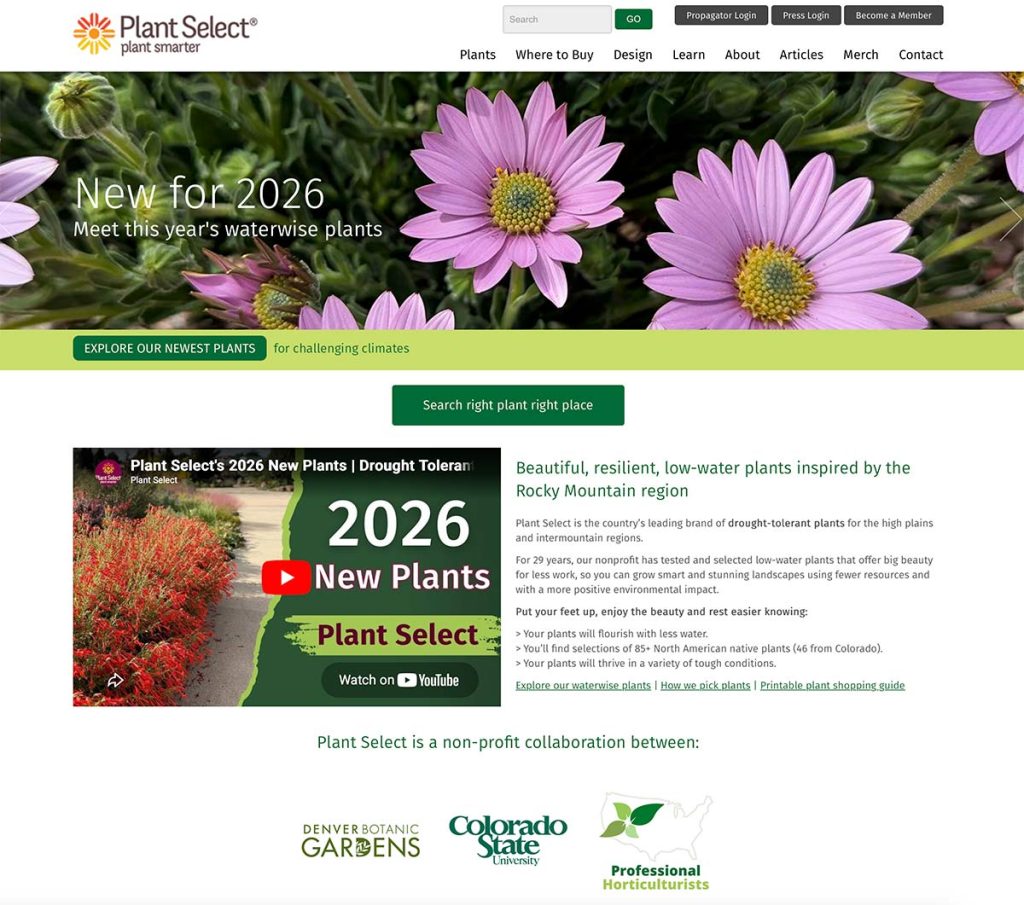
Plant Select tests and introduces waterwise plants inspired by the Rocky Mountain region. They’re a nonprofit collaboration between Colorado State University, Denver Botanic Gardens and the western green industry.
Their website has several helpful tools. For example, in their Plants section, you can look for plants by perennials, shrubs, trees, etc. There is also a Solutions section where you can find hummingbird plants, butterfly plants, native plants, etc.

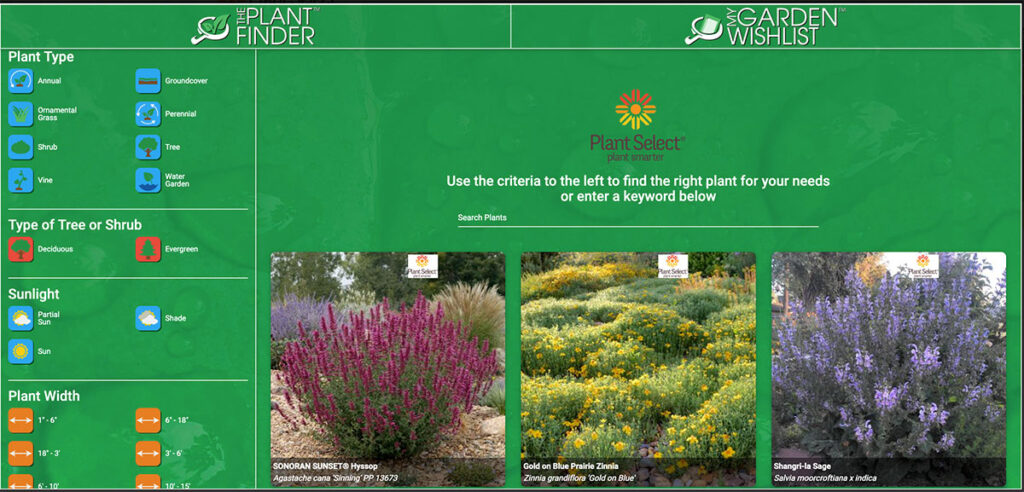
Image credit: PlantSelect.org | Find a Plant page
Another helpful tool is their Plant Finder (above). You can search for waterwise plants based on various criteria, including how big the plants will get. On other web pages, you can look up where plants are from (their native origins) and how much irrigation they need, if any.
This is a good website to dig into!
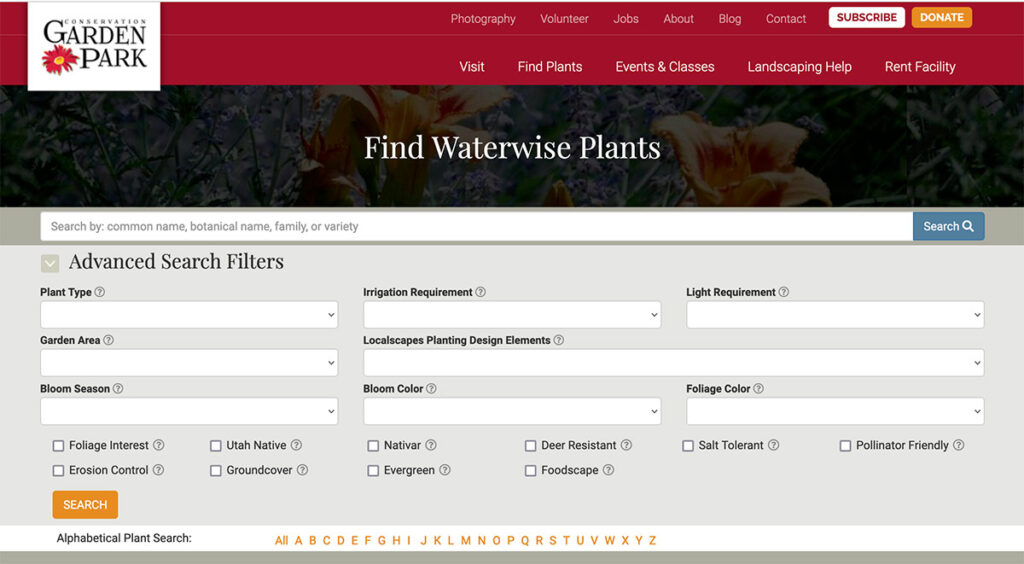
ConservationGardenPark.org

Image credit: ConservationGardenPark.org | Find Waterwise Plants page
Conservation Garden Park is a waterwise demonstration park in northern Utah. Utah residents can visit it to see examples of beautiful landscapes that are low maintenance and low water. And yay for us, Conservation Garden Park has created a big database that showcases the plants in their landscapes.
Utah faces many of the same gardening challenges we have in Colorado: heat, low moisture, tricky soils, etc. This is a great website to explore if you want to learn about waterwise plants.
One of my favorite things about this website is that they include photos of the plants through all the seasons—not just summer. This can be helpful if you want your yard to look good in the fall, winter and spring too!
WaterwisePlants.org

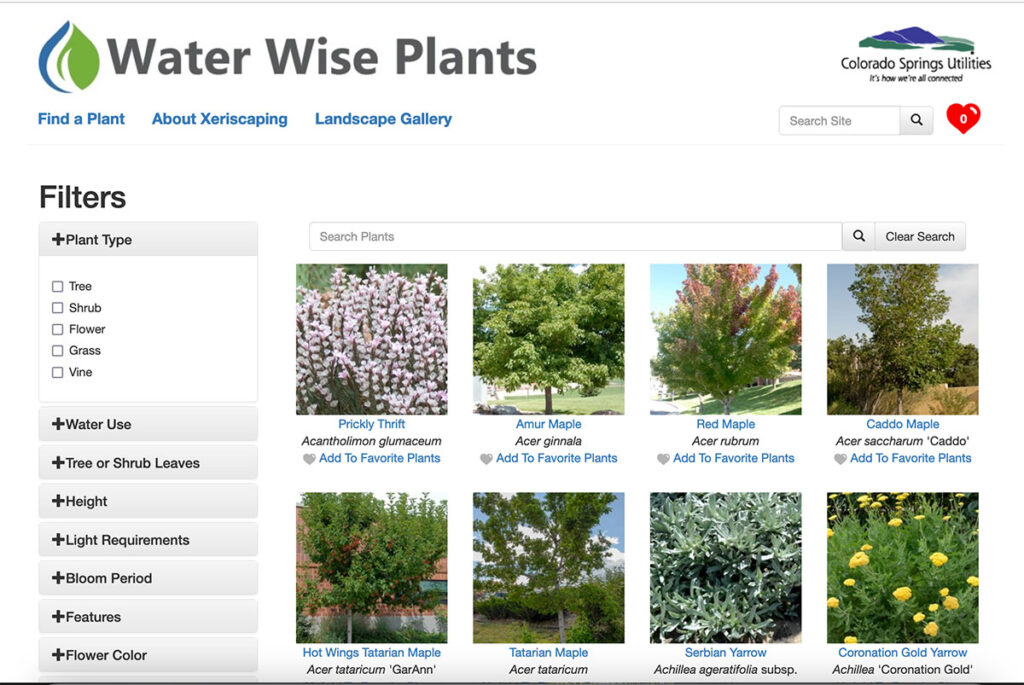
Image credit: Colorado Springs Utilities (WaterwisePlants.org) | Find a Plant page
Colorado Springs Utilities has created waterwise demonstration landscapes that are open to the public. Similar to Conservation Garden Park above, they have a website that showcases the plants in their demonstration landscapes. You can search for waterwise plants using different criteria. Here are a few of their website features I find helpful:
- You can search for plants by height. I like this feature when looking for shrubs. It’s a good way to make sure you aren’t picking a plant that will outgrow your space.
- They have “performance” notes for each plant. Be sure to look at those! They contain practical tips. For example, I was looking at a native grass called Prairie Dropseed. They noted that Prairie Dropseed has performed very well in their landscapes. However, it’s a favorite among rabbits. So, if you have rabbits, plan accordingly or skip this grass. (Helpful!)
HighCountryGardens.com

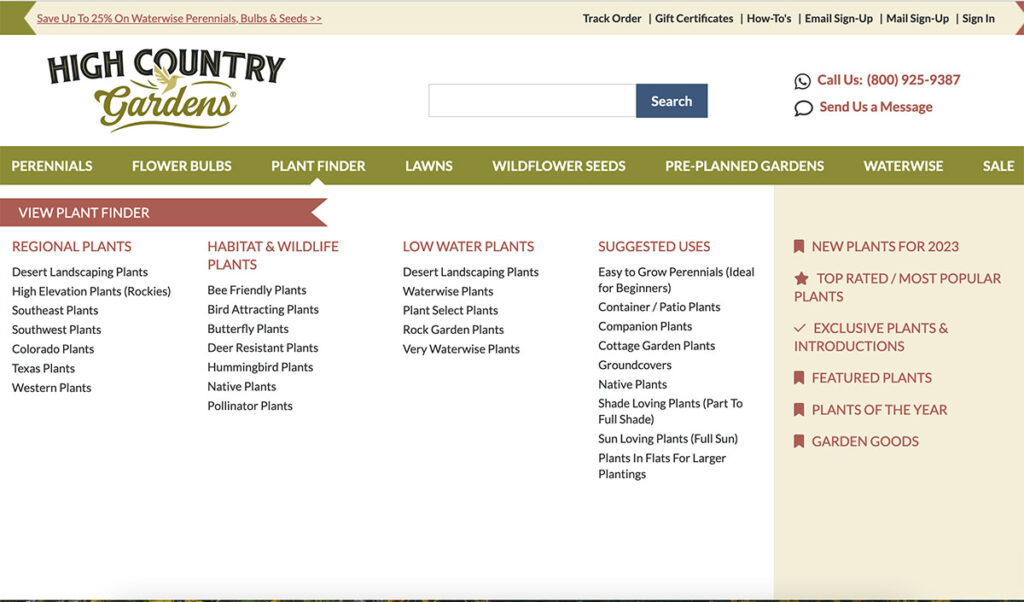
Image credit: HighCountryGardens.com | Plant Finder page
High Country Gardens is an online retailer of sustainable and waterwise plants. Many of their plants are well suited for Colorado and the semi-arid West. They have a Plant Finder tool that can help you discover plants you like, including categories called “Colorado Plants,” “High Elevation Plants” and “Western Plants.”
When I visit their website, I often use their search bar at the top of their website. I use it to look up specific waterwise plants.
If you’re a visual person, their website has great plant photos.
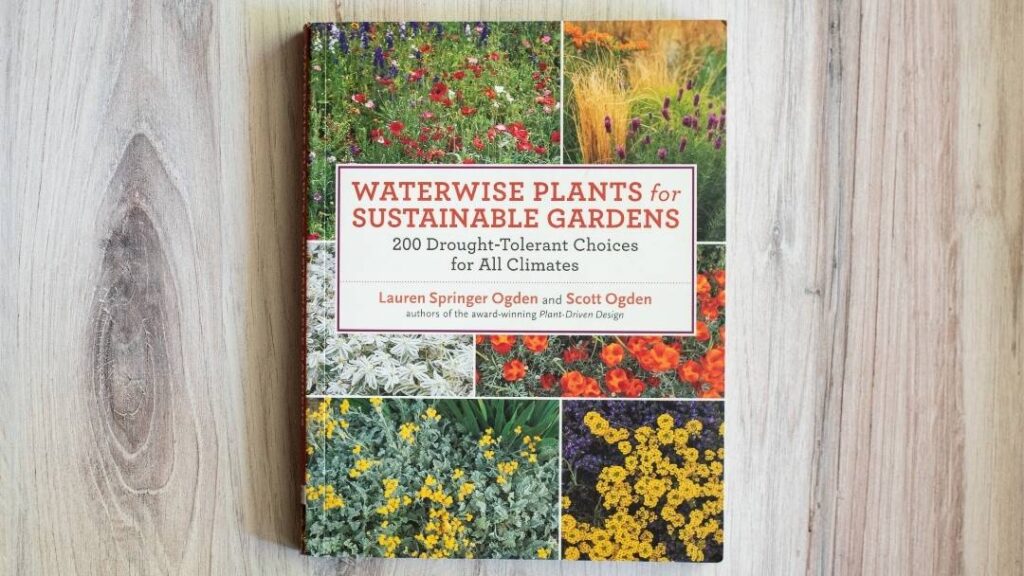
“Waterwise Plants for Sustainable Gardens” (Book)

This is one of my go-to books for waterwise plants in Colorado and the semi-arid West. It’s filled with photos and helpful tips that can be used whether you’re a beginner, intermediate or advanced gardener.
Pro tip: This book contains waterwise plants for different parts of the West, including the West Coast. As you go through the book, make sure the flowers you like match your plant hardiness zone. A plant hardiness zone tells you whether a plant is likely to survive the coldest winter temperatures that are expected in your area. Some of the plants in the book are better suited for parts of the West with warmer winters.
Native Plant Society Websites
Native plants are plants that have evolved naturally in a region. (The European settlers didn’t introduce them.) Native plants provide great habitats and food sources for birds, insects and wildlife. Many western native plants can tolerate drought and/or don’t need much water. (Though, not all!)
To find native plants for your state, here is a list of native plant societies for the intermountain region. Many have plant databases on their websites:
“Pretty Tough Plants” (Book)
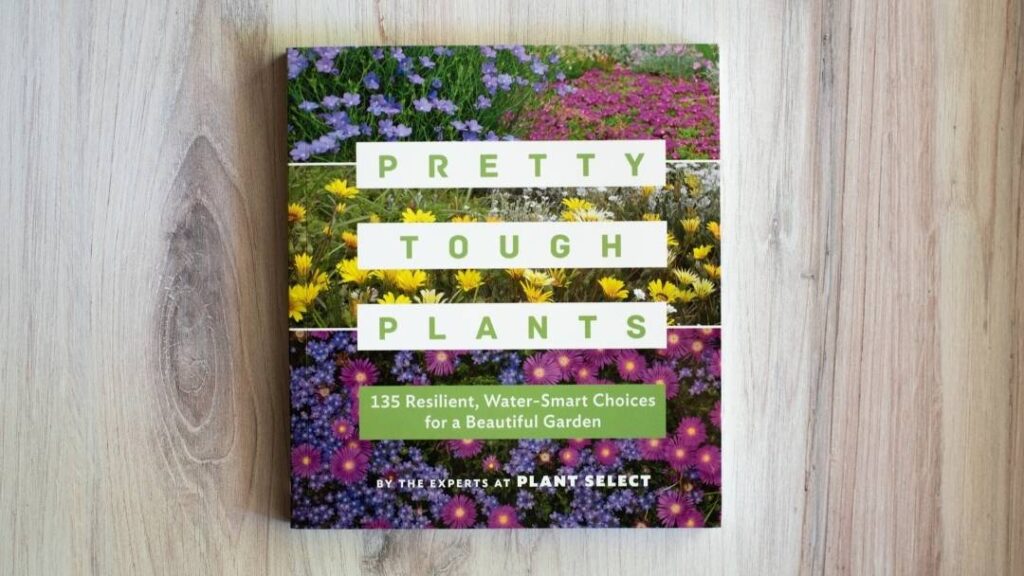
In addition to having a website, Plant Select has a great book called “Pretty Tough Plants.” I refer to this book all the time. It’s another book that is user-friendly for gardeners of different levels.
This book is no longer in print, so if you can find a copy on Amazon, snag it.
I hope these websites and books help you learn about waterwise plants, so you can create big beauty for less effort. And cheers to using less water!
Related tips that may interest you:

by Ann at Go West Gardener | Updated: May 20, 2026 | Gardening Tips and Tricks
Have you ever had trouble finding the flowers you want at the store?
You aren’t alone!
Figuring out which flowers to plant and tracking them down in a garden center can get overwhelming quickly. And if even if you don’t feel overwhelmed, it can be frustrating to want a certain plant and not be able to find it.
So, if this sounds like you, please know, this is normal.
In this tip, let’s chat about how to make it easier to find the flowers you want.
What can you do if you have ideas for flowers, but you can’t find them at your garden center?
First, I’ll say that some western plants ARE hard to find.
Often, though, it can be a matter of where you’re looking for them.
The big box stores are convenient for buying flowers, no question.
But they tend to have a limited selection of flowers. Plus, they often carry plants that are better suited for other regions of the country.
Yep, let me say that again: A lot of their selection isn’t a great fit for gardens in the semi-arid, tricky soils West.
So instead, my suggestion is to look up local, independent garden centers in your area.
These are local stores that only sell plants, flowers, gardening tools and related products.
If you’ve only shopped at the big box stores for your flowers and you don’t know where to find local, independent garden center, no worries!
Search for:
“Garden center in [your town or metro area]”
“Plant nursery in [your town or metro area]”
You can call these local garden centers on the phone to ask if they have certain flowers OR you can visit in person.
These local stores are more likely to have a wider selection of flower plants that grow better in our region.
Fair warning, because these garden centers usually have a lot of plants, they can be a little intimidating on your first visit.
(Just being honest with you.)
But every time you go, you’ll get more comfortable.
And the great news is, they typically have knowledgeable staff members who can help you.
It’s 100% okay to ask questions.
When you arrive at your garden center, ask if they carry the flower you’re looking for. If they don’t have it, feel free to ask:
“Can you recommend a similar flower?”
Share what you’re trying to do.
For example, let them know if you want to attract butterflies … or if you’d like plants that deer are less likely to eat.
If the person you’re talking to doesn’t know the answer, ask if there’s someone available who may know the answer.
(There’s always a wise and scrappy gardener tucked away somewhere.)
To better help you, they may ask you a little about your garden.
Don’t worry! You don’t have to be a master gardener to have a conversation with them. They just want to help.
You may want to snap a few photos of your garden or yard on your phone before you go to the store. This makes it easier for them to picture your space and your existing flowers.
Okay, so that’s option one.
But it’s possible you may not find what you want locally because not every store carries every plant.
In that case, you have a second option.
There are online plant and seed companies too… like Zappos for flower plants.
You may be able to buy the flower plant you want online, and they’ll send it to you.
Some get shoes in the mail, others get flower plants… 🙂
Want a few examples of online garden stores?
- High Country Gardens is an example of an online garden store that specializes in flower plants for the intermountain west.
- Botanical Interests is an example of a seed company that offers many western flower seeds. They’re based in Colorado. Depending on the flower (or veggie) you want to grow, you may plant seeds in the spring, in the fall or even during the winter.
Often times, these online retailers have unusual flowers that are tricky to find in stores.
Another option: You can choose a “pre-planned garden.”
Would you like to create a beautiful, western-friendly garden WITHOUT having to figure out which flowers work best and find them in a store?
If yes, you may want to check out pre-planned flowers gardens.
They’re an awesome way to create a beautiful flower garden without all the research and hunting for plants.
And bonus, many of these flower gardens don’t need a lot of water.
Related topics that may interest you:
by Ann at Go West Gardener | Updated: May 20, 2026 | Gardening for Pollinators, Gardening Tips and Tricks
10 tips to create a pollinator garden in Colorado, Utah and similar states
Do you want to attract bees and butterflies to your garden? Me too!
These wonderful pollinators need just a few, basic survival elements:
- Food (from nectar-rich flowers)
- Water sources
- Cover (shelter)
- Places to raise and feed their young
- Protection from pesticides
Here are 10 tips to create a pollinator garden that not only attracts bees and butterflies, but also offers an environment where they can thrive.
1) Plant a variety of flowers that bloom at different times—from spring to fall.
That way, you’ll give your bees and butterflies a constant source of food and shelter.
Typically, pollinators can find food sources during the summer. (It’s easy to find flowers that bloom in June and July!) So, if you’re prioritizing, focus on adding flowers, flowering shrubs or flowering trees that bloom in the spring, late summer or fall. This is when food can be scarce for bees.
At the end of this article, you’ll find good plant lists for butterflies and bees.
2) Include native plants in your garden, when possible.
There are approximately 1000 native bee species in Colorado and about 1000 native bee species in Utah.
Native bees tend to like native plants.
Native plants have been around for a long time—since before Europeans settled in North America. They’re “ecologically adapted” to your area, just like your native bees are. They’ve evolved together. These plants are very appealing to pollinators, especially bees and butterflies that have had their habitat destroyed by urban development.
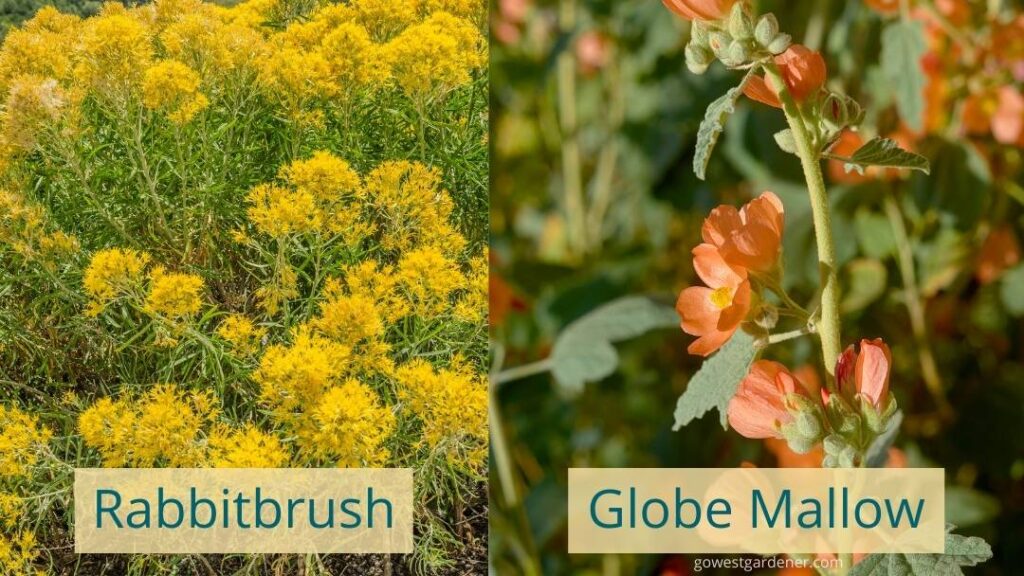
Some bees will only gather nectar and pollen from specific native plants—like Rabbitbrush (Chrysothamnus nauseosa), Globe Mallow (Sphaeralcea munroana) or Sunflowers (Helianthus).
Butterflies can prefer specific plants too.
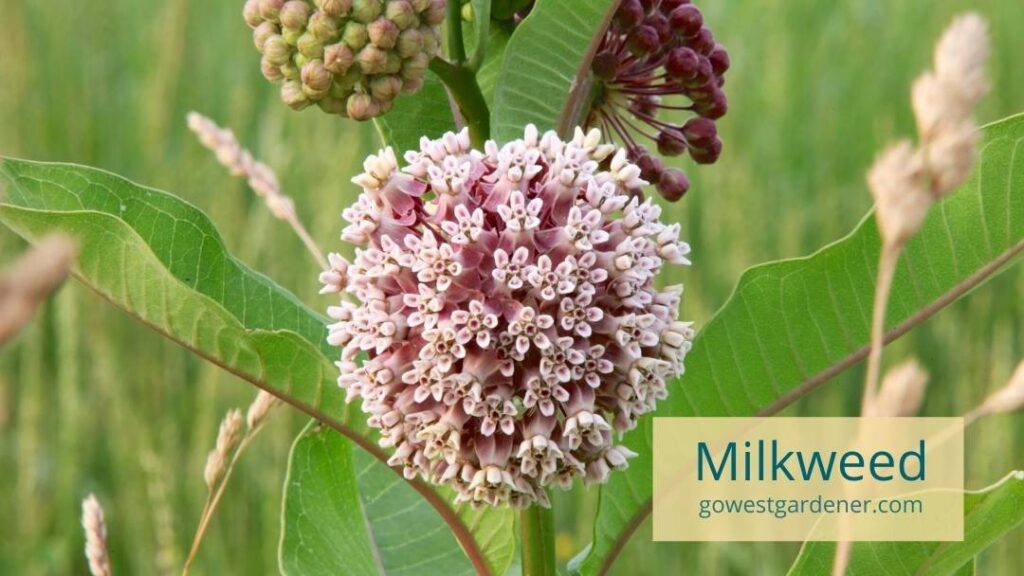
For example, Monarch butterflies will only use milkweed plant as a “host” for their young. A host plant is where they lay their eggs and the young caterpillars feed. Other butterflies have their own preferences for plants to host their babies.
Despite their growing popularity, native plants can be tricky to find at some garden centers.
The best places to look for native plants are typically: local independent garden centers, online retailers, native plant sales from nonprofit organizations, and native seed companies.
3) Plant flowers with different bloom shapes, sizes and heights.
If you want to attract bees and butterflies to your garden, make sure you have variety in your flowers!
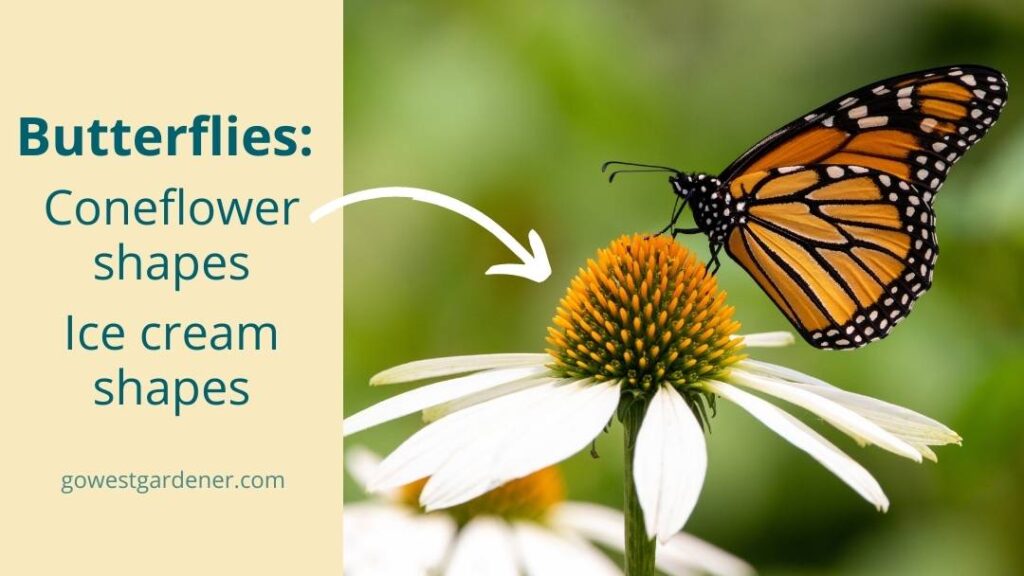
Butterflies:
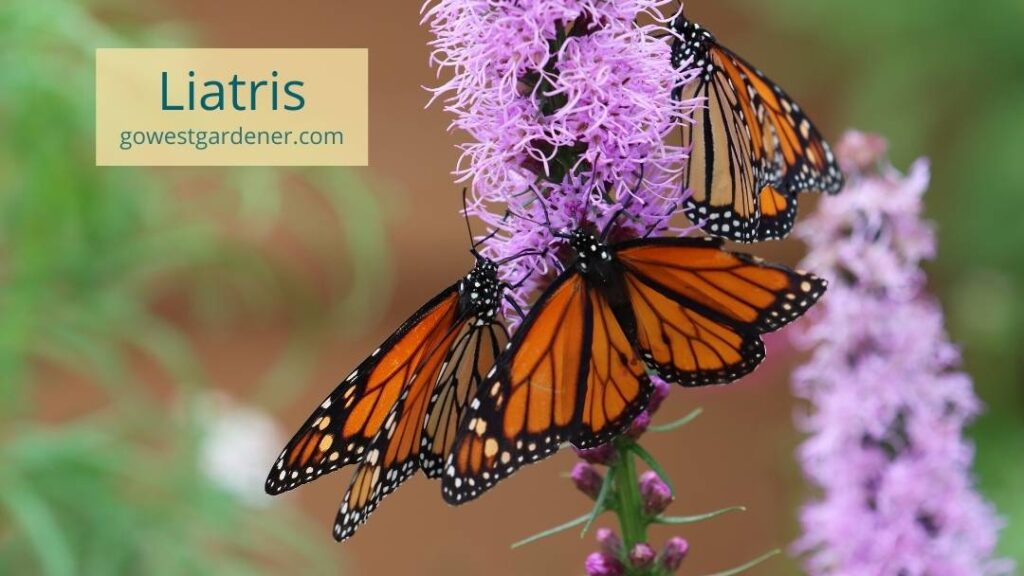
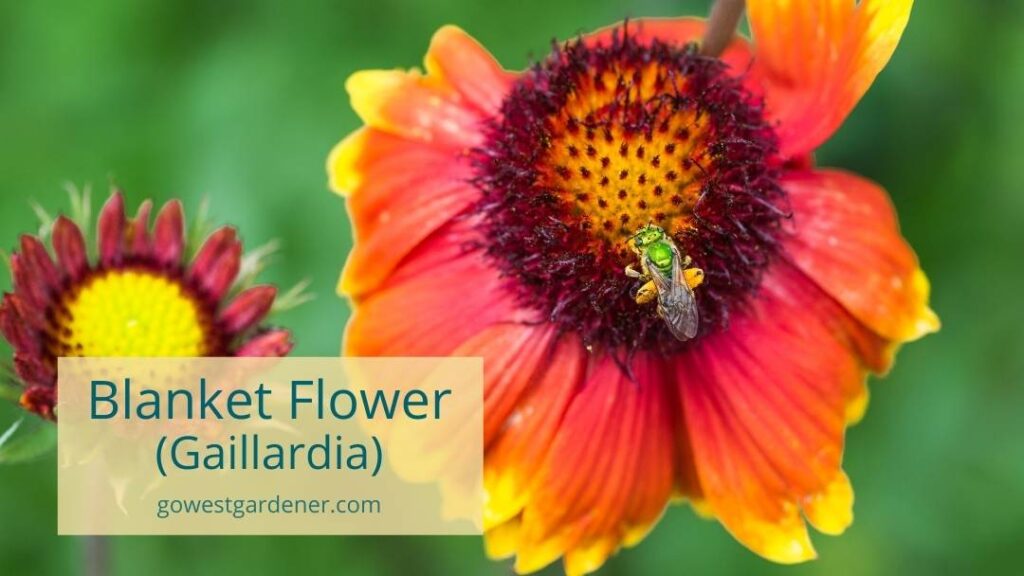
Butterflies tend to like coneflower-shaped flower heads and ice cream-shaped flower heads.
Butterflies won’t climb into a flower. Instead, they prefer flowers where they can perch with a 360-degree view—ideally, in an open spot with a lot of sunlight.
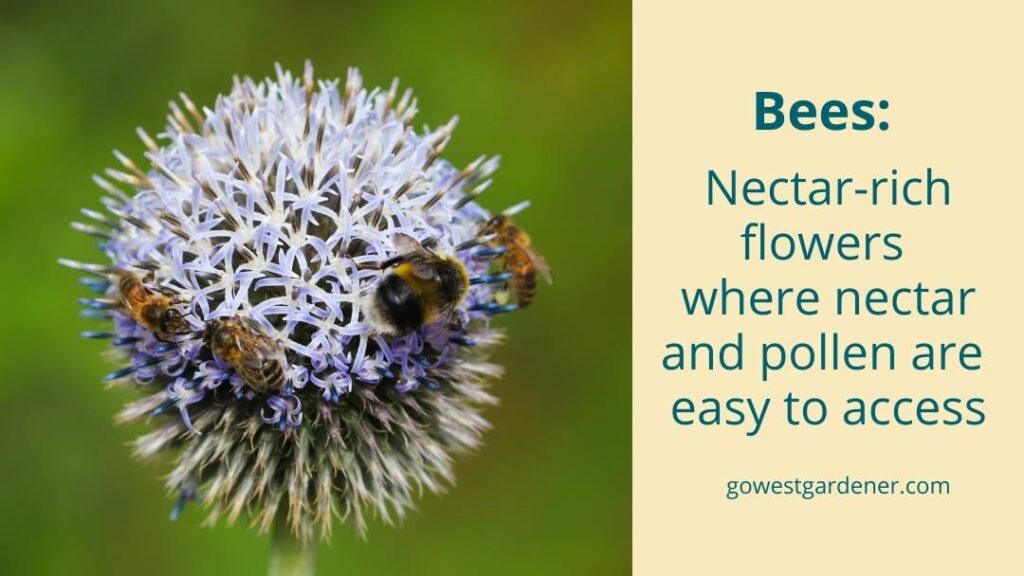
Bees:
Bees’ favorite flower colors are blue, yellow, bright white or ultra-violet. They’re drawn to nectar-rich flowers with an easy-to-access supply of nectar and pollen.
As my ecology instructor used to say, bees like flowers “with landing platforms.” They also like tubular flowers.
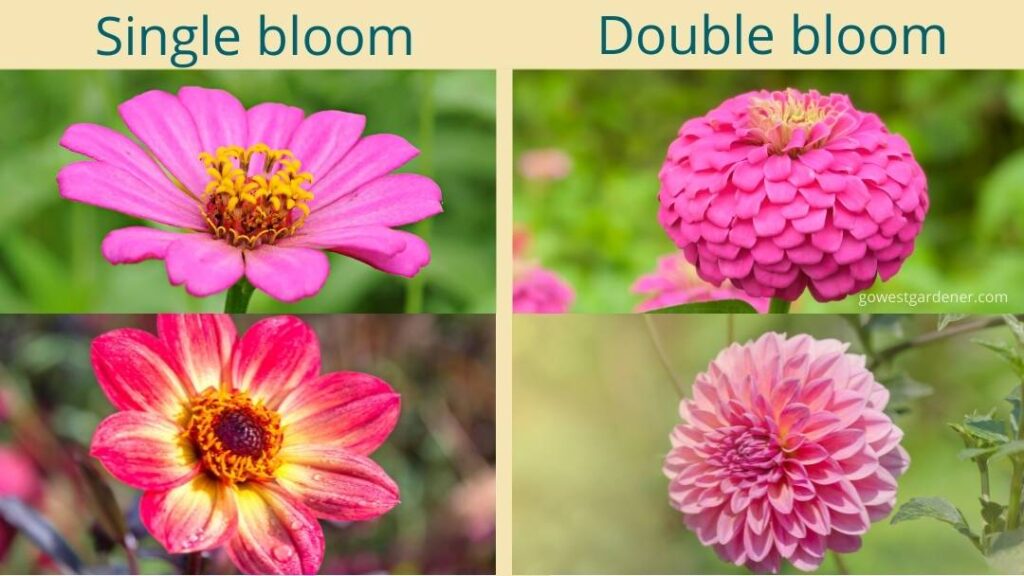
Single-bloom flowers are best.
Avoid “double-bloom flowers” (aka, double flowers). What the heck is a double-bloom flower? It’s a flower with extra flower petals. Here are examples with Zinnias and Dahlias:
Double-bloom flowers may look beautiful, but they make it harder for bees to get to the nectar and pollen. (And sometimes, these flowers don’t even have nectar and pollen!)
As far as flower size goes, there is no one-size-fits-all for bees. It depends on the bee. Some larger, native bees prefer larger flower heads. Other bees are drawn to very small flower heads.
Again, variety is key!
4) Plant flowers in groups (clumps of 3+ flowers), rather than individual plants.
For one thing, this can look natural and attractive.
But it also can be helpful for bees like honeybees. They like to gather nectar and pollen from the same flowers at one time. When you plant in groups, you’re more likely to attract honeybees—and keep them happy. You’ll help them focus their energy on gathering food.
5) Include a shallow water source in your garden.
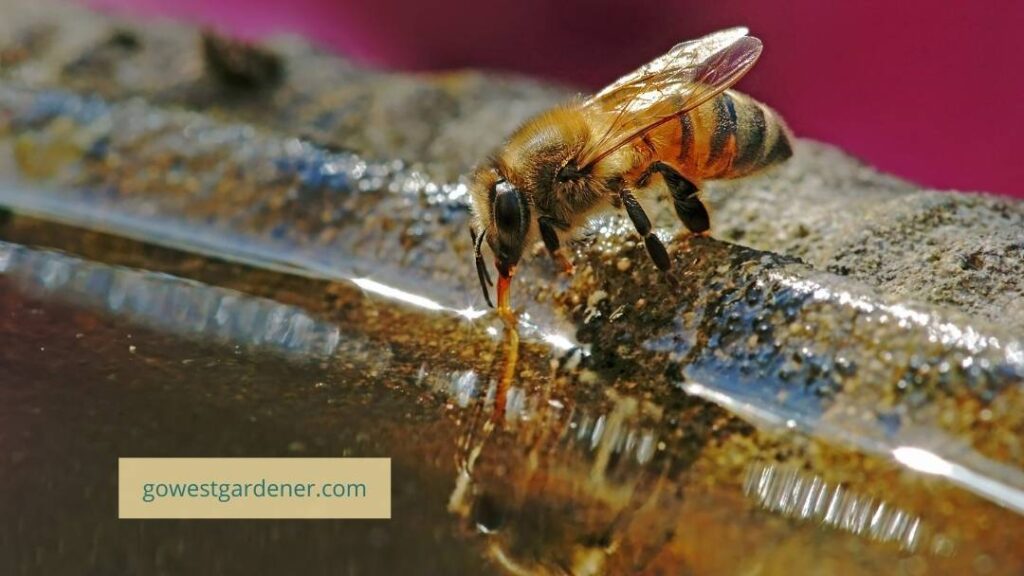
Bees need water. To give your bees a safe place to drink:
- Create a shallow pool with an old plate, flowerpot saucer, upside-down frisbee or shallow bird bath.
- Place objects—like pebbles, rocks and twigs—in the water, so your pollinators have a place to stand without drowning.
Bees also will drink water from your sprinkler heads or your drip system heads.
So, what about butterflies?
Adult butterflies like sweet liquids. They’re drawn to nectar, rotting fruit and other sweet liquids.
Male butterflies do like shallow mud puddles, though. While the reason isn’t fully known, it’s believed that dissolved minerals in the water may be good for butterflies.
Caterpillars primarily get their liquids from the plants they feed upon.
6) Make sure you have a sunny area that’s protected from the wind.
In western states like Colorado and Utah, we can get wind gusts that make it feel like our houses are coming apart at the seams!
Adult butterflies like to feed in sunny spots that are open… but also protected from the wind. So, if you can create a wind break in your garden, that’s ideal for your pollinators, particularly your butterflies.
7) Cut your flower garden back in the spring, rather than in the fall.
If possible, this means leaving some natural debris—like fallen leaves and plant stems—in your flower garden over winter.
Around 70% of Colorado’s native bees nest in the ground, and the other 30% nest in cavities, like hollow plant stems. When you wait until spring to trim back your flower garden, you provide good, undisturbed nesting grounds for bees.
You keep their nests safe and protected.
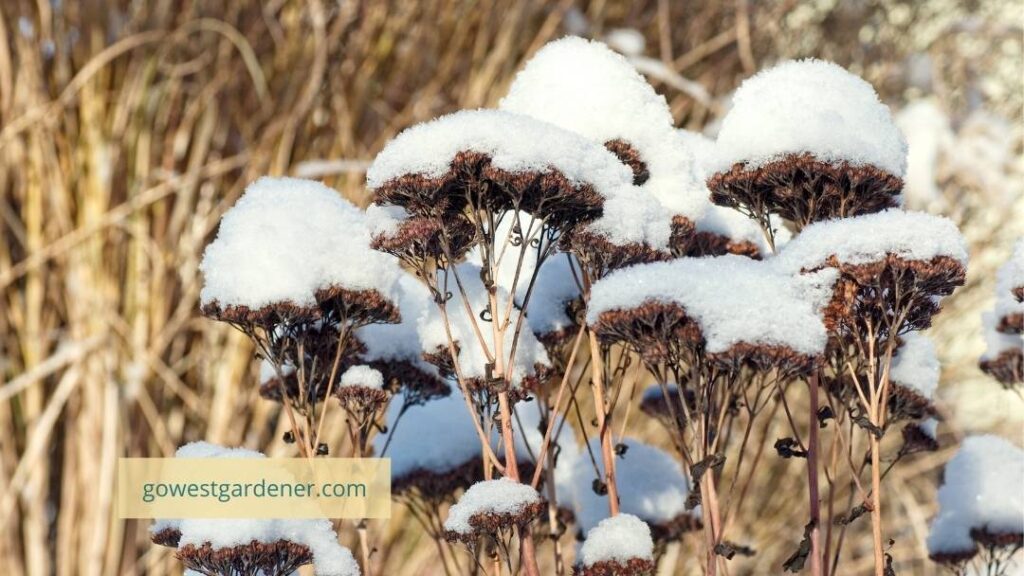
I know we’re chatting about bees and butterflies in this article, but it’s worth noting that your winter garden also can be a big hit with birds. Dried flower heads offer good food sources for them. And they can take shelter in your garden.
8) Gives bees shelter in your soil (dirt).
Did you know that 90% of native bees are solitary bees? They live alone, rather than in a colony.
And as I mentioned earlier, most native bees nest in the ground. To create a bee-friendly environment in your soil:
- Avoid using landscape fabrics. They keep bees from being able to tunnel into the ground.
- Avoid thick mulch in select places in your garden. Mulch is a material you put on top of your soil—like bark or wood chips. It offers a lot of benefits for plants, but deep layers of mulch can make it difficult for bees to nest in the ground. You may want to selectively choose a few spots where you use a thin layer of mulch or no mulch at all.
- Avoid tilling. Tilling is when you extensively turn your soil over until it’s all broken up. There was a time when tilling was a popular garden practice. However, it’s fallen out of favor in home gardens because it can create soil structure problems and destroy beneficial organisms. (It messes up the health of your soil, which can lead to problems in your plants.) In this case, avoid tilling because it can destroy your bees’ nests and/or kill bees or their young.
- Avoid using overhead sprinklers during the day. Instead, use drip irrigation (small irrigation lines that run to the plants). This way, the mama bee will be able to find her nest after a day of foraging. Overhead sprinklers can accidentally destroy the entrances with mud when the bees are away, says the Utah State University Extension.
9) Don’t use pesticides in your landscape.
If you want to attract bees and butterflies to your garden, avoid using chemicals to treat your lawn or plants.
And yep, this means you wouldn’t use pesticides for:
- Treating the weeds in your lawn or garden
- Fertilizing your lawn or your garden plants
- Battling Japanese beetles
The chemicals can transfer to bees and other pollinators when they land on the plants or feed from them.
(If you have no other alternative, use the mildest treatment you can. And spray when bees and butterflies are less active, like at dusk. Don’t spray during the day when pollinators are gathering food!)
10) Buy from bee-safe garden centers and growers.
Many plants sold at garden centers have been treated with “neonicotinoids”—a type of pesticide—early in their life cycle. This pesticide use is very common.
This pesticide is toxic to insects, including bees. It can stay inside plant tissues for a long time, leading to problems for pollinators that visit those plants, from impairment to death.
Some garden centers have pledged not to sell plants that have been grown with these chemicals. Here’s where to buy plants that are safe for bees in Colorado and the West.
Want more info on how to attract bees and butterflies?
Check out these resources:
Related topics that may interest you:
by Ann at Go West Gardener | Updated: May 9, 2024 | Best Flowers for Colorado, Utah & Similar States, Gardening for Pollinators, In-ground garden
Who else loves Columbine flowers?
(I have both my hands up.)
You’ll see Columbine flowers growing along alpine hiking trails in the Rocky Mountains… and in western gardens.
When I see them on mountain trails, I want to turn into Julie Andrews at the start of The Sound of Music, twirling around with my arms in the air, singing about the hills being alive. They make me giddy every time I see them.
Columbine flowers are perennials. This means they come back every year.
If you’re like me, you may think of Rocky Mountain Columbines first. They’re the bluish-purple and white flowers you’ll often see on mountain trails (like the ones pictured above). Rocky Mountain Columbines grow well in moist mountain meadows.
But you can find Columbine flowers in different types and colors.
There’s even a type of Columbine that can handle our hot, semi-arid summers at lower elevations in the intermountain west. (Scroll down for the scoop!)
Typically, Columbine flowers bloom in May and June at our lower elevations in states like Colorado.
And at our higher elevations, these flowers usually bloom in June and July.
Columbines are a WONDERFUL hummingbird magnet.
If you ever get a chance to visit the Betty Ford Alpine Garden in Vail, Colorado during the summer, make a beeline to the Columbine flowers.
If they’re in bloom, you’ll often be able to watch the hummingbirds blissfully zip from flower to flower.
It’s heavenly.
Tip: If you want to plant flowers that attract hummingbirds to your garden, add Columbines to your list.
Happy plants tend to live longer, so let’s chat about how to keep your Columbines happy.
The big thing is planting your Columbines in the right place in your garden.
Our summers can get really hot in our lower elevations in western states like Colorado and Utah. If you live someplace hot, your Columbines will likely prefer spots in your garden that have “partial shade” or “shade.” (A helpful guideline is 4 hours or less of sunlight. Avoid planting them in afternoon sunlight, which can be too hot.)
For example, you may want to plant them in the shade of a leafy tree.
They also like it when your dirt (which we’ll call “soil”) is moist and drains well.
To help keep your soil moist, it helps to put a layer of “mulch” (like wood chips or mini-bark) on top. You can find mulch at your local garden center.
But there IS a type of Columbine that can handle sunnier spots…
And it’s a much better fit for our gardens in the hot, semi-arid parts of the intermountain west!
If you’re looking for a Columbine flower that grows well in sunshine, ask at the garden center about Denver Gold® Columbine.
This plant’s official botanical name is: Aquilegia chrysantha ‘Denver Gold’.
Denver Gold® is a showy, yellow Columbine that flourishes in sunny locations.
It grows well in our tricky western soils up to elevations of about 9,000 feet.
In the photo above, you’ll see Denver Gold® Columbines (the tall, yellow flowers) planted next to purple flowers known as bearded irises.
Isn’t this a pretty combo?
Denver Gold® Columbines give you beautiful yellow flowers in May and June in our lower elevations. And if you trim off the dead blooms, you may get more flowers later in the summer as well.
It’s native to the canyon lands in the Southwest.
In the photo above, Denver Gold® Columbines (the yellow flowers) are planted alongside a bluish-purple flower known as Salvia (Salvia sylvestris ‘May Night’).
Another showy combo!
If you live in another region of the country…
Ask at your local garden center whether Columbines will grow well where you live.
Related tips that may interest you:
by Ann at Go West Gardener | Updated: May 20, 2026 | Gardening Tips and Tricks, In-ground garden
The tulips in your spring garden have given you gorgeous color. But what do you do with tulips after they’ve flowered?
They’re done blooming, and now your tulip leaves are turning yellow and flopping on the ground. They don’t look so great.
(This is normal, BTW! You haven’t done anything wrong.)
- Should you leave the tulip leaves?
- Should you cut the tulip leaves off?
- And if yes, when should you cut the tulip leaves?
These are the things we’re going to talk about in today’s tip!
Tulips go through an awkward period when they’re done blooming.
After tulips have flowered, their leaves turn yellow and flop on the ground.
But those fading leaves can make a BIG difference in how well your tulips bloom next year!
Here’s why:
Tulips grow from a bulb.
Think of the bulb like a battery and the leaves like solar panels.
When your tulips finish flowering, those leaves are gathering sunlight and turning it into food (and energy). Those solar panels are hard at work, even though they don’t look great.
Your tulips will use that food to get through next winter and next year’s bloom season.
The bulb is pulling all that food from the leaves back down into the bulb and storing it.
It’s recharging its battery.
If you cut the tulip leaves, you’re cutting off the solar panels.
The bulb won’t be able to recharge properly.
This means your tulips may not bloom as well next year.
It also means you may get smaller flowers or lackluster blooms.
When your tulip leaves are turning yellow and brown, you have several options.
#1: If you want pretty tulips next year, DO cut off the stem the flower was on, but DON’T cut off the leaves.
When you trim off the stems, you’re telling your tulips to focus their energy on making food for next season — recharging the battery!
Where do you trim the tulip stems?
Make your cut where the stem meets the leaves. You can wait until the petals fall off. Or you can cut the stems when the petals start shriveling up.
But fight the urge to cut off the leaves, even if they don’t look great.
You can put a flowerpot in front of your tulips to hide them. Or, you can grow other plants nearby to mask the leaves.
Don’t pull out those leaves until you can give them a gentle tug, and they come right out.
The leaves will likely be very yellow and limp.
If you give the leaves a gentle tug and they resist, they aren’t ready to come out yet.
They’re still helping the bulb recharge.
Another tip, don’t “wrap” the leaves.
You may see neighbors wrapping a rubber band around the leaves, tying them up into a little ball so they look tidier. Don’t do that. Remember, we want the leaves to act as solar panels. Tying up the leaves defeats this purpose.
#2: You can dig the tulip bulbs out.
Yep, you can dig the entire tulip out, including the bulbs in the ground.
The tradeoff is, you won’t have tulips next year unless you plant new bulbs in the fall.
But, if you really want your garden to look tidy and you don’t mind replanting your bulbs in the fall, it’s a good option.
Related topics that may interest you:
by Ann at Go West Gardener | Updated: May 20, 2026 | Flower Garden Basics, Gardening Tips and Tricks, Western Container Gardening With Flowers
If I could go back in time and tell myself one thing as a new gardener…
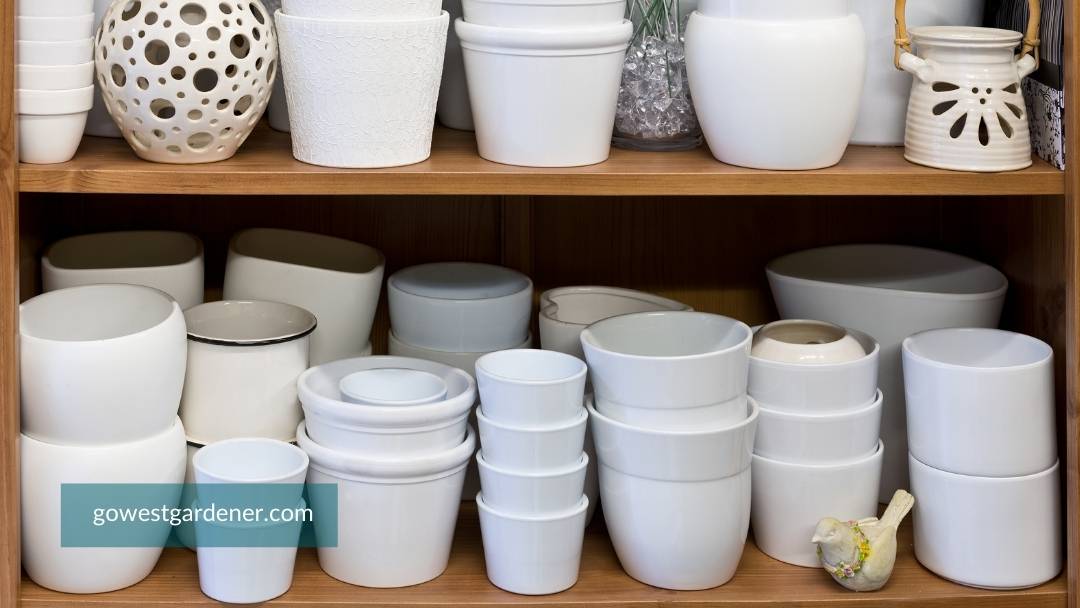
I would say it’s worth finding pretty flower pots. They’re like a good pair of shoes or a nice piece of jewelry. They can really elevate the look of your container garden.
But how do you choose? And should you buy big or small flower pots?
Here are practical questions to consider, so you can choose the best flower pot for YOU.
As you cruise through this article, keep in mind that you don’t have to buy new flowerpots. You can find them used instead. This can be good for your wallet (and Mama Nature too).
#1: Do you want to water less often?
Look for big flower pots.
Big containers tend to dry out more slowly than small pots.
#2: Do you want to have more design options with your flowers?
Look for flower pots with bigger openings (typically, big pots).
You can fit more flowers in a big container with a wide opening, so it offers more design options. You also can plant bigger flowers.
When you see flower pots that are exploding with color (like in mountain villages or outside the mall), chances are you’re looking at larger pots of flowers.
Does this mean you can’t create a beautiful container garden with medium size or small pots?
Not at all!
If you have smaller pots and you’d like to increase your design options, one thing you can do is to group pots together. That can create a really pretty look with interesting textures and heights. It also allows you to include more flowers.
You can see an example below with medium size pots.
#3: Would you like to keep your plant roots happy, which can play a role in beautiful flowers?
Look for a bigger flower pot — one that has room for plant roots to grow.
As your flower plants leaf out and grow above the soil, their roots are growing proportionally below the surface too.
Bigger containers offer more room for plant roots to grow.
And plants that have more roots are usually happier and healthier plants.
Avoid tiny pots or very shallow pots.
They’re going to look super-cute at the garden center, but it’s best to skip them for your outdoor flowers. (Use them for your indoor houseplants instead.)
#4: Do you live someplace with blazing hot summers?
Get a big pot if your flowers are going to get afternoon sunlight.
Big flower pots allow for more soil and moisture, which can do a better job keeping the roots of your plants cool and hydrated.
#5: Do you have limited space on your balcony, patio or front porch?
Look for smaller flower pots—or tall, skinny flower pots.
They work well in small or narrow spaces.
#6: Do you want to be able to move your flower pots in bad weather?
Smaller flower pots can be easier to move.
This is something to think about if you live someplace that gets hail or fluke snowstorms. Because gardening in states like Colorado, Wyoming and Texas is an adventure, y’all!
However, a small pot can still get heavy.
Plus, there are things you can do to make big pots easy to move in hailstorms, like keeping them on “plant caddies.” Plant caddies are plant stands with wheels. Get the scoop on hailstorm protection here.
#7: Are you on a budget? Or, are you interested in reusing rather than buying new?
Then, the size will vary.
Smaller flower pots will require fewer flowers and less potting soil, which can reduce your costs.
And small, decorative pots are usually cheaper than big, decorative pots at garden centers. With that said…
You can find deals on any size container if you get creative.
For example, you don’t have to buy a new container.
- If you’re moving into a home, ask if the previous owner wants to leave any garden supplies — like flower pots. People are often transitioning to different stages of life. (This is how I scored many of my garden tools and a collection of pots!)
- You can look for flower pots at estate sales.
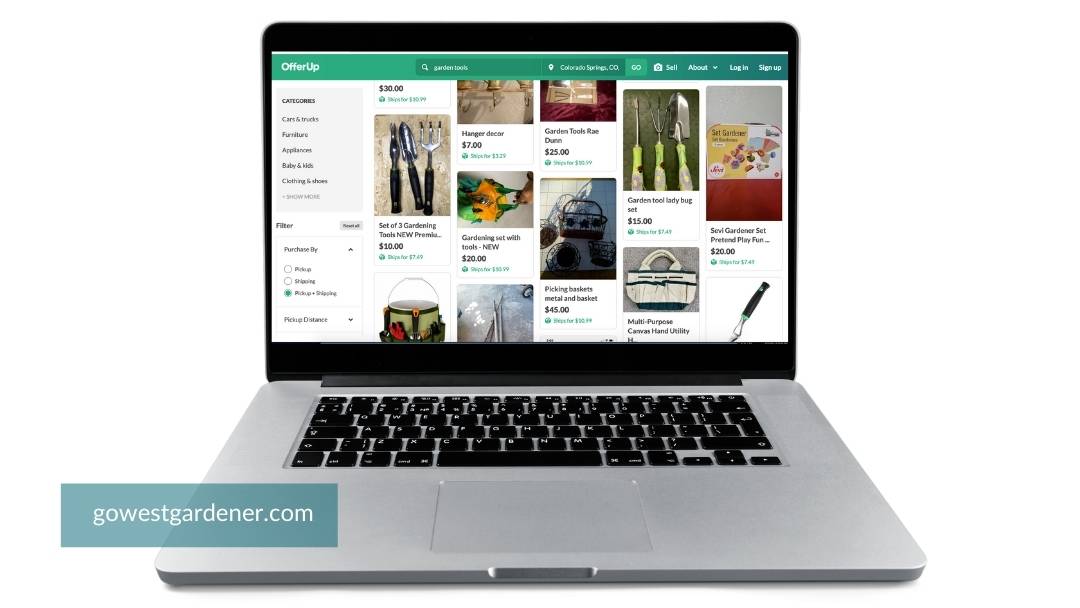
- Neighborhood websites like Facebook Marketplace, Next Door, Craig’s List or OfferUp can be a good source of garden supplies, including flower pots.
In the early spring, places like Costco and HomeGoods (TJ Maxx) often carry flowerpots that won’t break the bank.
And in the fall, flower pots often go on sale at garden centers and boutique-type stores.
#8: Want to make sure your flower pots have the most important feature of all?
Look for flower pots with a hole.
You’ll save yourself extra steps and have happier plants.
Why do they make so many flower pots without holes? It’s weird!
Holes are important.
A flower pot without a hole is like a bathtub without a drain. It can lead to problems.
When water can freely drain from your pots, your plants will have much healthier roots. And healthy roots make a big difference in growing long-lived plants that look GOOD. Cheers to that!
Related topics that may interest you:
by Ann at Go West Gardener | Updated: May 20, 2026 | Flower Garden Basics, In-ground garden
Spring can be one of the best times to plant perennials — the flowers that come back.
“Cool temps are ideal for planting perennials…” wrote David Salman, respected western plantsman of Waterwise Gardening LLC, in 2022. “Perennials thrive in cool weather, putting their energy into growing robust root systems.”
And healthy root systems lead to healthy plants!
When you plant your perennials on mild spring days with cool nights, their roots have a chance to get a head start before summer. They’re better prepared when our roasty summer temps arrive.
So, the question is:
When should you plant perennials in the spring?
I’d love to give you a simple answer—or better yet, a date.
Yep, a specific date would be nice. But Mama Nature makes her own rules, and she can be a fickle gal, especially in Colorado and similar western states. Plus, it depends on where you live and what you’re planting.
Nevertheless, here are helpful guidelines.
You should be able to plant perennials when all of the following occur:
1) Your ground isn’t frozen.
According to the Colorado State University (CSU) Extension, you should theoretically be able to plant hardy perennials when you can work the soil (your dirt). In other words, you can get a shovel in the ground.
If the ground isn’t frozen, your plants’ roots also should have access to water.
In the Front Range of Colorado, this is often April.
2) The ground isn’t too damp.
Digging in wet dirt can compact your soil. (This is a fancy way of saying: You can accidentally smoosh your dirt.)
Compaction is a common issue in clay soil—which many of us have in Colorado and the intermountain west. It can cause problems that last a long time. For example, compacted soil can make it tough for water and air to get to your plants’ roots.
If you’ve been getting snow or rain, hold off on digging in the dirt. Let your soil dry for a bit.
3) Your perennials have been actively growing outside for a while.
This is important. Let’s dig into why.
Perennials that have been growing outside are tougher. They’re better equipped to handle the intense sunlight, drying winds and yo-yo temperature swings that we can get in Colorado and similar states.
In contrast, perennials that have been growing inside are tender. They’ve had warm, comfy conditions—like their own spa. They aren’t used to outdoor conditions yet.
Greenhouse plants are more vulnerable to sunburn outside (yep, that’s a thing), as well as frost and freeze damage. They can become stunted, weak or die. These flowers “are best planted after the danger of frost has passed in the spring,” says the CSU Extension.
When you bring home perennials that have been growing indoors, it’s also a good idea to toughen them up before you plant them outdoors. This is known as “acclimating” or “hardening off” your flowers. (Here’s how to harden off flower plants.)
On a related note, if most of the plants in your garden are still dormant (winter hibernation mode) and you see leafy perennials at the store, it’s too early to buy those plants… unless they’re going straight into a greenhouse at your house. Those leafy, greenhouse perennials will not do well in our spring freezes in Colorado.
4) Your temperatures are mild rather than hot.
Moving your flowers from their nursery pots to the ground can be stressful for your plants. And hot temperatures can add to your plants’ stress.
Look for days with mild temperatures to plant your perennials. Avoid planting on summer-like days in the spring, if possible. Cloudy days can be excellent days to plant.
Here’s my approach to planting perennials in the spring in Colorado.
I live in the Front Range of Colorado.
Typically, I’ll start moving and dividing perennials that are already planted in my garden in early April, depending on the weather. The ground usually isn’t frozen and these plants have been growing in my garden, so I know they’re used to the conditions.
If we’ve been getting a lot of snow or rain, I’ll hold off on moving plants to avoid planting in wet soil. I don’t want to compact my soil (smoosh my dirt).
Depending on the weather, I’ll bring home new perennials starting in late April. I harden off the perennials I get from mail-order websites and garden centers before I plant them. Tip: If you see plants outside at a store and you don’t know if they just arrived from a greenhouse or not, I would err on the side of hardening your plants.
We can get yo-yo temperature swings in Colorado in the spring, from summer-like days, to freezing cold nights. So, I keep my eyes on the forecast. If the forecast says temps could drop into the upper 20s (or below) or we could get snow (because, yay, it’s Colorado), I’ll typically wait to plant them. I protect my leafy, newly-purchased perennials from freezes.
Gardening is both science and intuition.
I have a gardening friend who shared an observation I adore:
Gardening is both science and intuition. What works for one gardener may not work for the next.
If you want to know when you should plant perennials in the spring in Colorado (or a similar state), I hope these guidelines help you hone in on what works well for your western garden.
Related topics that may interest you:
by Ann at Go West Gardener | Updated: May 20, 2026 | Flower Garden Basics, Gardening Tips and Tricks
So, you walk into your local western garden center…
And you see row after row of flowers. You may find yourself thinking one of two things:
- “Ahhhh, I’m in my happy place.” You feel like a kid in a candy store.
Or …
- “HOLY. CRAP.” There are sooooo many choices. You suddenly feel a strong urge to breathe deeply into a brown paper bag.
Both are natural reactions!
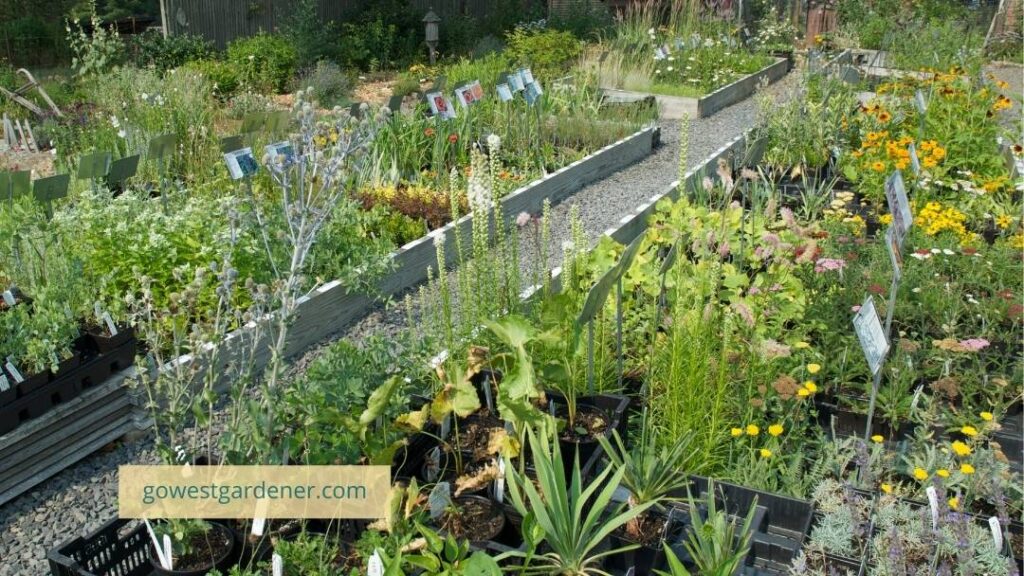
Here are 5 tips to help you navigate your local garden center and make awesome flower choices.
Tip #1: Western garden centers may not sell the flowers you recognize from other parts of the country or from magazine photos
And that’s actually a good thing.
Here’s why.
Colorado and similar western states are tough on plants.
Really tough.
It’s dry here. Windy. Our high-altitude sun is more intense on our plants. Our soil lacks nutrients. We get hail and 60-degree temperature swings.
Down at our lower elevations (3500-6000 feet), our summers can get H-O-T with very little rainfall.
And up at our higher elevations — like in our mountain valleys — we can get frost in the summer.
(Aren’t you glad you’re becoming a gardener here? )
The point is, we need hardy-plants that can handle these types of conditions.
Typically, the pin-worthy flowers from Southern Living magazine and other lifestyle magazines prefer a lot of moisture, different soil, a more temperate climate, etc.
You’ll be much more successful and have to replace fewer plants in states like Colorado and Utah if you’re planting flowers that do well in our crazy, western conditions.
So, get ready to discover some new types of flowers as you browse the aisles!

Tip #2: Flowers are often arranged together based on whether they grow for one season or return every year
In other words, there is a method to the colorful madness.
You want big, showy color all summer, particularly in your flowerpots?
You’re probably looking for annuals. Annuals give you a lot of color for one growing season, but they don’t come back the next.
You want pretty flowers in the ground that come back year after year?
You’re looking for perennials. Perennials return every year, but they typically bloom for a shorter window of time — often, only a few weeks.
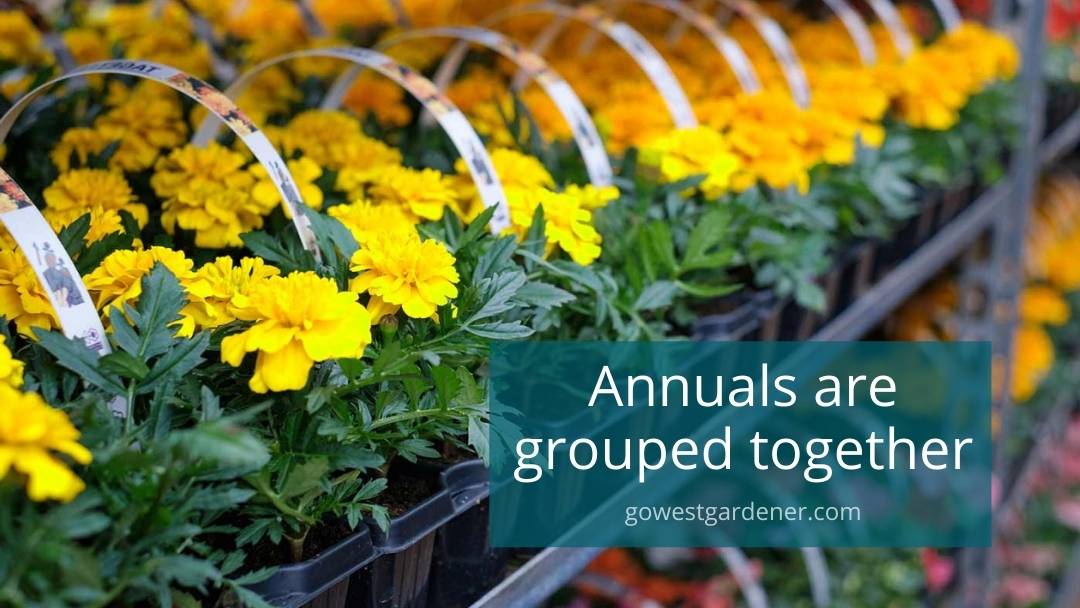
The good news is your garden center likely has organized its annuals together and its perennials together.
The annual section usually has a lot of flowers together with bright, showy color.
If you aren’t sure which section is which, please ask. People are happy to help.
In addition, in the perennial section, plants that love sunshine are often separated from plants that prefer shade …
Though, not always. (I’m looking at you home improvement stores.)
In outdoor garden centers, the shade-loving plants will likely have a screen or a cover over them. This is always a helpful clue that they prefer less sunlight.
Tip #3: Perennials bloom at different times of the summer, so it’s helpful to return to the garden center every 2-4 weeks to see what’s blooming
When I planted my first garden in Colorado, I was so excited to buy flowers.
I went to the garden center in early June, and I bought a variety of colorful perennials (the flower plants that come back year after year).
Over the next few years, my garden looked GOOD … in May and June.
But by the time July arrived, everything would stop blooming.
I had very little color for the rest of the summer.
What happened?
Perennials bloom at different times during the summer — usually for 2 to 3 weeks at a time.
I bought the perennials that looked pretty at the garden center in the early summer. They were the flower plants that bloom in May and June.
I didn’t realize that I needed to pace myself.
If you’d like color in your garden across the w-h-o-l-e summer, it’s helpful to return to the garden center to see what blooms during different months.
Your garden center will likely be getting new plants in.
Plus, plants you didn’t notice before may be blooming now.
Don’t have time to make multiple trips to the garden center to look at perennials?
In that case, be sure to look at the plant tags (tucked in each pot) when you buy your flowers.
The plant tags should tell you when your perennial will bloom.
Look for perennials that bloom at different times of the summer. That means you may need to look for plants that aren’t flowering at the time you’re at the garden center.
If you live at a high elevation in a western state like Colorado, you’ll have a shorter growing season. You may want skip the “early fall” bloomers. Your growing season may not be long enough for those flowers to bloom. You also may have more summer options if you start flowers from seed.
Tip #4: The size of the flower plant in the store isn’t its final size
Perennials take up to 3 years to reach their full size.
So, when you see a pretty perennial at the garden center and it’s flowering and you can totally picture the perfect spot for it in your garden …
Pump the brakes.
Read the plant tag (tucked in the pot) to find out how big the plant will grow and how much space it needs.
When you read the tag, you may find yourself thinking:
“This adorable little plant needs 24 inches in width and is going to be 3 feet tall? Nah!”
Yep.
It just may take a few years to get there.
Here’s what this means:
Your garden may not look “full” in the first year or two, but this is totally normal.
You can always fill in with flowerpots of annuals.
Putting each plant in the right place for its needs will help you keep your plants from competing for water, nutrients and sunlight.
Translation: You’ll have happier, healthier plants and less work for the long term.
By the way, almost every gardener has ignored a plant tag and had to move — or remove — a plant when it’s gotten too big (myself included).
So, if you’ve done this, you’re in good company!
There’s nothing like planting a perennial in the front of your garden, only to discover that your plant has turned into the tall kid in the school class picture — and you have it standing in the front row.
And if you like having the tall kid in the front row, great!
Nature is wild and unruly, and it can be part of the fun of gardening too.
Just make sure your tall kid isn’t crowding out your other plants (for example, blocking their sunlight or water).
The other thing to keep an eye on is whether your tall kid’s roots may be growing into other plants and taking their nutrients.
Tip #5: A big flower plant growing in a small container can be a problem, so look for containers that are proportional to the plant
As plants grow bigger above the soil, their roots are elongating below the soil.
So, when you see a big plant growing in a small pot — for an amazingly low price, no less — you may not be getting the deal you think you’re getting.
Why?
Because when plant roots have nowhere to go, they start circling around the inside of the container, growing tighter and tighter.
The plant’s roots will begin to strangle and kill the plant.
This is known as: “root girdling.”
Sometimes, there are things you can do to loosen up the roots when you get your plant home, but these steps take extra work and you can end up damaging the roots.
Your flower plant may not recover.
What’s another sign that the roots are too big for the container?
You may notice a lot of roots growing out of the bottom of the pot.
Poor lil’ dudes are trying to escape!
Root girdling is a bigger issue in perennials (and shrubs and trees), than in annuals. After all, your annuals are only going to last for one season.
Nonetheless, be wary of plants that have outgrown the size of their containers.
You may be buying a problem.
Being observant can help you set yourself (and your plants) up for more success in your garden. And cheers to that!
Related topics that may interest you: