
You may be in the heart of winter, but that doesn’t mean your garden has to look boring!
Chances are, when you’re out walking your dog or getting a little fresh air, you’ve noticed a neighbor’s home that catches your eye.
You know the one.
It’s the house or apartment complex where you can’t help but stop and look. Their landscaping looks soooo good in the fall and winter.
Heck, even your dog wants to stop and take a look. (Or, at least take a lil’ sniff.)
If you want a pretty winter garden too….
One of the easiest ways to make your garden look good in the winter is to plant ornamental grasses.
Ornamental grasses add a “wow” factor to winter gardens.
Their feathery plumes or seed heads will glow in the winter light. When the wind blows, you’ll get a wonderful flowing motion and a whispering sound. And they can add structure and height to your garden.
In garden lingo, this is known as creating “winter interest.” Even though it’s winter, you still have plants that look pretty.
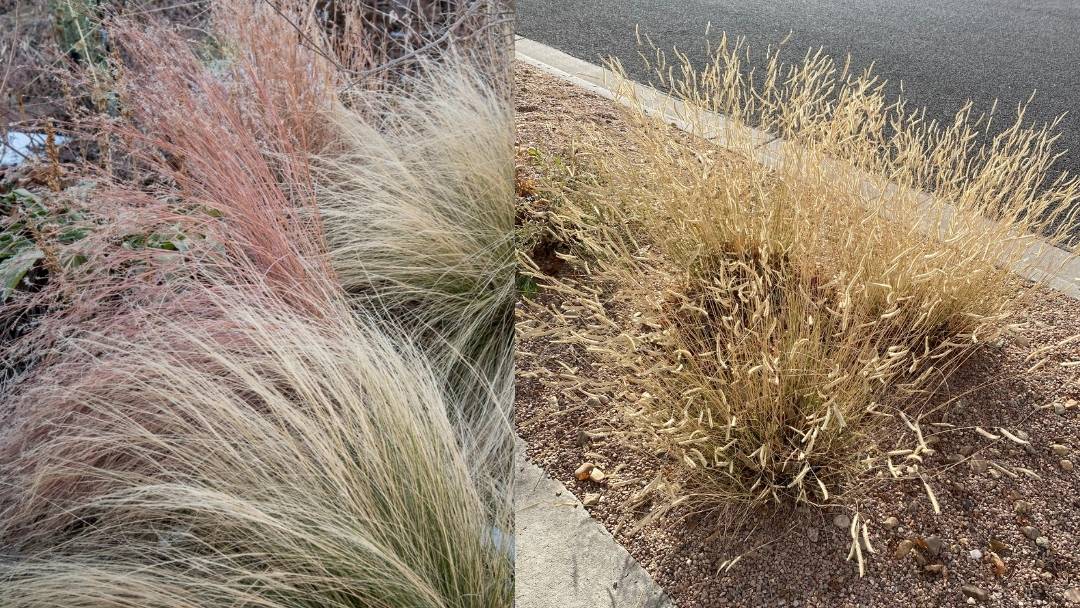
Best of all, ornamental grasses are easy to grow.
Here are helpful things to know about ornamental grasses:
1) Ornamental grasses tend to be low maintenance.
You’ll likely cut them back once a year, but that’s about it. You don’t have to fuss over them.
2) Grasses tend to bounce back well from our tough weather: gusty winds, hail, surprise snowstorms… Gotta love the intermountain west!
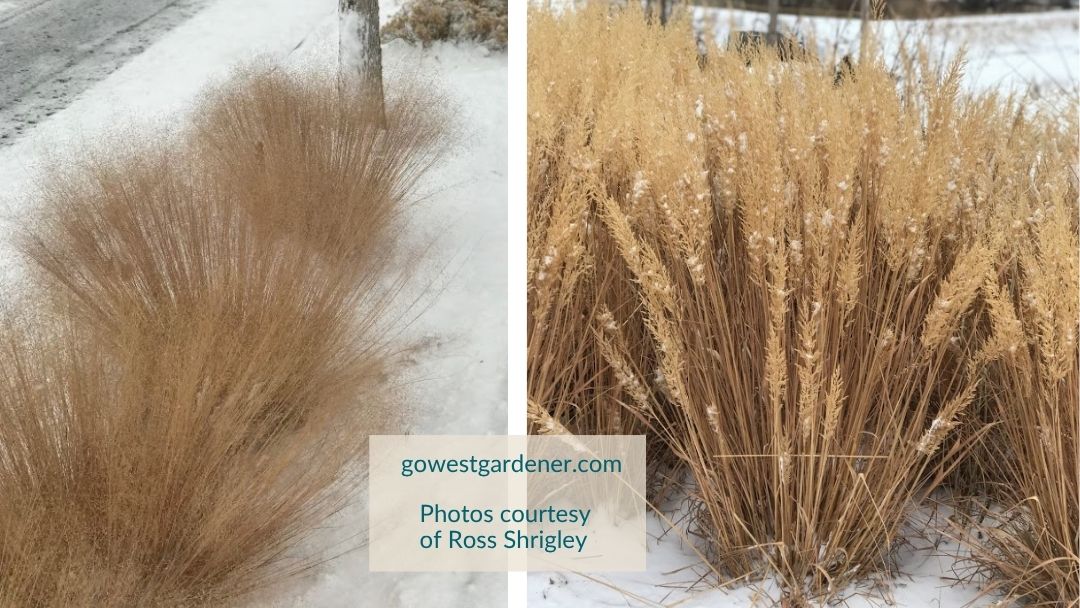
3) They tend to grow well in our poor western soils, so they’re less work.
4) Many grasses are “deer resistant.”
You shouldn’t have to worry about your grasses disappearing thanks to your neighborhood Bambi.
5) Some grasses don’t need much water, which is awesome if you live in a semi-arid climate like Colorado or Utah.
PRO TIP: Some grasses DO need regular watering, so don’t assume your grass is “drought tolerant.” Do a little research first or ask when you buy it. The Colorado State University has a useful web page explaining which grasses are low moisture versus high moisture.
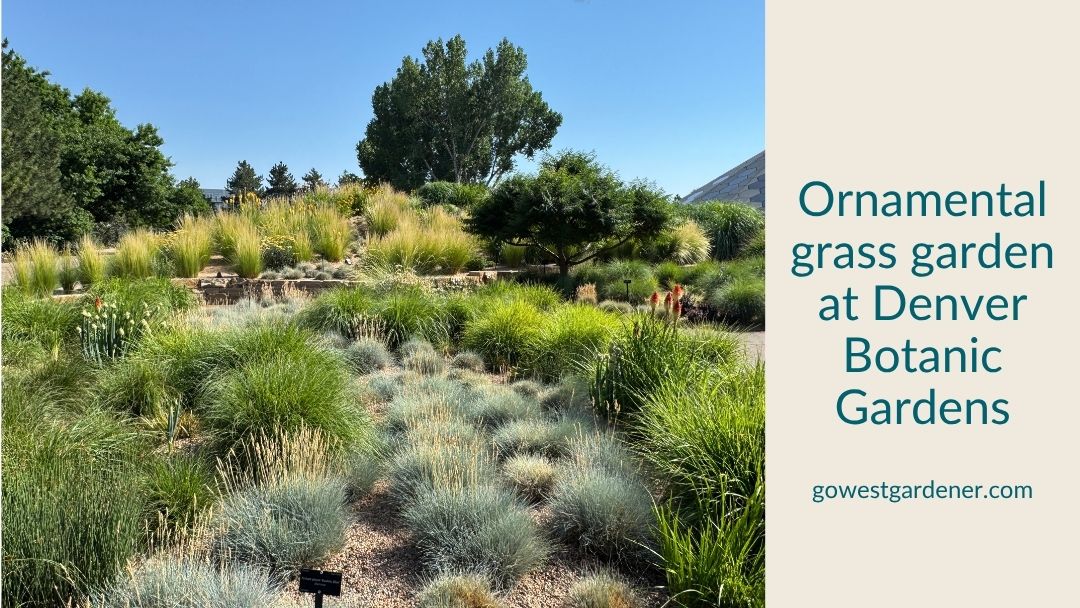
6) There are lots of interesting grasses to choose from!
You can find the perfect look: from round, mounded grasses, to narrow, column-like grasses. They come in all sizes and a range of colors, as you can see in the photo below.
While you don’t plant grasses in the winter, our coldest months are a great time to take photos of grasses you like.
When you’re out walking your dog or dashing to the grocery store, pull out your phone and snap a pic if you see grasses you think are pretty in the winter. Create a folder on your phone called “Garden Inspiration.” Add your pics to that folder.
(If you have a million photos on your phone like me, this makes it easy to find your photos when you head to the garden center.)
It’s 100% okay if you don’t know what the grasses are!
Check out this post for 5 popular western grasses and what they look like in the winter. Hopefully, this will make it easier to figure out which ones you like.
Plus, you can take your photos with you when you buy flowers in the spring. The employees at local, independently-owned garden centers are usually happy to help you identify plants.
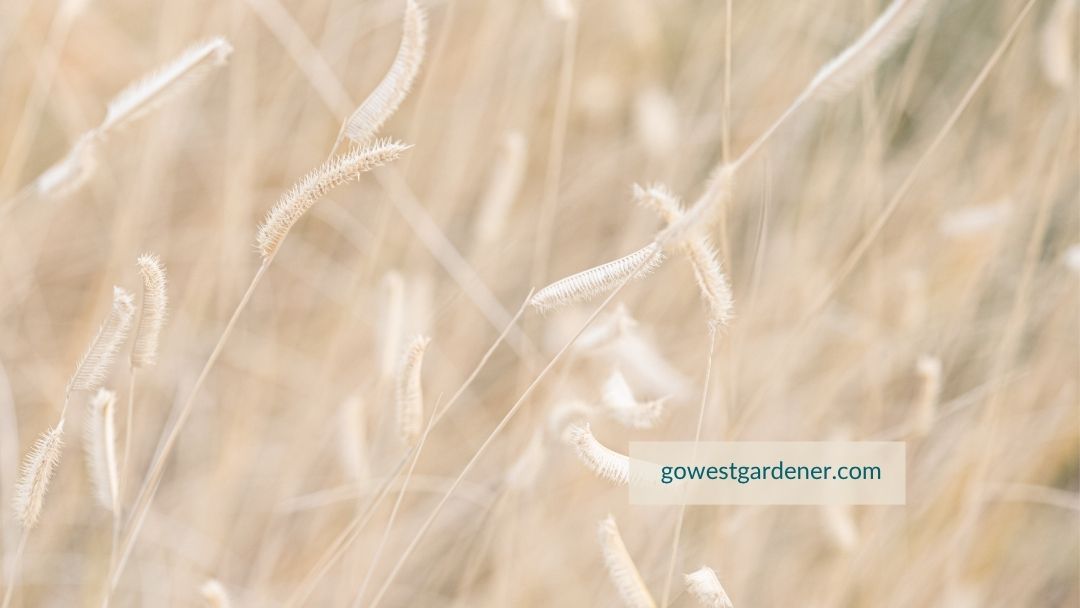
One more tip to make your garden look good in the winter…
It’s tempting to cut down your ornamental grasses in the fall to make them “look tidy.”
But it’s worth appreciating how pretty plants can look when they’re left standing over the winter. Think of winter as a fourth season of beauty.
Often times, leaving your grasses standing can help them survive the winter better too. And it can create a little habitat for wildlife, like birds.
So, if you already have ornamental grasses and you’ve been cutting them down in the fall, no worries! But next year, skip the chopped look below.

Leave your grasses standing through the winter.
Prune them in the spring when you start seeing new growth coming up. This is an easy way to make your winter garden look prettier. Plus, it’s good for the health of your garden and for pollinators too.
Related tips that may interest you:
- When’s the best time to cut back perennials in Colorado and similar states?
- 5 popular ornamental grasses for a prettier winter garden
- 3 plants that struggle in western winters (what NOT to plant in your Colorado landscape)