by Ann at Go West Gardener | Updated: May 20, 2026 | Gardening Tips and Tricks, Western Container Gardening With Flowers
You want to “clean” your petunias, so they look pretty and tidy.
But how do you know you’re trimming off the right parts? What’s a new bud versus a dying flower?
In this short video on petunia care, you’ll see get simple tips and clear photos on:
- EXACTLY what to look for on your petunia plants, so you don’t cut off the wrong parts
- The key differences between dying flowers and new buds
- What a seed pod looks like (and why you want to remove it)
And if you have flowers that look like mini-petunias — which you may know as Million Bells, Super Bells or Calibrachoa — this video can help you too.
Click above to watch.
Prefer to read?
Simply scroll down for the transcript.
TRANSCRIPT:
How to Care for Petunias, So You Aren’t Trimming Off the Wrong Parts
How do you tell the difference between a new bud and a dying flower on your petunias?
It’s not always easy to tell.
That’s what we’re going to talk about in today’s tip.
[music]
Hi, I’m Ann with Go West Gardener.
Inspiring new western gardeners to find their green thumbs with flowers.
It’s awesome that you want to clean your petunias, so they can grow new flowers for you.
But, at the same time, you want to make sure you aren’t cutting off new blooms by mistake!
First, if you are ever unsure whether you’re looking at a bud or a dead flower, I say, give it a couple of days.
Because within a few days, it should become more clear.
If the bloom is dying, the petals will look more dry and even more shriveled up.
And if they’re new buds, they’ll look even bigger, and they should have more color to them.
You’re going to see some changes.
But let’s say you want to know now.
Here are some ways to tell.
It helps to think about a petunia bloom as a torch and a flame.
The little stem is the torch and the petal is the flame.
One of the easiest ways to tell if the flower is ready to be trimmed is you will have a shriveled up flame sitting on a torch.
The petals, which we’re calling the flame, will be curved over.
They’ll often change color, getting really dark or brown or gray.
And they’ll almost feel like shriveled up paper.
Another thing you may see is just the torch.
The petals have fallen off on their own.
The torch doesn’t have any additional leaves on it.
It’s often pretty long, and it connects at the stem.
Even if the flame is gone, it helps to trim off this torch because if you don’t, the torch may begin forming a little green kernel in the middle.
This is a seed pod, and it means your flower is turning its attention away from making flowers.
And we want flowers!
Let’s look at another example.
Can you see the torches on this petunia that are ready to be trimmed?
There’s this one here.
It’s the most obvious because it has a shriveled up flame.
But you’ll also see a torch here.
Here.
Here.
And here.
These are all ready to be trimmed off the plant.
If you haven’t been trimming off the torches, the first time you clean up your petunias, you may find yourself cutting off a lot of them at one time.
It helps to trim them off as you see them.
This will help keep your petunias’ energy focused on making new flower buds, rather than going to seed.
But let’s go back to our example for a second.
There are also new buds on this stem.
Here.
And here.
What are some clues that they’re new?
You’ll often see leaves on them.
The torch is just opening up.
And often times, the torch stem is still really short in length.
Okay, so let’s talk for a second about the in-between phase when the petunia flame is either getting ready to bloom or it’s dying.
To tell if it’s a new petunia flower, there’s a lot of structure to it.
You’ll see the bud is pretty firm.
I like to think of it as being architectural.
It kind of looks like a drill bit.
You’ll see a clear structure to it at the top of the bud.
And the flower opens in a distinctive pattern.
In contrast, though, a fading bud – that’s one that’s dying – doesn’t have as much shape to it.
It’s soft, kind of a blob, and it’s starting to shrivel.
Can you see the difference?
If you’d like more ways to feel more confident with gardening in the West, please click to subscribe to this channel [on YouTube].
See you next time.
[music]
Related topics that may interest you:

by Ann at Go West Gardener | Updated: Sep 10, 2026 | Gardening Tips and Tricks, In-ground garden, Waterwise Gardening in the Intermountain West
Winter is a marathon for our plants in Colorado.
It’s an endurance test, and it can take its toll on our landscapes. Typically:
- Most of us don’t get a lot of precipitation during winter in Colorado.
- We get drying winds that pull the moisture out of plants.
- We also get wild temperature swings above and below freezing — like animated 7-year-olds riding up and down on a seesaw.
All of this is tough on our plants.
And it’s especially tough in our gardens that face south or west. These plants get warm afternoon sunshine, and then the temperatures drop at night. As the ground freezes and thaws, it creates cracks in the soil, creating little Grand Canyons. This can push our plants’ roots up. Now our plants’ roots are more vulnerable to getting cold and drying out.
And winter can go on, and on, and on…
Our Colorado gardens have to put up with a lot!
So, if you’re wondering, “Should I water my Colorado garden in the fall and winter?”
Yes, it can be a good idea for many plants if you’re having a dry fall or winter. If you’re going through a prolonged dry period, hook up a hose and give your plant babies a deep watering, so their roots stay hydrated and healthy.
Read on for specific watering tips!
What plants should you water in your Colorado garden?
New plants tend to be more vulnerable to winter stress. However, even waterwise perennials that have been growing in your garden for a number of years can experience winter dieback during drought. (Perennials are your plants that come back each year.)
If you’re pressed for time, focus your watering efforts on your:
- Trees and shrubs, especially those you planted within the last 2-3 years
- Trees and shrubs that keep their needles or leaves over winter
- Any perennials you planted in the fall
- Any perennial gardens that face south, west or are exposed to wind
There are exceptions on what to water.
Because Mama Nature makes her own rules, y’all!
Xeric plants (those that need VERY little supplemental water) that have been growing in your garden for a season or two likely don’t need any irrigation from you.

During a dry autumn and winter…
Water 1-2 times per month if:
- It’s been windy.
- Daytime temperatures have been mild (warmer than usual). Or:
- You’ve gotten less than 1″ of moisture from rain or snow.
Just as a point of reference, 1″ of rainfall usually works out to to about 12-13″ of snow. So, a dusting of snow — or even a couple of inches — doesn’t add a lot of water for your plants!
Make sure:
- Temperatures are above 40 degrees.
- The ground isn’t covered with snow.
- You water in the middle of the day when it’s warm. Mid-day watering is ideal in the fall and winter, so foliage can dry before nightfall and water can soak into the ground.
Pro tip: Make a note on your calendar or on your phone when you water. It can help you keep track.
Many parts of Colorado are in a “rain shadow.”
In the Front Range of Colorado, we live in a rain shadow of the mountains. Weather systems lose their moisture on the windward sides and tops of mountains. This casts a shadow of dryness — aka, a rain shadow — onto the Front Range.
The same thing can happen on the Western Slope. If you live in western Colorado, you can get a rain shadow effect from Utah.
So, if you haven’t gotten much moisture, temperatures have been mild, or it’s been windy in your garden this fall or winter, pull out the hose to water.
If you’d like specific watering tips…
The Colorado State University Extension has more details on fall and winter watering, including how to water your trees.
And for related topics, check out:
by Ann at Go West Gardener | Updated: May 20, 2026 | Gardening Tips and Tricks, Waterwise Gardening in the Intermountain West
Let’s say you’re thinking about planting a perennial garden in Colorado or a similar western state, so you can enjoy colorful flowers year after year. Yesssss!
Before you head to the garden center, here are a few things to know to get your western garden off to an amazing start—and some of these tips may not be what you expect.
1) Many perennials from other parts of the country aren’t the ideal fit for our growing conditions.
Growing flowers in Colorado, Utah, Idaho and similar states can be an adventure.
We have tricky soils (dirt), intense sunlight, roller coaster temperature swings, drying winds and low moisture. These conditions leave us grabbing for bottles of moisturizer and suntan lotion.
And they can be tough on plants too.
Flowers that thrive in places like the East Coast—where they get 40+ inches of moisture per year and have fertile, acidic soils—often aren’t a great match for our it-hasn’t-rained-in-2-months western gardens.
Instead, it helps to look for perennials that prefer the local growing conditions in your yard.
Before you buy flowers you know from other parts of the country (and yes, you’ll see them at the big box stores), explore flowers that grow well here. Check out websites like: PlantSelect.org, WaterwisePlants.org, and the Colorado Native Plant Society.
When you choose the right plants for the right places in your yard, you’ll be able to put your feet up and enjoy the beauty you’ve created—rather than making more work for yourself and racking up a hefty watering bill.
Speaking of watering…
2) Even drought-tolerant flowers need to be well watered their first year.
I learned this one the hard way when I planted my first perennial garden in Colorado.
Ahem.
Drought-tolerant flowers are plants that don’t need a lot of water to grow. However, they aren’t ready for our semi-arid conditions as soon as they’re planted. It isn’t instant.
Typically, they need consistent watering during their first growing season while their roots are getting established in the ground. Then, you can reduce how much you water them.
3) Buying smaller plants can (usually) give you bigger impact quickly.
Yep, you read that right.
There are perks to buying plants in smaller pots at the garden center, rather than getting the big, showy plants you see in larger containers. For example, smaller perennials with good root systems are known for getting established and growing faster than big plants.
Here’s why:
When your plants are small, they can put their energy into establishing their roots. And plants with healthy roots are more likely to survive our tough climate and push out new growth quickly.
(Not to mention… Smaller plants usually cost less and don’t use as much plastic in their containers. Win, win!)
Bigger plants, on the other hand, have more physiological stress after they’ve been planted. They have to support ALL the leaf, stem and flower growth that’s already on the plant.
And our climate doesn’t help.
Our high-elevation sunlight, semi-arid conditions and drying winds pull the water right out of them. Bigger plants can wilt or become stunted because they don’t have strong enough roots yet to support all of their above-ground growth.
So, when you head to the garden center to buy perennials, what plant size should you buy?
Denver Botanic Gardens suggests choosing perennials in quart-size containers. Quart-size containers are the pots you can hold in one hand. (You can find more of their western best practices for gardens here.)
4) Many western plants prefer soil (dirt) that isn’t rich and fertile.
Your soil—aka, your dirt—plays a big role in how happy and healthy your plants are.
In traditional agriculture, if you want to improve your soil, you typically add compost. (Compost is organic matter you can buy at the store or make at home from materials like leaves and food scraps.)
And yes, compost can be helpful, especially when you’re growing vegetables or perennials that thrive in other parts of the country, like the East Coast or the Pacific Northwest. These plants often like fertile soils.
But in western states like Colorado and Utah, this isn’t always the case. It depends on the types of plants you’re growing.
Drought-tolerant western flowers often prefer “leaner” soils that drain well. Lean soils may have a little organic material in them—but not much.
So what’s the takeaway here? If you’re planting a perennial garden in Colorado or Utah with western plants, the way that you get your soil ready will likely be different than if you’re planting a vegetable garden or a traditional perennial garden.
5) It may take a few years for your flower garden to reach its full glory. (This is normal.)
Perennials can take up to 3 years to reach their full size.
I mention this because it’s natural to plant a perennial garden in Colorado or Utah, and think, “This flower garden doesn’t look ANYTHING like my neighbors’ gardens.”
Trust the process. Your plants will grow, but it can take a year (or two) for your plants to get established.
Resist the urge to plant your flowers closer than is suggested. This will create more work for you later.
You’ll have a beautiful flower garden before you know it.
Related topics that may interest you:

by Ann at Go West Gardener | Updated: May 20, 2026 | Best Flowers for Colorado, Utah & Similar States, Gardening for Pollinators, Gardening Tips and Tricks, In-ground garden, Waterwise Gardening in the Intermountain West
Buying flowers for western gardens can feel like a lot of work.
Especially when you live in the semi-arid, gotta-have-some-moxie West — like Colorado and Utah!
This isn’t a place where you a dig a few holes, plop in some flowers and watch them grow into a lush jungle. Nope, our growing conditions can be tough on plants (and on our water supply), so we need to be smart in the flowers we choose.
Let’s say you’d like a beautiful, drought-tolerant garden, but you want to skip the hassle of figuring out flowers.
You may want to explore pre-planned gardens for Colorado and Utah instead. They’re also known as gardens in a box.
In this article, you’ll get the scoop on:
- What a pre-planned garden is
- Why they can make creating a western flower garden much easier
- Beautiful examples of pre-planned gardens that are drought tolerant
- An important tip for choosing a pre-planned flower garden

Pre-planned flower garden in Colorado. Image courtesy of Resource Central.
What is a pre-planned garden?
Typically, a pre-planned flower garden is a collection of beautiful flowers for a specific theme, like:
- Drought-tolerant flowers for a sunny portion of your yard
- Heat-loving flowers for tough, hot spots in your yard
- Pollinator gardens, like butterfly or hummingbird gardens
- Native plants that attract pollinators, like bees or birds, or
- Good plants for dry, shady spots in your yard
You receive the flowers and a suggested garden design, or you get flower seeds and guidelines on how to plant them. Then, you get the satisfaction of planting the flowers and enjoying the gorgeous results.
But you don’t have to research which flowers grow well together.
Many pre-planned gardens also take care of the plant shopping for you too.
You get the beauty without the headaches.
Think of a pre-planned garden like a dinner meal kit.
You get a chef-inspired recipe and fresh ingredients, so you can focus on the joy of cooking and enjoying every bite. But you don’t have to waste your time on meal planning or grocery shopping.
Pre-planned flower gardens usually work the same way.
Here are perks of a pre-planned garden:
- You’ll save time.
- You’ll enjoy a professionally-designed garden without the expense of a landscaper.
- Your flowers will look beautiful together. (Get ready for neighbors to stop and admire your garden!)
- You’ll often get color all season because the flowers have been specially selected to bloom at different times.
- You should have a happy garden because your flowers prefer similar growing conditions, like how much sunlight and water they need.
- You’ll likely lower your water bill and do some good for Mama Nature if you pick a garden with waterwise plants and native plants.
- You can skip trial and error and wasted money, if you feel like you’re guessing which flowers to plant and hoping they’ll grow. (Fewer dead plants!)
Check out these examples of pre-planned flower gardens for Colorado and similar western states:
1) Pre-planned flower gardens from High Country Gardens
High Country Gardens is an online garden retailer. Think of them like Zappos for plants.
They have beautiful, pre-planned gardens, in addition to selling individual plants. And many of their pre-planned gardens have been created with our tough, western growing conditions in mind.
The Summer Dreams Pre-Planned Garden, planted in New Mexico. Used with permission from High Country Gardens. You can find the plant list on their website.
High Country Gardens specializes in native and waterwise plants. They’re a good source for flower plants if you want to create a sustainable, low-water landscape. They also carry a lot of unique plants that you can’t find at local garden centers.
You can order their pre-planned flower gardens for delivery in the spring or in the fall. They often sell out, so plan ahead. Don’t wait until the last minute to order.
Check out the pre-planned flower gardens from High Country Gardens here >>
2) Gardens in a Box from Resource Central | Colorado
Resource Central is a nonprofit in the Front Range of Colorado. They help homeowners conserve natural resources, like water. They have a special, waterwise garden program called “Gardens in a Box.”
Illustration of the native Colorado Oasis garden. Image courtesy of Resource Central.
Gardens in a Box are drought-tolerant, pre-planned flowers gardens. They were designed for Colorado’s semi-arid climate and tricky growing conditions. You can choose from a variety of waterwise flower gardens — like native flowers, colorful flowers for shady areas, flowers for mountain gardens, etc.
Each “box” comes with plants and a professional design.
Pre-planned flower garden in Colorado. Image courtesy of Resource Central.
Gardens in a Box are available for planting in the spring or fall. They go on sale during the winter (for the spring) and the summer (for the fall). They’re popular and sell out, so if you’re interested, sign up to be notified when the Gardens in a Box go on sale. When you buy a Garden in a Box, you’ll choose a pick-up location along the Front Range of Colorado, so you can easily pick it up. The gardens are not delivered to your home.
Check out Gardens in a Box from Resource Central >>
If you live outside the Front Range of Colorado, check with your city or local water agency to see if they offer a similar program.
3) Seed mixes from Botanical Interests
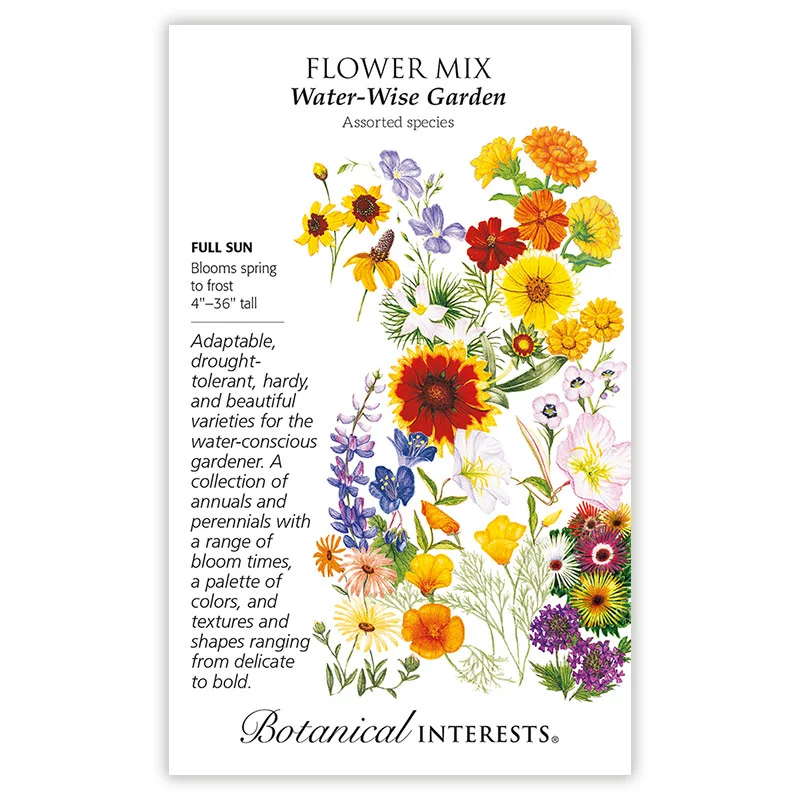
Botanical Interests is an online seed company that started in Colorado. They offer a range of flower seed mixes with beautiful flowers. In their mixes, you often can get both annuals (the one-summer-only flowers) and perennials (the flowers that return every year). And yes, they have a waterwise garden mix too, as can see below.

Image courtesy of Botanical Interests
Growing flowers from seeds has its perks:
- One, it’s rewarding to see your plant babies come up from the ground.
- Two, it’s economical. You don’t need fancy indoor growing equipment for these mixes. You just spread the seeds directly in the ground. (Don’t worry, the seed packets come with instructions!)
Depending on the flowers you’re growing, you may plant your seeds in the spring, fall or late winter.
If Botanical Interests is sold out of the seed mix you want, you can sign up to get an email when the seeds become available. You also can find their seeds at local, independent garden centers in Colorado.
Check out the flower seed mixes from Botanical Interests here >>
Image used with permission from Botanical Interests
4) Free, downloadable garden designs from Plant Select
Plant Select is a non-profit collaboration between Colorado State University, Denver Botanic Gardens and the professional green industry. This non-profit helps bring unique and sustainable plants to market that are inspired by the Rocky Mountain region.
They have free, downloadable garden designs available on their website. Many of their designs are waterwise gardens (beautiful flower gardens that need very little water).
In this case, you have to go to a garden center to buy the plants yourself, but the professional designs are done for you.
Check out the downloadable garden designs from Plant Select here >>
Before you pick a pre-planned flower garden for Colorado (or a similar state)…
Just make sure the plants work well for your growing conditions
For example, if you’re buying a pre-planned garden from an online retailer, make sure the garden is well suited for the semi-arid West.
A pre-planned garden with flowers that thrive on the East Coast or in the Midwest (where they have fertile soils and lots of moisture) may not be the best fit for your it-hasn’t-rained-in-2-months garden in Colorado, right?
If you’re ever in doubt, you can always chat with the company you’re buying from. Typically, they’re happy to help.
Related topics that may interest you:
by Ann at Go West Gardener | Updated: May 20, 2026 | Best Flowers for Colorado, Utah & Similar States, Gardening for Pollinators, In-ground garden, Waterwise Gardening in the Intermountain West
Would you like a long-blooming perennial…
… that attracts butterflies and interesting moths, gives you color all summer AND is drought tolerant?
Yes, pleasssssse!
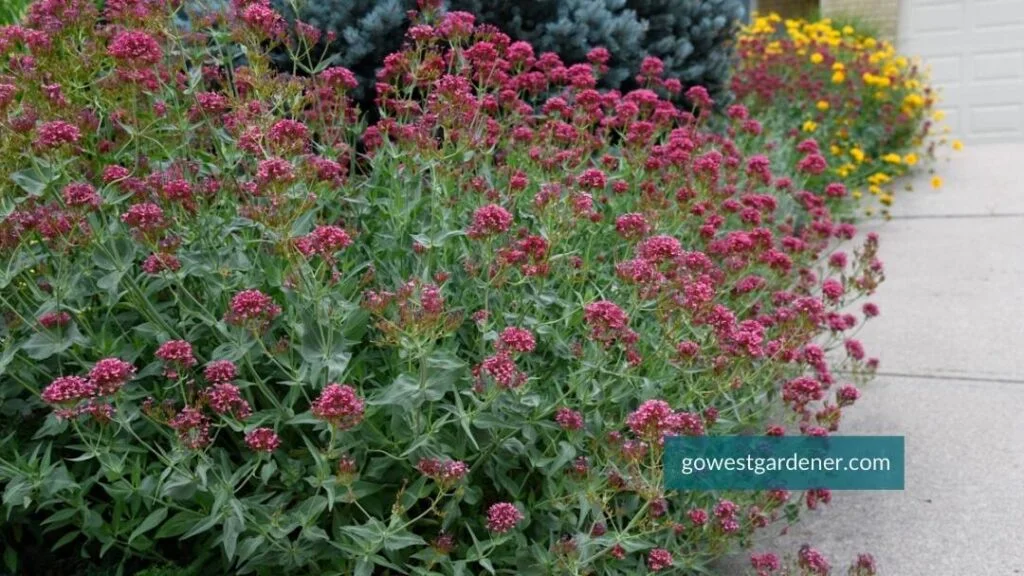
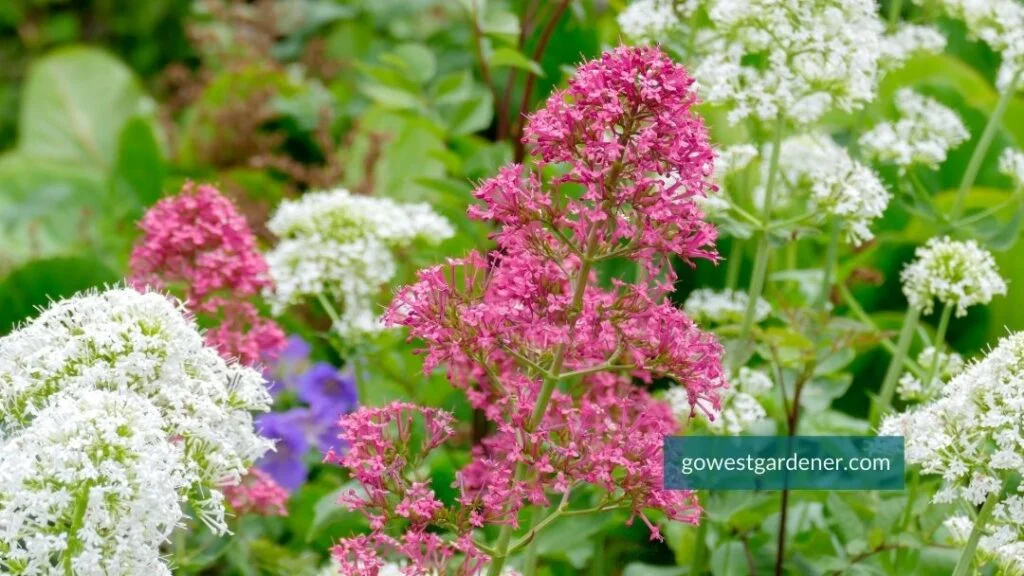
I can’t wait to introduce you to Jupiter’s Beard (aka, Red Valerian). Its botanical name is Centranthus ruber.
If you want months of color, I think it’s one of the best flowers for Colorado, Utah and similar western states. It’s one of my favorite perennials. (Perennials are the flowers that come back year after year.)
Here are a few reasons to add Jupiter’s Beard to your garden.
This flower plant is:
- Easy to grow
- Colorful and showy
- Drought tolerant (you don’t have to water it much once it gets established in your garden—awesome for semi-arid states like Colorado and Utah)
- Tolerant of hail (it bounces back quickly from light hailstorms)
- Resistant to nibbling deer and rabbits (they tend to skip it for munching)
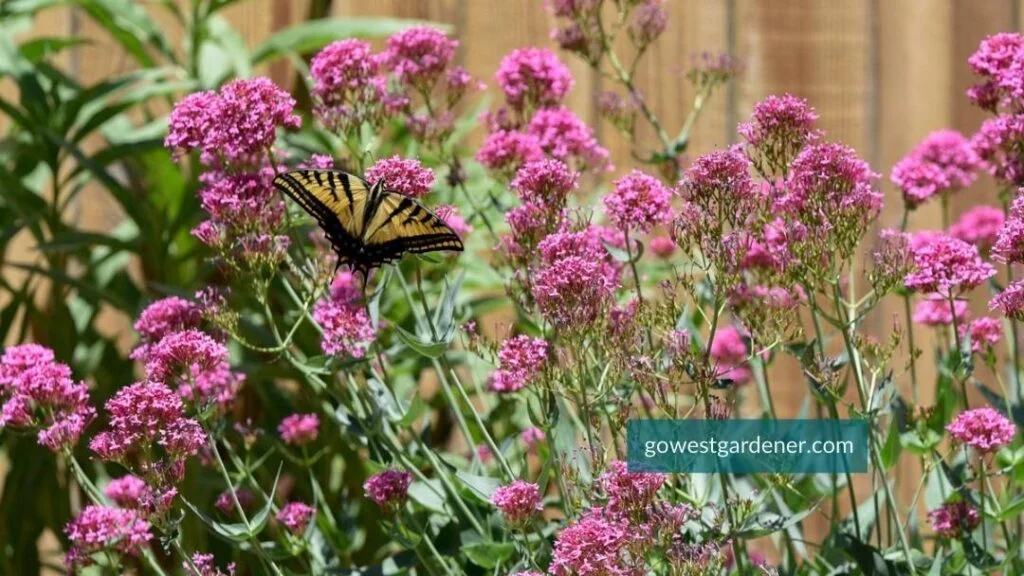
Plus, it’s a MAGNET for butterflies and interesting moths.
I constantly find myself heading back into my house to get my camera because there’s a new butterfly dancing across its flowers.
“Oh, hey there, Swallowtail butterfly!”
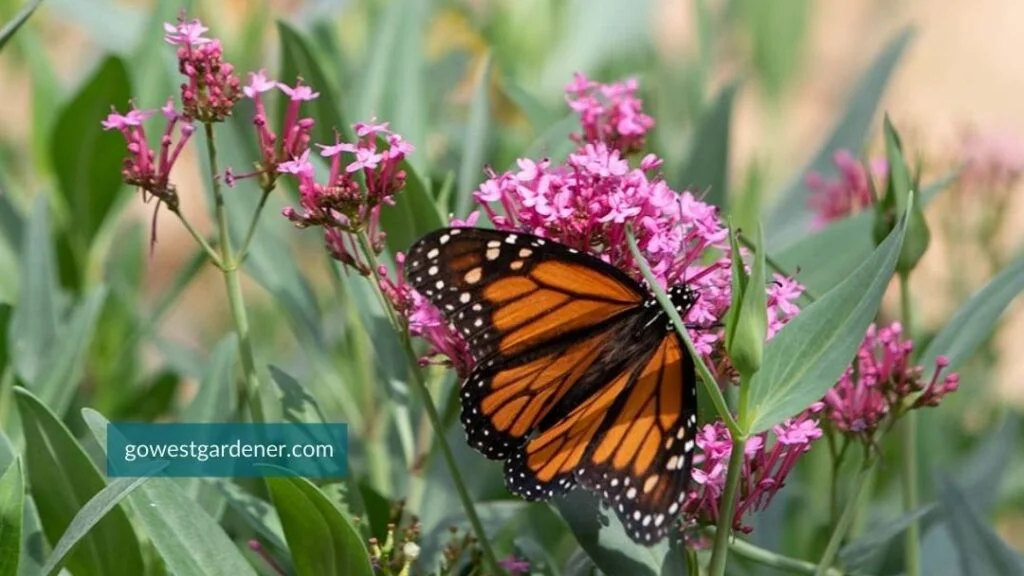
The Monarch butterfly in the photo below visited my Jupiter’s Beard plant in October.
(Yep, flowers and butterflies well into October!!)
And its color goes on, and on, and on …
When you’re planning a perennial garden, I think one of the biggest challenges can be finding flowers that give you showy color for a long time. Most perennials only bloom for a few weeks, and then they’re done for the season.
The beauty of Jupiter’s Beard is that it will keep pushing out new flower blooms over the whole summer.
The only catch is that you need to keep up with trimming off the faded blooms, so new buds can grow in.
And if you don’t trim off the dead blooms?
Well, this happy-go-lucky plant will send its seeds EVERYWHERE.
It’s like a birthday card with glitter on it. No many how many times you vacuum, you keep finding more glitter.
Friends, the seeds on this plant are like glitter.
So, put Jupiter’s Beard in a spot you want to fill in with more flowers OR be diligent about trimming off the dead blooms.
You can find Jupiter’s Beard with red, pink or white flowers.
The red variety is more of a dark pink than a true red, but it’s still very pretty.
Jupiter’s Beard is happiest when it gets a lot of sunshine (6+ hours/day).
It grows well up to elevations of about 9,000 feet.
And if you’re familiar with plant hardiness zones (which tell you whether a plant is likely to survive winter temperatures in your area), Jupiter’s Beard typically grows well in gardens in zones 4-9.
Do you live outside the intermountain west?
If you live in another region of the country, ask at your local garden center whether Jupiter’s Beard can be grown where you live.
Jupiter’s Beard can spread aggressively in maritime regions (like the West Coast), so there are places where it isn’t allowed.
Related tips that may interest you:
by Ann at Go West Gardener | Updated: Jan 28, 2026 | Gardening Tips and Tricks
Looking for fun gift ideas for flower lovers in the West?
You’ll find 11 of the best gift ideas for flower lovers below — perfect for holidays, birthdays, Mother’s Day, Father’s Day and more.
And if you’re looking for gardening gift ideas for yourself… well, then, share this article with friends or leave it out on the kitchen counter where your honey can’t miss it.
(Wink, wink!)
Botanic Garden Tickets, Classes or Memberships
Share the experience of exploring beautiful gardens
If your idea of the best garden gift is an experience (rather than stuff), may I suggest a membership to a local botanical garden?
Taking time to explore beautiful gardens is a fun and relaxing way to discover flowers that grow well in our semi-arid climate. Not to mention, being outside in nature has shown to lower stress. Yes, please!
Want to keep it simple? A one-day ticket is a good gift idea for a flower lover too. You could meet up to stroll through the gardens and then head out for drinks or dinner.
Here’s how to find western botanic gardens near you >>
Pretty, Metal Plant Markers
Keep track of plants in an attractive way

Photos courtesy of Gardener’s Supply Company / gardeners.com
Plant markers come in handy for all kinds of reasons — from remembering the names of flowers, to keeping track of where you planted your spring bulbs (like tulips and daffodils). X marks the spot!
But the plastic plant tags you get when you buy your flowers can break easily, get buried or blow away. Plus, they aren’t that pretty.
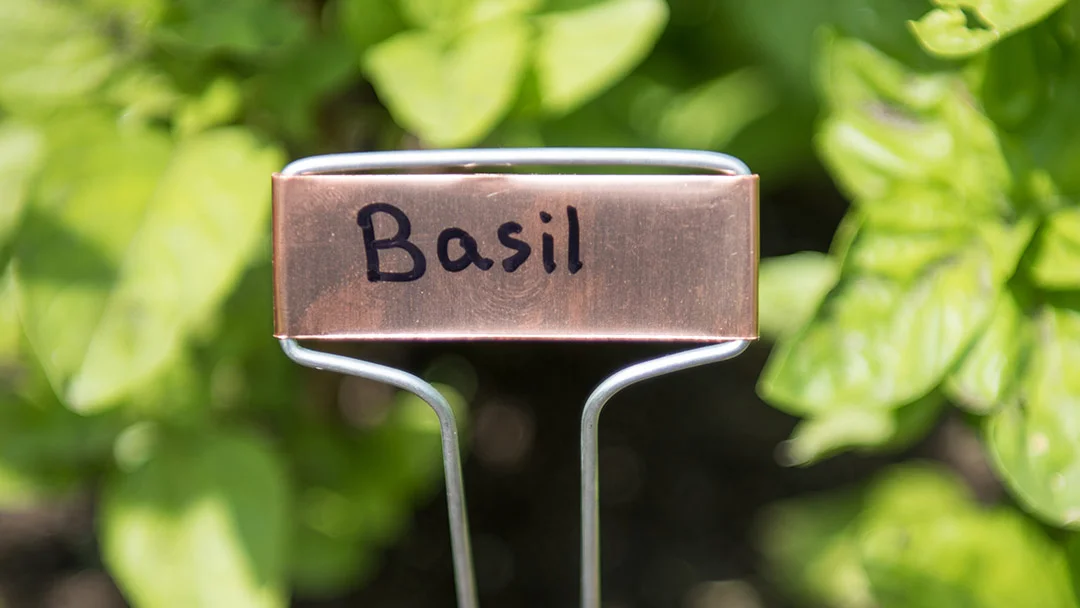
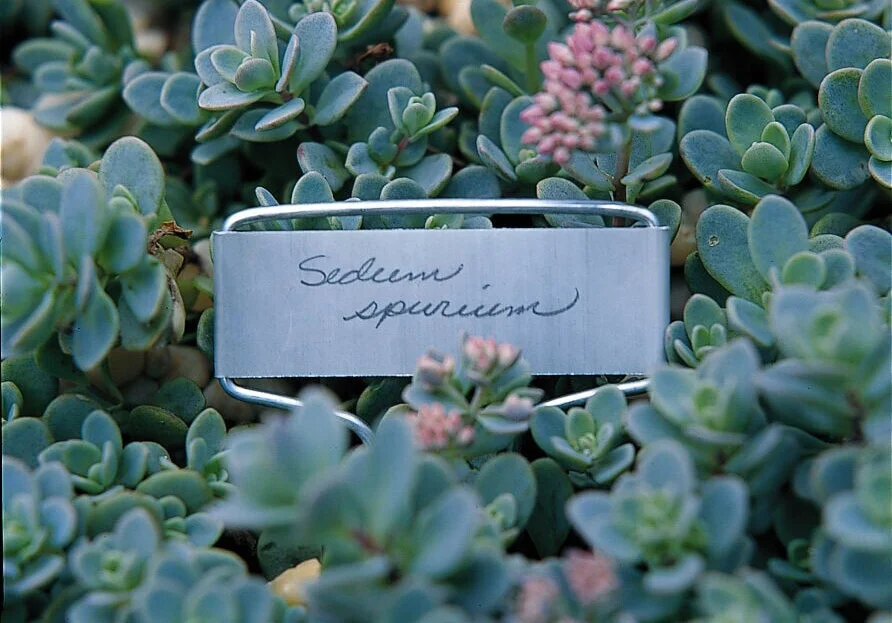
Gardener’s Supply Company has come up with a good solution: metal, weatherproof plant markers that are attractive, as well as functional. Made of galvanized steel, these plant markers are 10″ long, so they’re easy to stick into the soil and they’ll last a long time. You can choose either a copper label tag or a zinc-coated label tag.
Give copper plant markers or steel plant markers as a gift to your favorite flower lover!
Flower Photography Classes
Inspire an artistic soul
One thing I’ve noticed about flower lovers is many of us enjoy taking photos of our plant babies.
If your favorite flower gardener would like to get better at taking artistic photos of flowers, there are online classes that can help. For example, Click Photo School has a variety of online training courses to help people channel their creativity. They offer a self-paced course called Macro Style: Finding Beauty in the Details. It’s designed to help students improve their skills with “macro” photography, such as taking close-up photos of flowers.
These types of classes would be a good gift idea for flower lovers who have basic knowledge of how to use a DSLR or mirrorless camera.
These classes probably aren’t the right fit for someone who primarily takes photos with a phone. But worth noting: Click Photo School also offers beginner classes on how to get started with photography.
Gift Cards to Local, Independent Garden Centers
Give the joy of flower gardening
To be clear, I’m NOT talking about a gift card you pull off the rack for a home improvement store. Nope, nope, nope! Step away from the gift card kiosk.
I’m talking about getting a gift card for a local, independent garden center — a store that specializes in plants and flowers. Think of these stores like book shops for people who love to read. To find an independent garden center near you, simply search for: local garden center in [your city or area] or plant nursery in [your city or area].
Prefer something online instead? There are online garden centers. (Yep, they’re a thing!) High Country Gardens is an online retailer of flower plants that are ideal for the western United States. You can find High Country Gardens e-gift cards here. And Gardener’s Supply Company has all kinds of wonderful garden gadgets and supplies. You can find Gardener Supply e-gift cards here.
The flower lover in your life can use this gift money to buy flowers, pretty flowerpots, garden art, special garden tools… Sooooo many ways to spend that money, so little time!
Packets of Flower Seeds
Grow beautiful flowers from a pretty packet of seeds
Seed packet illustration courtesy of Botanical Interests
How much joy can come from a little packet of seeds?
A LOT.
Seeds make fun hostess gifts and stocking stuffers for flower lovers.
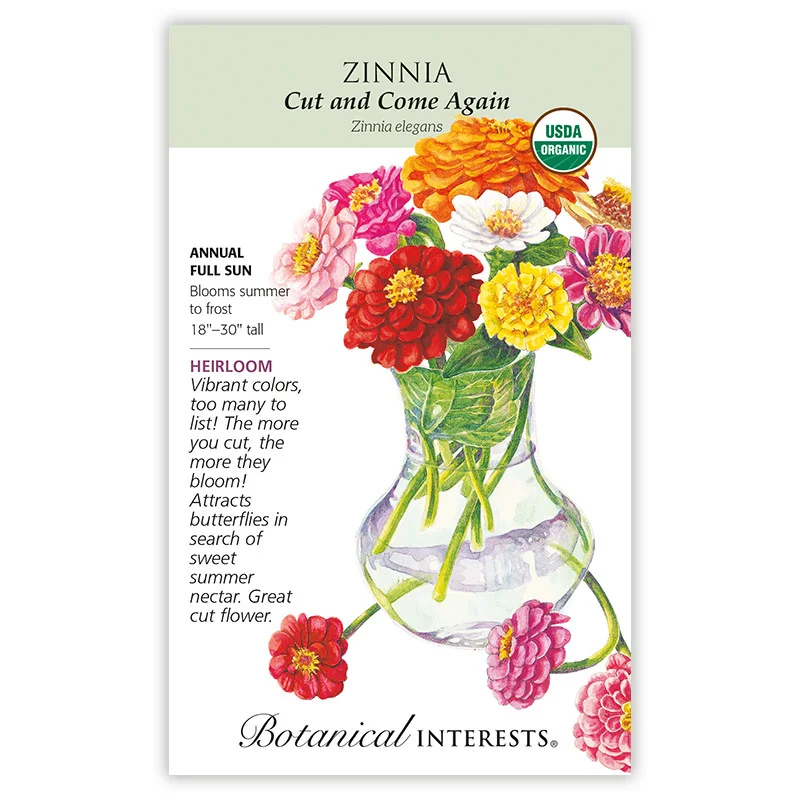
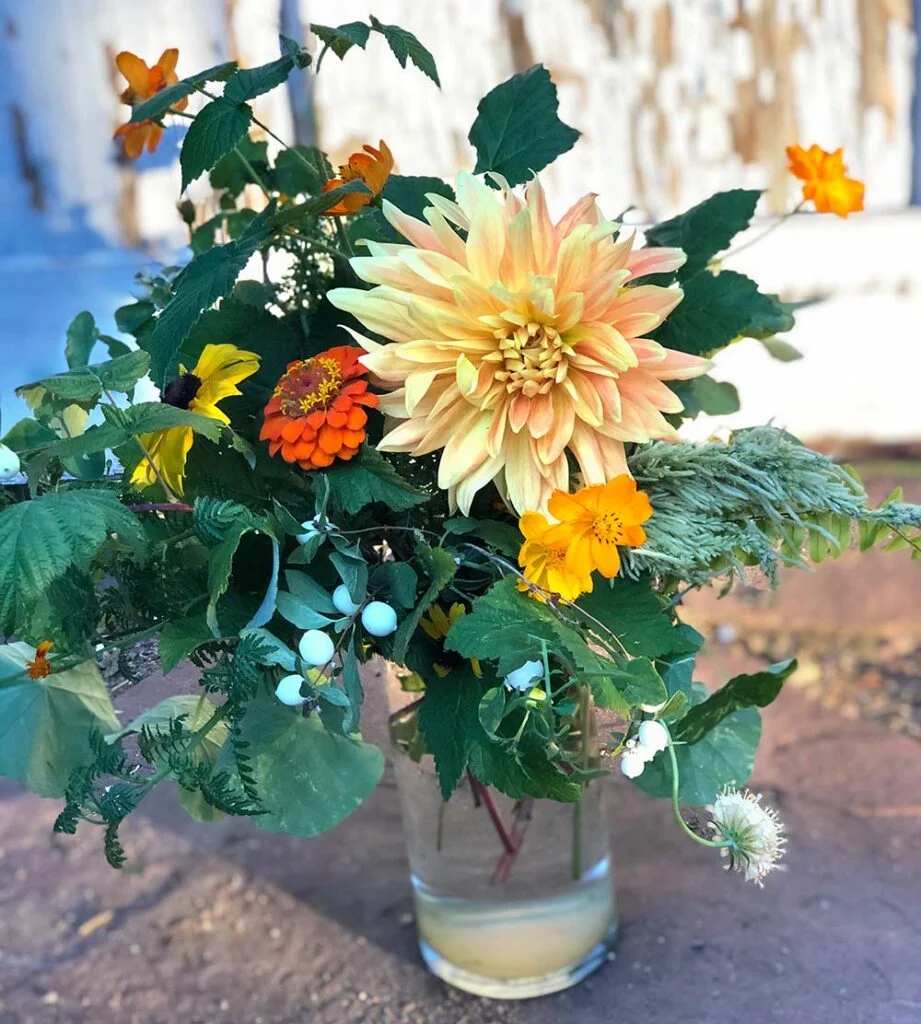
If you’re new to choosing flower seeds, I suggest zinnias. Unlike many seeds, zinnias can be grown right from the ground, so they’re easier to grow. Zinnias are native to Mexico. This means they’re heat tolerant, which is awesome for our hot summers in Colorado, Utah and similar western states. These flowers offer vibrant color for one summer, but typically won’t return. Best of all, zinnias make beautiful “cut flower” arrangements. You can cut them, put them in vases and watch as even more blooms fill in!
In the photos below, you’ll see the “Cut and Come Again” zinnias I grew from seeds last summer and my last bouquet of the season. (There are a couple of cosmos flowers tucked in the bouquet too.)
I get many of my seeds from Botanical Interests. They’re a seed company with Colorado roots. Each of their seed packets comes with gorgeous illustrations and helpful instructions. Their seed packets are little works of art — so they make good flower gardener gifts!
Botanical Interests sells seeds to gardeners across the country. So, if you want to buy flower seeds, just make sure you’re choosing flowers that are a good fit for where you live. (They have great customer service and are happy to help.)
Shop zinnia seeds here >>
Cute Shirts for Flower Lovers
Show the world you’re a plant mom (or plant dad)

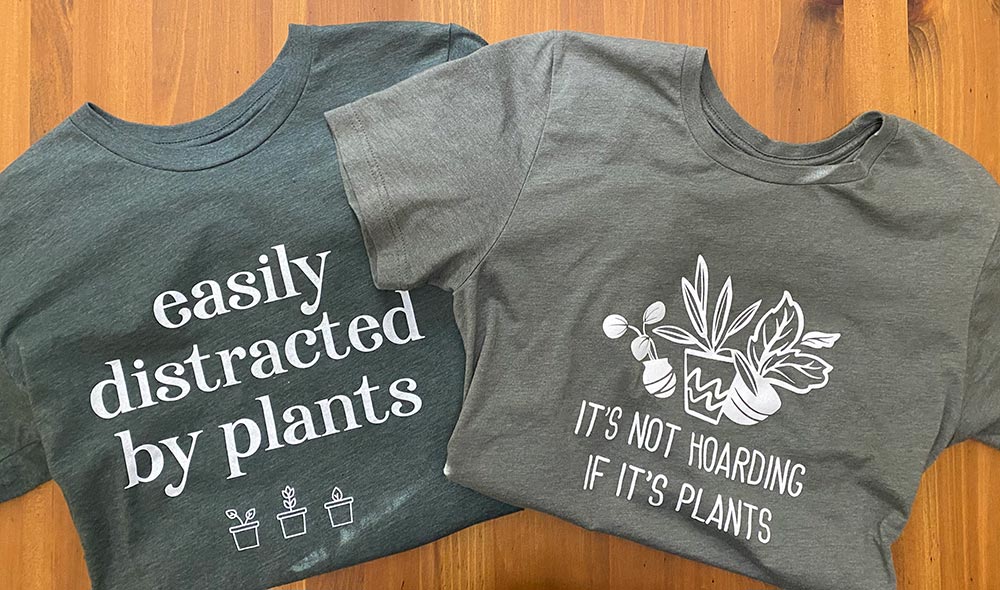
Shirts for plant lovers (above): Piper & Ivy
I love a cute plant shirt. A friend of mine introduced me to Piper and Ivy with a “just because” gift, and I’m hooked.
Check out the plant lover t-shirts from Piper and Ivy here: Easily distracted by plants + and other plant lover shirts >>
Plant Books for Western Gardeners
Discover flowers that thrive in our semi-arid climate
In my opinion, one of the trickier things about gardening in the semi-arid West is figuring out which flowers, shrubs and trees grow well here. Many plants from other parts of the country don’t like our growing conditions — or they’re gas-guzzlers for water.
One of my favorite books for discovering beautiful, drought-tolerant plants is called: “Waterwise Plants for Sustainable Gardens.” This book is ideal for gardeners of all levels — from new gardeners to avid gardeners. It contains helpful photos and lots of inspiration.
Sometimes, you can find this book at local, independent garden centers. Or shop for the book online here >>
Floral Snips
Keep flowers looking pretty and tidy
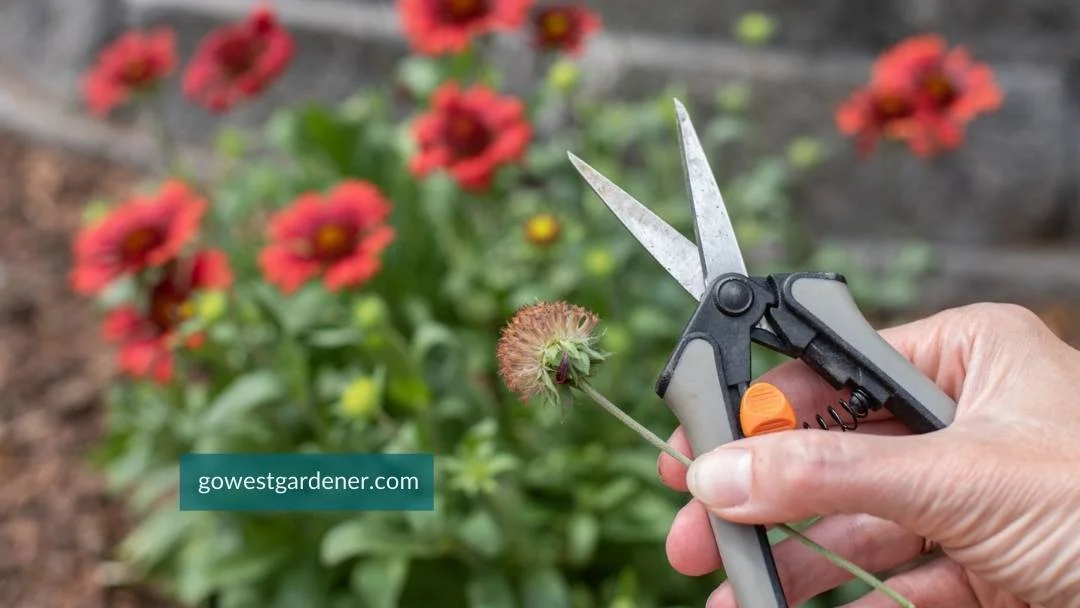
Floral snips are like scissors for plants. They’re a good gift for flower gardeners, especially new gardeners. Floral snips make it easy to trim off dead blooms, so new flower buds can grow in. Best of all, you can be really precise in your cuts, so you don’t accidentally remove more of the flowers than you intended.
I keep a pair of floral snips near my back door in the summer. That way, I can grab them when I walk outside and quickly tidy up my flowerpots and garden beds. Snip, snip, snip!
You can find floral snips at your local garden center and on Amazon.
Local Flower Bouquet Subscriptions
Brighten a home with fresh and unusual bouquets


Photos courtesy of Piper’s Lane
If you’re looking for creative or unusual gift ideas for flower lovers, give a subscription to a local flower service.
(Imagine having a bouquet of freshly-cut flowers on your kitchen table each week during the summer. Ahhhhh!)
These aren’t your same-old, same-old bouquets from the grocery store. I’m talking about fresh and unique bouquets from a local flower farmer. These flowers:
- Smell wonderful because they’re freshly picked from the garden
- Contain unusual flowers you just can’t find in store bouquets
- Have been grown close to you rather than flown in from South America, which is where many of the store bouquets come from
If you live in the south Denver area, definitely check out Piper’s Lane. The founder, Kristen, has an urban farm and offers a local, flower bouquet subscription service. Kristen’s beautiful bouquets are made up of unique and seasonal flowers that are grown from seed without chemicals. You can choose from several types of subscriptions (which Kristen calls “shares”) in the spring, summer and/or autumn. You pay in advance. Then, you simply pick up your flower bouquets on your designated weeks.
Live someplace else?
To find local flower farmers near you and explore their unique services, check out the Floret flower farmer network.
Decorative Garden Art
Add a pop of color to flowerpots and garden beds


Photos courtesy of Iron Bird Salvage
Gotta love a little garden bling!
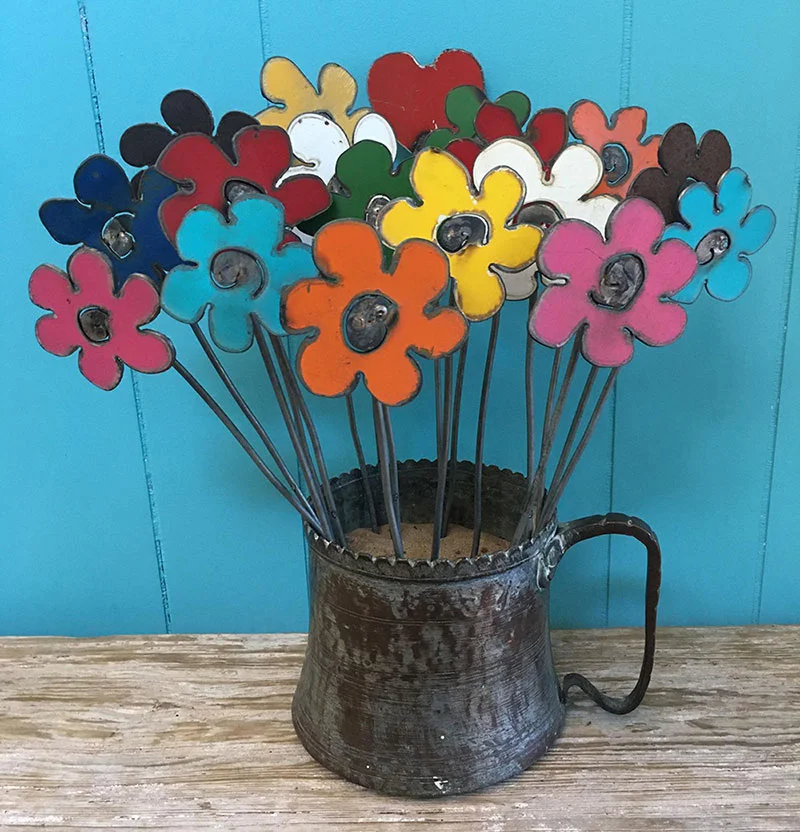
These rustic, metal flowers from Iron Bird Salvage look super-cute tucked in flowerpots or planted in the garden. I have several “bunches” of metal flowers in my shade garden. They add a pretty pop of color, and friends always ask about them.
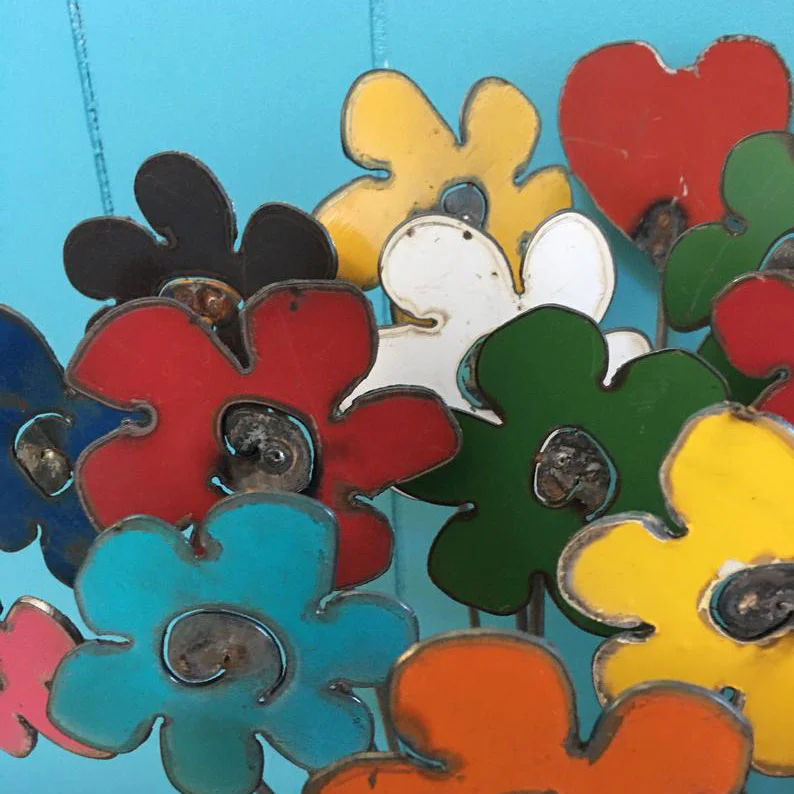
These flowers may look painted, but they’re actually made out of recycled materials, like old wheelbarrows, toolboxes, wagons and more. Each flower is the color of the reclaimed metal item it’s being made from. You can buy as many flowers as you like, and you get to choose your colors.
The flowers are cut by hand, so they’re all unique. And because they’re made from reclaimed metal, they have imperfections. That’s part of the rustic charm.
They make fun gifts for flower lovers!
Shop for these decorative metal flowers here >>
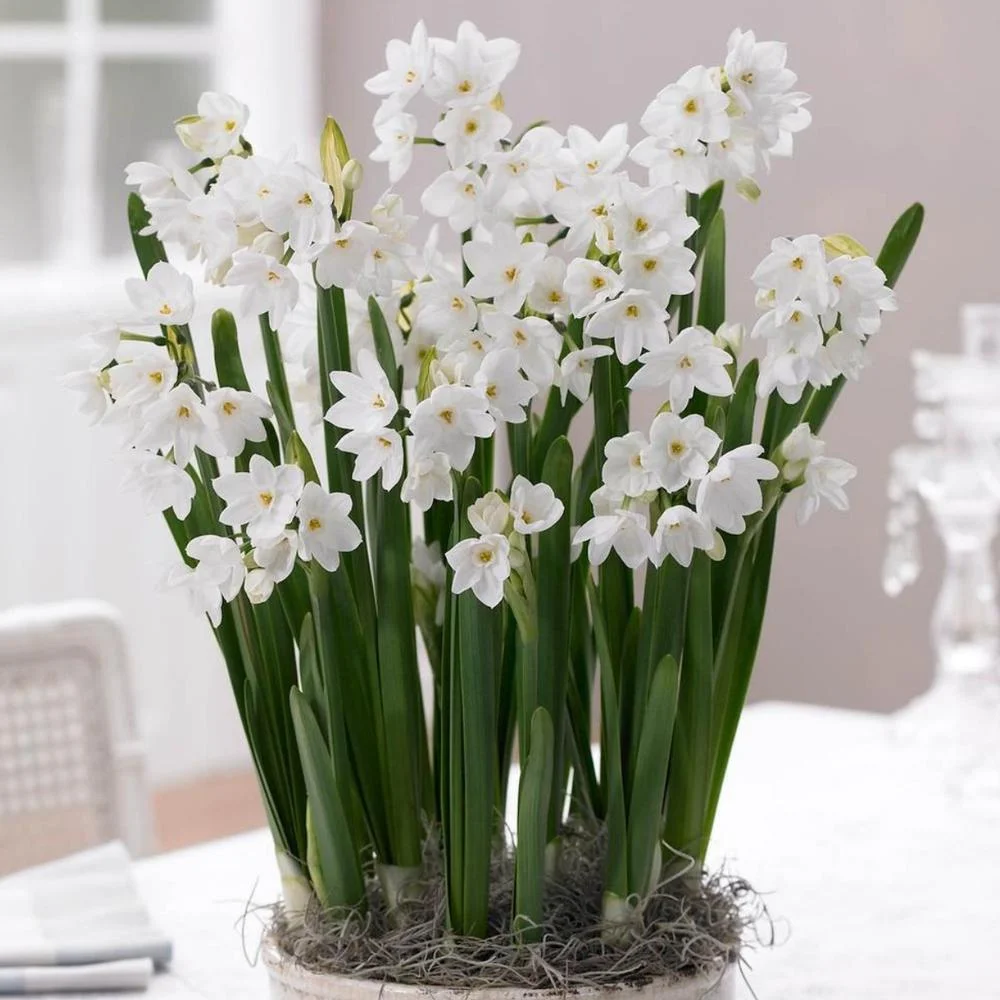
Paperwhite Bulbs (Narcissus)
Brighten up winter with these beauties

Photo courtesy of Longfield Gardens
Brighten up a looooong winter with the gift of paperwhite bulbs. These flowers are easy to grow inside during the winter. (Yep, indoor winter flowers!)
Check out the Longfield Gardens website to:
Happy gifting!
Related topics that may interest you:
Was this article helpful to you? Please share it!
by Ann at Go West Gardener | Updated: Sep 10, 2026 | Flower Garden Basics
Have you noticed…
… that some of your plants are overachievers in the spring—eager to emerge from the ground in all their leafy glory? Meanwhile, other plants don’t seem to be doing much AT ALL.
As plant lovers, it’s natural for us to look at the latter and wonder:
Hey, are you even alive?
Did we do something wrong?
Wait, are you ghosting us??
The biggest culprits are often ornamental grasses.
Ornamental grasses are the showy grasses you plant in your garden for year-round interest.
Some grasses burst from the ground in the spring looking all green and lush.
Others? Not so much.
They’re more like teenagers on a Saturday morning: S-L-O-W to wake up.
I had a neighbor stop me in April and glumly share: “I don’t think my ornamental grasses made it through winter.” (I think she took it personally.) But nope, her grasses are alive and well! Just slow to wake up.
So, if you’ve ever wondered, “Why aren’t my ornamental grasses growing?”, here’s a helpful thing to understand about grasses.
Some grasses grow when temperatures are mild. These “cool season” grasses are off to the races in the spring. Then, they can go dormant when it gets hot, meaning they aren’t actively growing over the summer.
Other grasses are in their happy place in the heat. These “warm season” grasses green up when it gets hot, like in the late spring and summer.
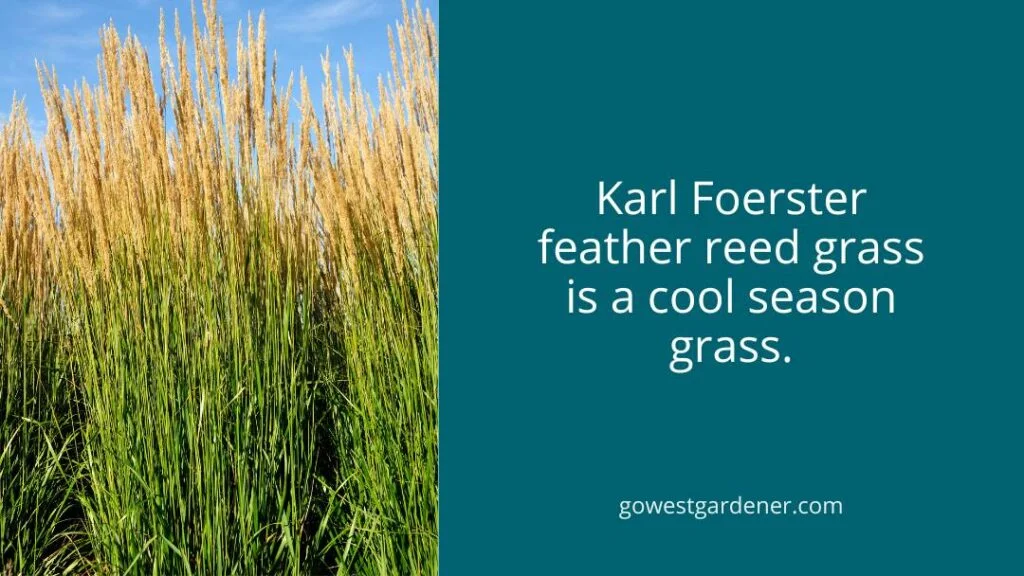
Here are examples of cool season grasses
You may recognize the ornamental grass below: Karl Foerster feather reed grass. It’s used in a lot of landscapes. It’s a popular ornamental grass that thrives in mild temps. It can go dormant in the summer heat.
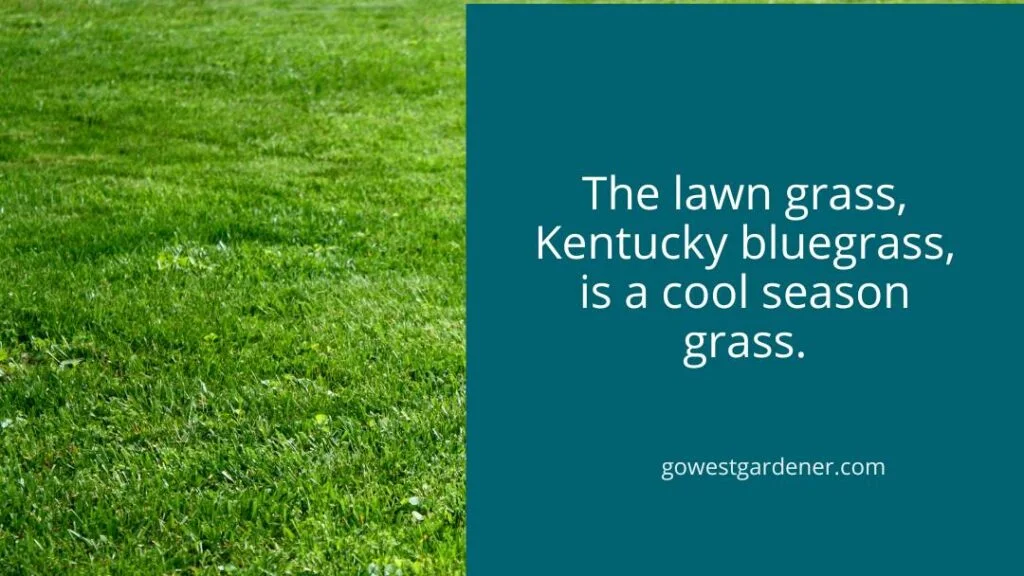
The lawn grass, Kentucky bluegrass, is a cool season grass too. It grows in cooler temps, and it can go dormant in the summer heat.
Here are examples of warm season grasses
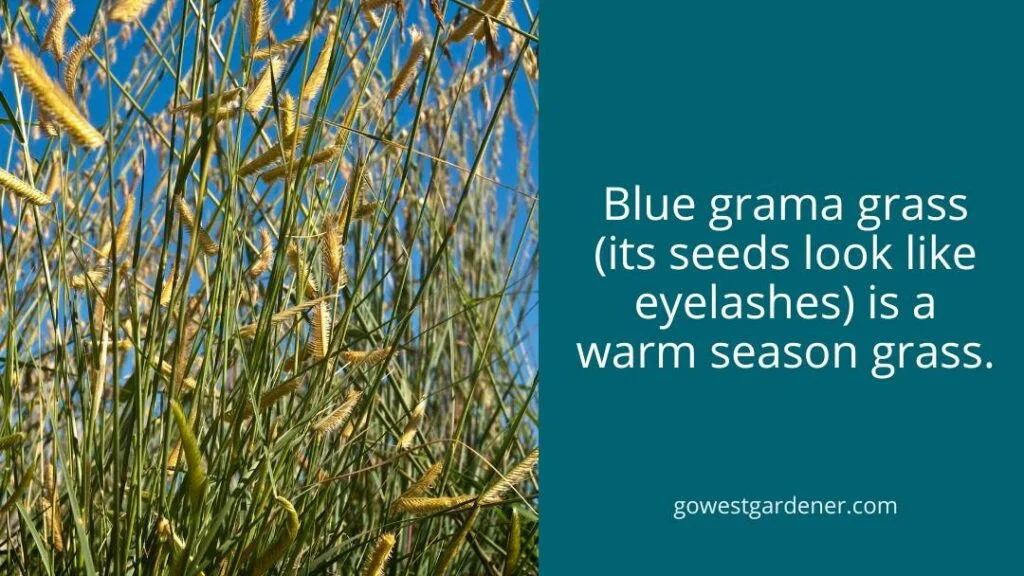
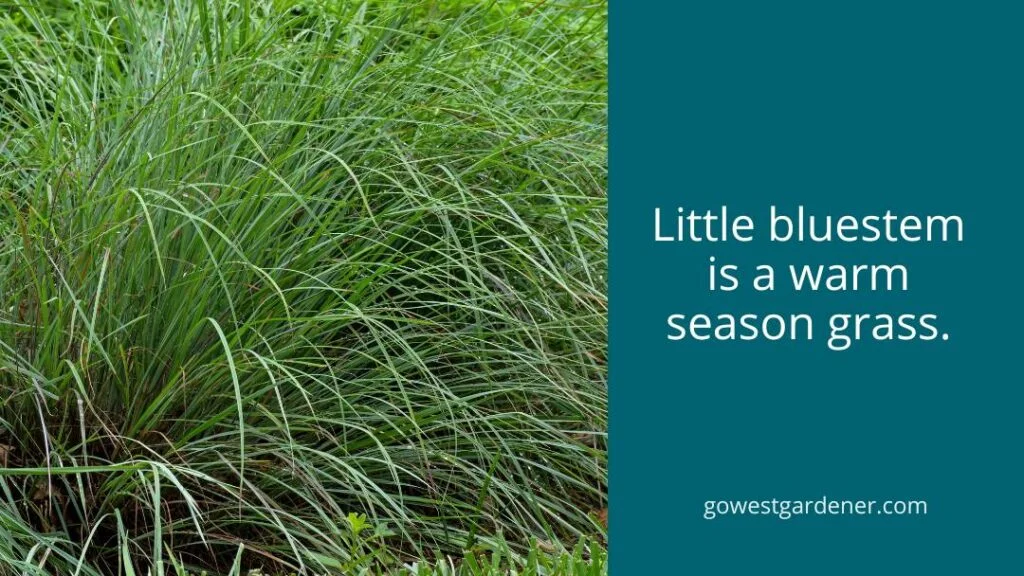
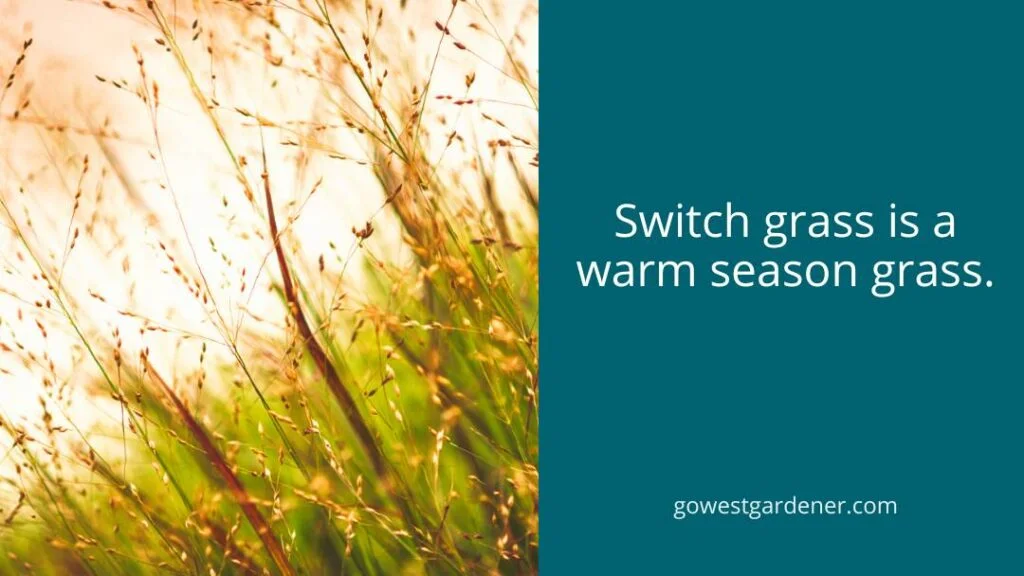
Little bluestem grass, blue grama grass, and switch grass are all examples of warm season grasses. They thrive in the heat.
So, if your ornamental grasses aren’t growing in the spring…
They may be warm season grasses that are waiting for the heat.
If your ornamental grasses aren’t growing in the summer…
They may be cool season grasses that have gone dormant in the heat. They may be waiting for cool temperatures to return.
The Colorado State University Extension has a table that notes which ornamental grasses are cool season and which are warm season. You can use it to check the grasses in your own garden. (Unfortunately, the chart doesn’t have photos, so you need to know what kind of grasses you have. If you saved your plant tags, great!)
If you’re interested in the science behind cool and warm season grasses, the University of Illinois Extension has a quick write-up.
Related tips that may interest you:
by Ann at Go West Gardener | Updated: Jul 6, 2026 | Gardening Tips and Tricks, In-ground garden, Waterwise Gardening in the Intermountain West, Western Container Gardening With Flowers
Many years ago, I cheered on a friend as he ran a local marathon. As my friend began running, he looked like he belonged in a Nike ad: Strong. Healthy. Determined. Just do it, baby!
And he set a great pace until about mile 16 …
… when heat and exhaustion caught him like a cat chasing a mouse. Life decisions were questioned. (Was a burrito really the best decision for breakfast?) He was doing the best he could, but he was digging deep.
I find myself thinking about mile 16 as we slog through heat waves in our western gardens.
Temps are blazing. Weeds are thriving. Critters, like Japanese beetles, are munching. And munching. And munching.
It can feel a little exhausting. Garden decisions are questioned: Was it really the best idea to impulse-buy flowers in the last 2 weeks? (Asking for a friend. Ahem.)
Heat waves are an ideal time to talk about how to garden smarter, not harder.
If you find yourself gardening in the heat, here are 5 ways to keep the beauty coming with less effort.
1) Make sure your flower garden has at least 1-2″ of mulch.
Mulch is your friend when you’re gardening in the heat. It keeps your plants’ roots cooler. (Happier plants!) It keeps your plants hydrated. (Less watering!) It helps suppress weeds. (Less work!)
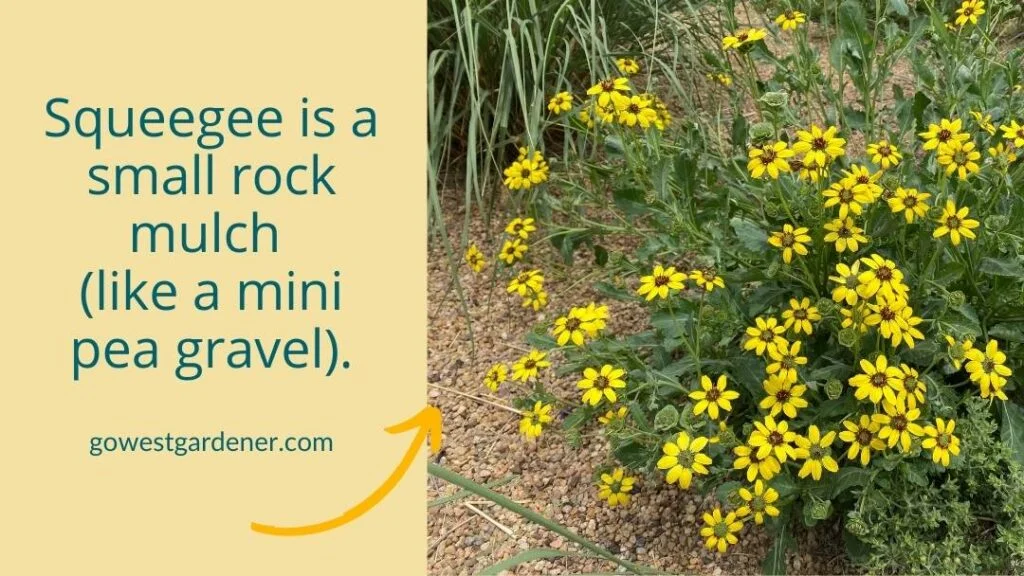
If you aren’t familiar with mulch, it’s a material you put on top of the ground—like small wood chips or “squeegee,” which is a smaller form of pea gravel.
You can even put mulch in a flowerpot if you want.
I use a few different materials for mulch, depending on the plants. Some of my gardens have mini-bark (small wood chips). Some have “soil pep” (a very fine wood mulch). I like these smaller wood mulches because they break down more easily than big, chunky wood mulch, adding organic material to my garden beds. They’re less likely to soak up water like big, chunky wood mulch. I also think they look better, but that’s just personal preference.
In my more xeric gardens (the low-water gardens), I use squeegee as a mulch. It drains well, and it doesn’t add organic material to the ground. Many low-water plants like “leaner” soil, meaning it isn’t rich in organic material.
2) Snap a few pics of your flowers on your phone.
Take note of which flowers look like champs in the heat, which plants are limping along, and which flowers are guzzling water like a 6-year-old chugging juice boxes.
At some point, you may wish to replace the strugglers and water guzzlers with flowers that thrive in our western heat and drought. That way, you can spend your time sipping chilled beverages and dazzling your friends with how fab your garden looks.
You can find western flower ideas here.
3) Focus your energy on newly planted flowers.
Have you popped any plants in the ground or in your flowerpots in the last 4 weeks? Those plant babies need more attention in the heat. Heck, even low-water plants need frequent watering their first season, so they can establish healthy roots.
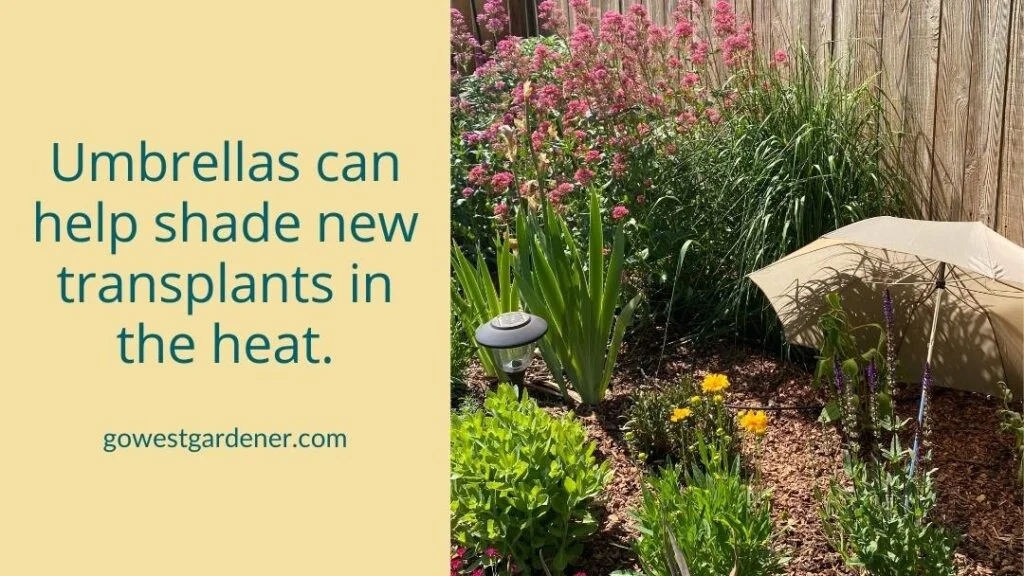
For your in-ground plants, I’ve found that rain umbrellas make wonderful sun shields for new plants in extreme heat. Just make sure it isn’t windy. (Learned that one the hard way!)
You also can use shade cloth, which you can find at garden supply companies.
Another tip… Plant small, landscape flags next to your new plants during their first month. That way, you’re less likely to overlook them or forget to water them, especially if they’re tucked in among bigger plants.
When temps are blazing in months like July, it’s a good idea to check newly planted flowers every day (for the first 4 weeks or so) to see if they need water.
And consider trimming off the flower blooms on your newly planted perennials (the plants that come back every year). Snip, snip!
You may be thinking, “Wait, whaaaaat??”
I know that sounds a little crazy. You probably bought the plant BECAUSE OF the pretty blooms. But cutting off the flowers can allow your new plants to focus their energy on establishing good root systems in the heat.
4) Be smart with your flowerpots.
If possible, give your flowerpots a good soak in the morning by 10 am. Watering in the morning reduces evaporation, and it helps keep your flowers hydrated through the day.
Some flowers in your pots may wilt from heat, rather than just from lack of water. (I’m looking at you, Sweet Potato Vine.) Before you water, make sure the soil (dirt) in your flowerpots actually needs water, so you don’t overwater your flowers by accident.
You may want to move any flowerpots that are struggling in the heat to a shadier spot for a few days, if you can.
5) Find efficient ways to water your garden.
For example, check out drip irrigation. Drip lines are thin, little hoses that run near your plants’ roots. Drip systems are 90% efficient, compared to sprinkler systems which are only 50%-70% efficient, says the Colorado State University Extension.
If you use pop-up sprinklers, look into switching to “MP rotators,” rather than traditional spray heads. MP rotators send out multiple streams of water like little Bellagio fountains. They are more efficient than regular spray heads.
Do you have clay soil—dense, sticky dirt that’s common in many parts of the intermountain west?
If yes, it helps to get in the habit of watering your established plants deeply and infrequently, instead of giving them quick, daily splashes of water. This encourages your plants to grow deeper roots, so their roots can find water in the ground. (Read: Less work for you.) Use your best judgment, of course. If your plants need water, then water them.
Stay strong! Stay cool! You’ve got this!
Related tips that may interest you:
by Ann at Go West Gardener | Updated: Jul 6, 2026 | Gardening Tips and Tricks
There is no perfect gardener, no matter what your neighbor up the street with the pristine landscape wants you to think.
So, if you have a flower plant that looks sick, is struggling or is dying, take heart. It happens to everyone.
(Yes, even to your neighbor. Though, she may not admit it!)
Flowers can get stress, weather issues, disease, insects…
And that’s just the beginning.
The tricky thing is that sometimes the issues you see AREN’T the primary issue.
They’re signs or symptoms of an underlying problem.
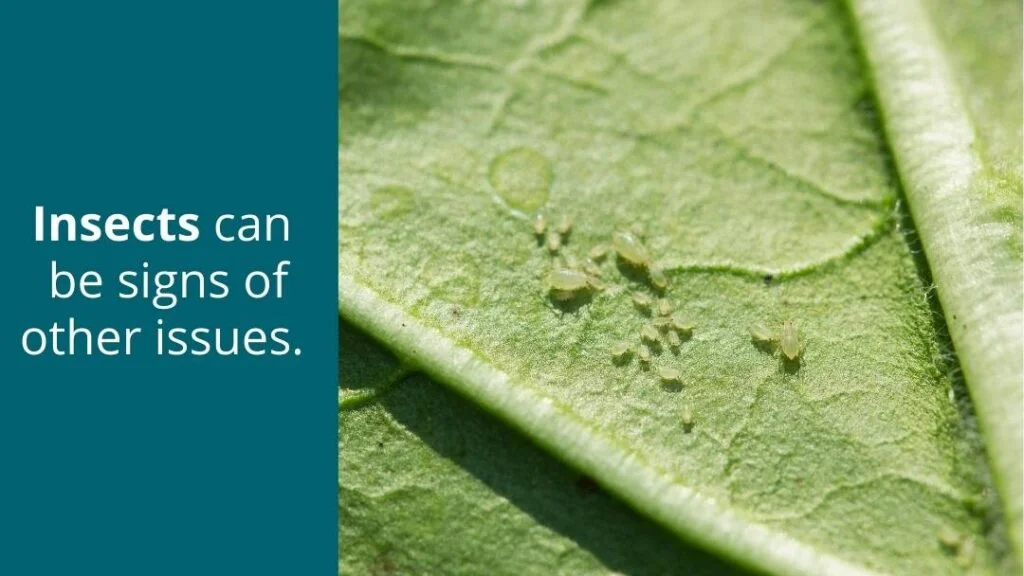
Insects, for example, are known to show up when a plant is stressed and something else is going on.
So, wouldn’t it be awesome to have a plant detective to help you figure out what’s going on?
Good news, you DO have a local resource if you need plant help.
But you may have never heard of it before!
It’s called a cooperative extension or an agriculture extension office.
The lingo can vary slightly from state to state.
These offices are usually associated with a state university. For example, in Colorado, our extension is the Colorado State University Extension — or CSU Extension for short.
They’re staffed with horticulturalists and trained volunteers who are there to help you figure out what’s going on with your plants.
Pretty cool, right?
You can reach out to them by email or phone. Some have locations you can visit.
Usually, they’ll ask questions to help you identify what’s going on with your plants. If there are solutions, they’ll help you understand what to do. And it’s all based in research and science.
This service is typically free or available for a very small fee.
So, how do you find your local extension office?
Here are links to the cooperative extension offices in western states:
If you don’t see your state listed above, search for: [your state] agriculture extension office.
When you open your state’s website, look for the extension office for the county you live in. Generally, it’s best to start with your county’s office.
If you don’t see your county, look for a nearby community.
Before you reach out, you may want to collect a few pieces of info.
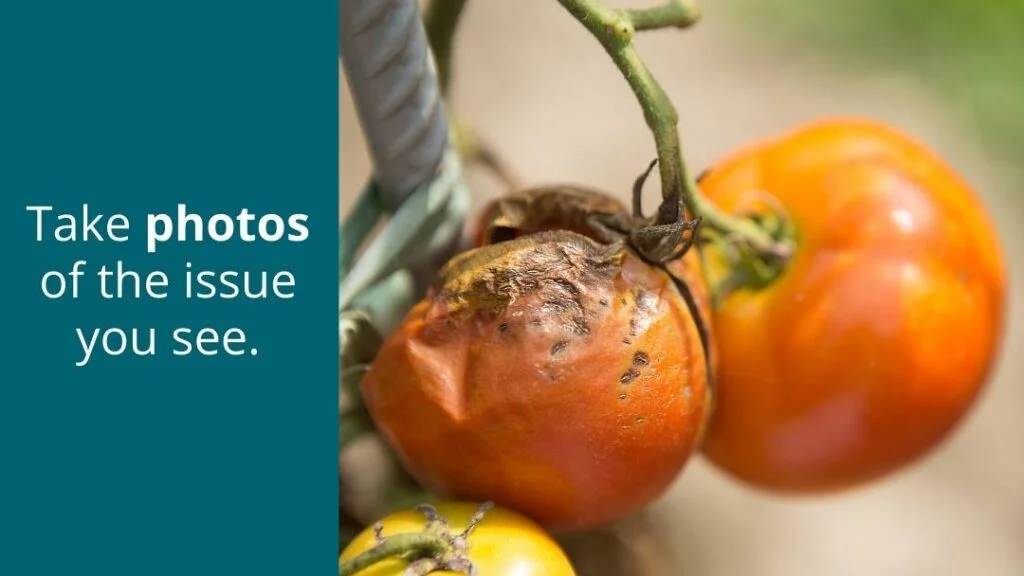
1) Take clear photos of what you’re seeing on your plant.
Include a close-up photo, a slightly wider shot and a very wide shot of your yard.
Sometimes the issue on your plant is related to something else that’s going on in your garden environment.
Plus, photos can be helpful for identifying your plant, whether it’s a flower, vegetable, shrub or tree.
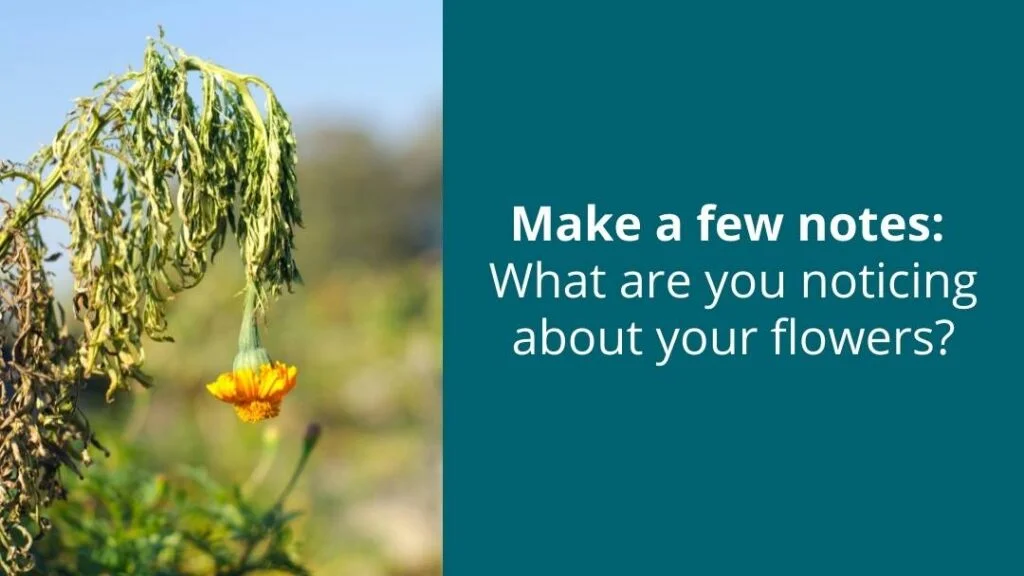
2) Make notes about what you’re seeing.
This makes it easier for someone who isn’t there by your side in your garden to understand what’s going on.
For example:
- What are you noticing?
- When did you first notice it?
- Did it happen suddenly or gradually?
- Where is this plant growing in your landscape?
- Have you noticed the issue on any other plants?
- Has anything happened recently in this area?
- Have any fertilizer, weed killers or other products been used around this plant? If yes, what kind?
- How are you watering this plant? How often?
- When was this plant planted?
Thinking through these questions in advance can be helpful.
And if you aren’t sure what the name of your plant is or you don’t know some of the answers, don’t worry! That’s okay.
3) Collect a sample.
If your plant looks diseased or like it has insects, take a sample and immediately seal it in a plastic bag.
For example, it may look like your plant has diseased leaves. Trim off a section of that plant (some leaves and stem) and seal it in a bag.
Why a sealable bag?
If you have insects, those lil’ critters move quickly. If you put your sample in a paper bag or something open, many will turn into escape artists.
Do you need to pull this info together before you reach out?
Nope! But if you’re chatting with your extension office through email, this can eliminate the need for a lot of back-and-forth messages.
You’ll make more efficient use of your time.
Plus, this background information can help your local extension office give you a more accurate diagnosis of what’s going on.
Don’t hesitate to contact your local extension office.
You don’t have to be a gardener with tons of experience to contact your local extension office.
If you have flowers that look sick or are dying OR you have another pressing plant or yard question (for example, you’re having a hard time getting rid of a weed), it’s 100% okay to reach out.
Your extension office should be there to help you without judgment.
Related topics that may interest you: