Let’s say you’ve noticed some strange, round holes in your plant leaves. These circular holes have fairly smooth edges. It almost looks like someone took an office hole punch and punched circles along the edges of your leaves.
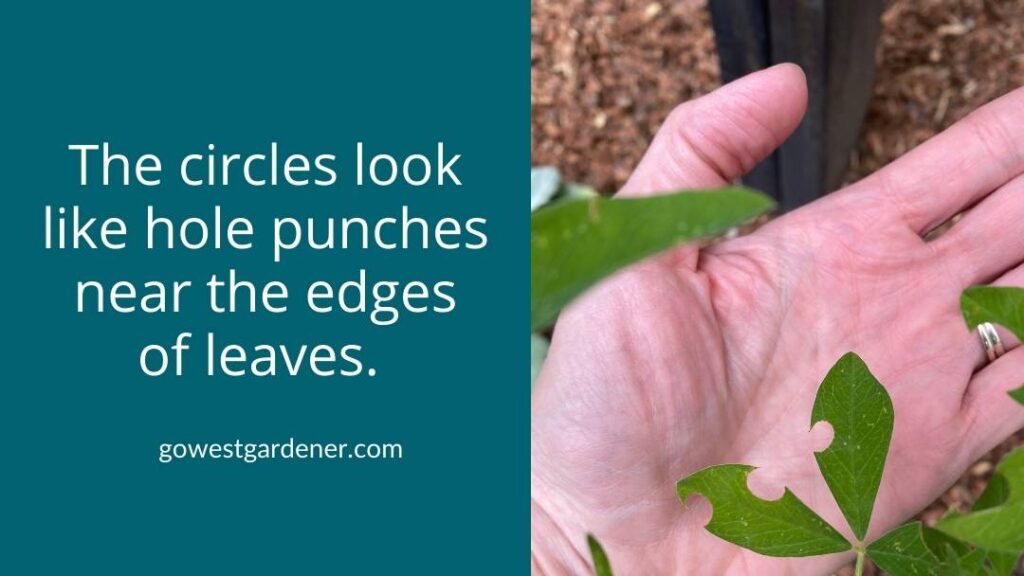
What’s making these round holes in your plant leaves?
Is it Japanese beetles??
Nope, Japanese beetle damage looks different.
It’s more likely you have leafcutter bees—a native bee and beneficial insect in Colorado and many western states. They’re important pollinators for wildflowers and some fruits and veggies.
(Cool!)
Leafcutter bees aren’t eating your leaves. Rather, they’re cutting circular pieces to use in the nests they’re building for their babies. They’ll insert the leaf piece into a hollow tunnel, along with nectar and pollen. Then, the mama bee lays an egg and seals it off. Her bee nursery is ready to go.
What plants do leafcutter bees like?
Almost any plant with broad, thin leaves is fair game. In my garden, the leafcutter bees love cutting round holes in the leaves of my lilac bushes and a flower plant called Golden Candles (Thermopsis lupinoides).
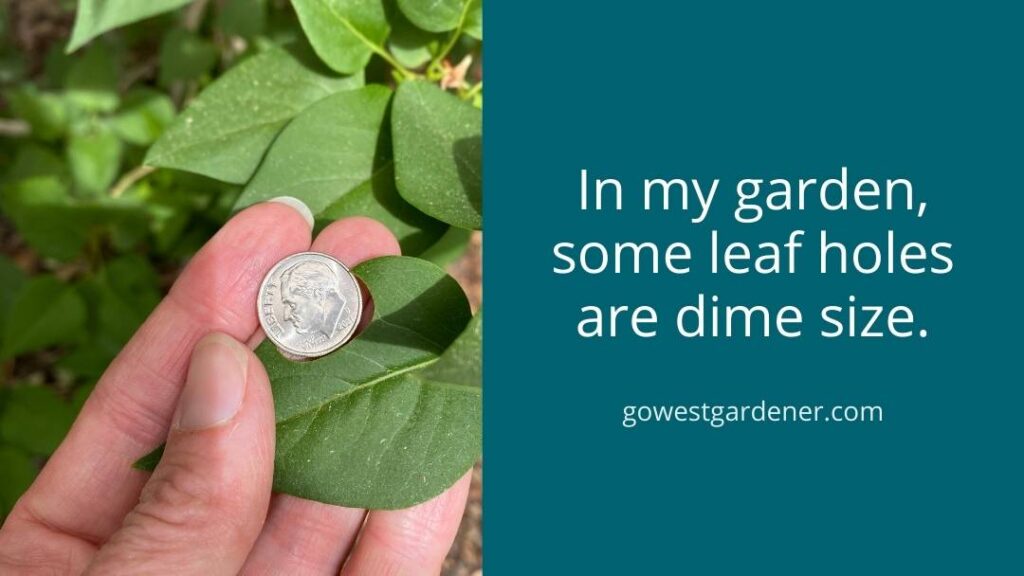
I’ve noticed circles and semi-circles that are dime size, but many of the holes are smaller.
So, should you be worried about the round holes in your leaves?
Typically, no. The damage from leafcutter bees is only aesthetic.
Insecticides will not prevent bees from cutting holes, according to the Colorado State University (CSU) Extension. So, save yourself money and a trip to the hardware store. Skip the insect sprays and powders.
(This will keep your garden ecosystem healthier too.)
In most cases, you don’t need to do anything…
Except maybe point out the leaves to your friends, so they can see that your garden is a favorite among pollinators.
If you have a plant that the leafcutter bees have become REALLY fond of, the CSU Extension suggests covering the plant with loose netting or cheese cloth if you want to deter the bees from making holes. Put up the netting when you first notice damage.
Just keep in mind the damage is only aesthetic. You’ve got busy pollinators at work in your landscape. 🙂
Now, if the holes on your leaf edges are jagged and look like notches…
Then, you likely have a different insect.
Root weevils are a type of beetle. At night, the adults chew jagged notches along the edges of plant leaves. You can find root weevil leaf damage on lilacs, peonies and privets, as well as other plants.
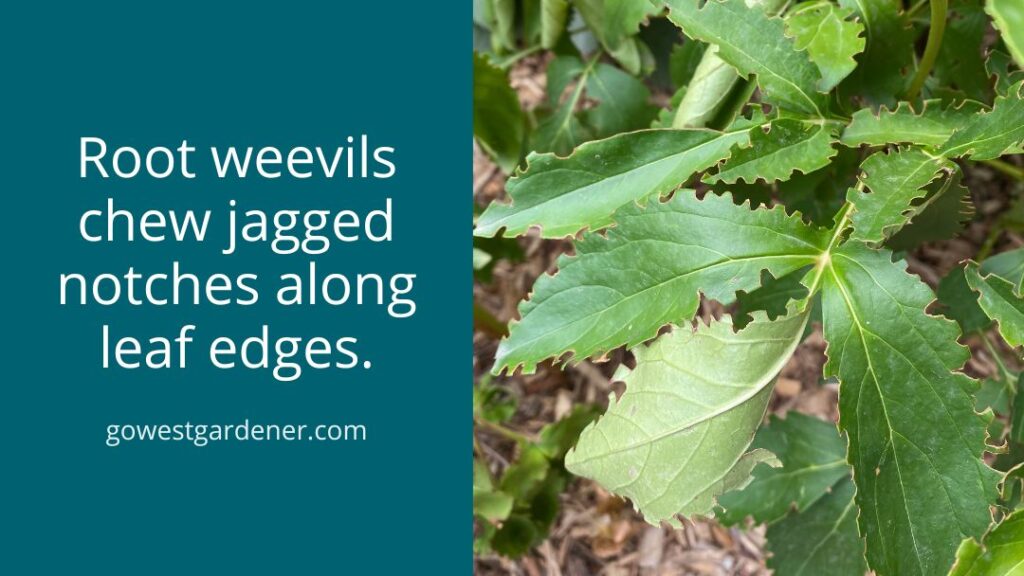
To me, the edge of a leaf with root weevil damage looks like the edge of a key. It’s more jagged than the symmetrical, round holes from a leafcutter bee. Can you see the difference below?
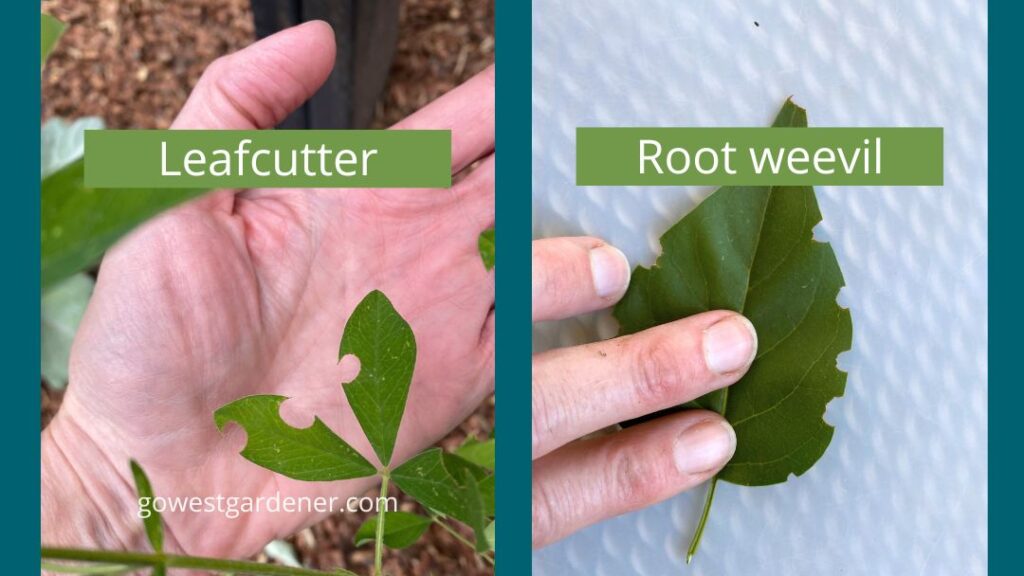
If you want to learn more about root weevils (and see more photos of their leaf damage), check out this root weevil summary from the CSU Extension.
Related topics that may interest you:
- Helpful fact sheet about leafcutter bees from the CSU Extension
- Why bees and butterflies are like puppies and kittens
- Planting a perennial garden in Colorado? 5 counter-intuitive tips