
When you live in states like Colorado, Wyoming and Texas, you may not get hail every year, but some years, you’ll get it 2 … 3 … 7 times.
(I’m not crying. I have something in my eye.)
It’s like playing the lottery, except hail is a prize you DON’T want to win.
In this tip, you’ll get the scoop on plants that do better in hail than others, so you won’t have as much damage and clean-up.
Flower plants that are “drought tolerant” or “xeric” — meaning they need less water — tend to do better in hail than others.
If “drought tolerant” makes you think you can only plant cacti, I have good news.
You have LOTS of options for beautiful, drought-tolerant flowers. They just may not be the flowers you know from other parts of the country.
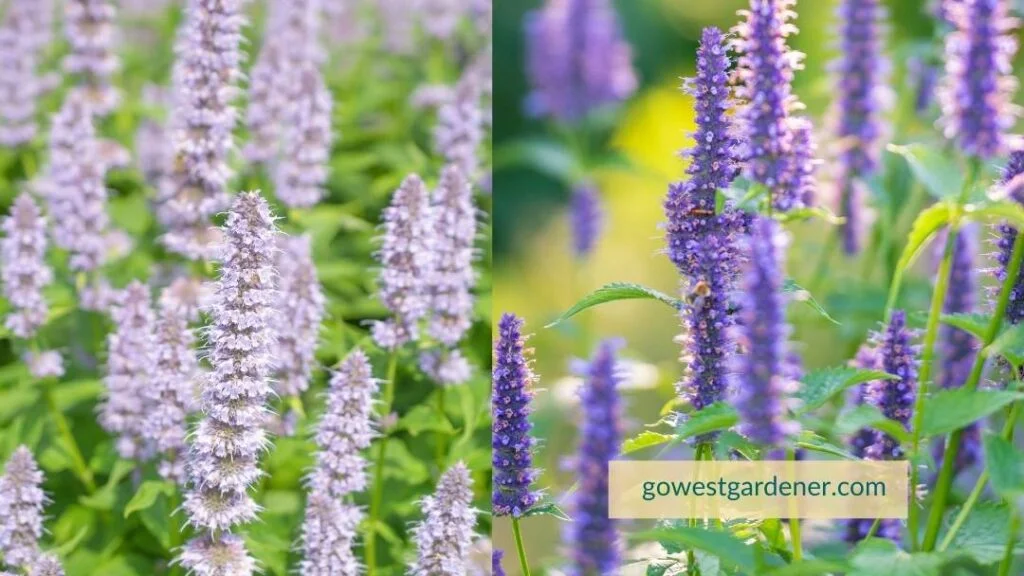
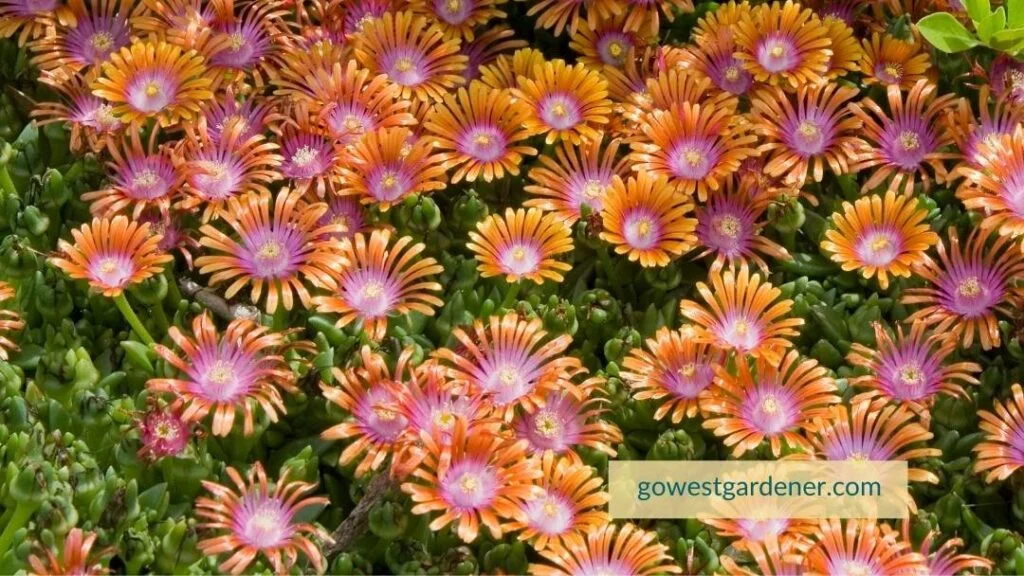
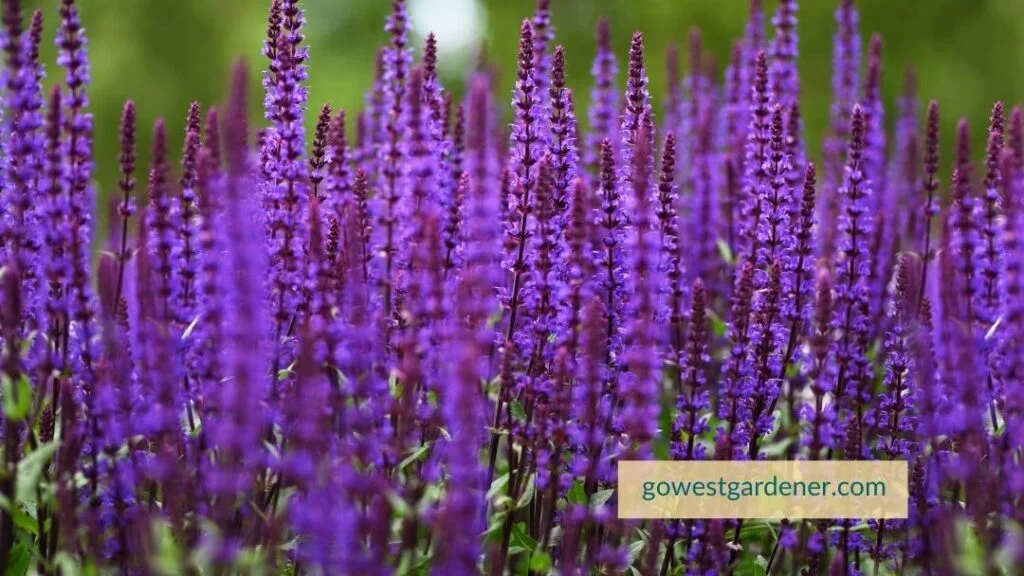
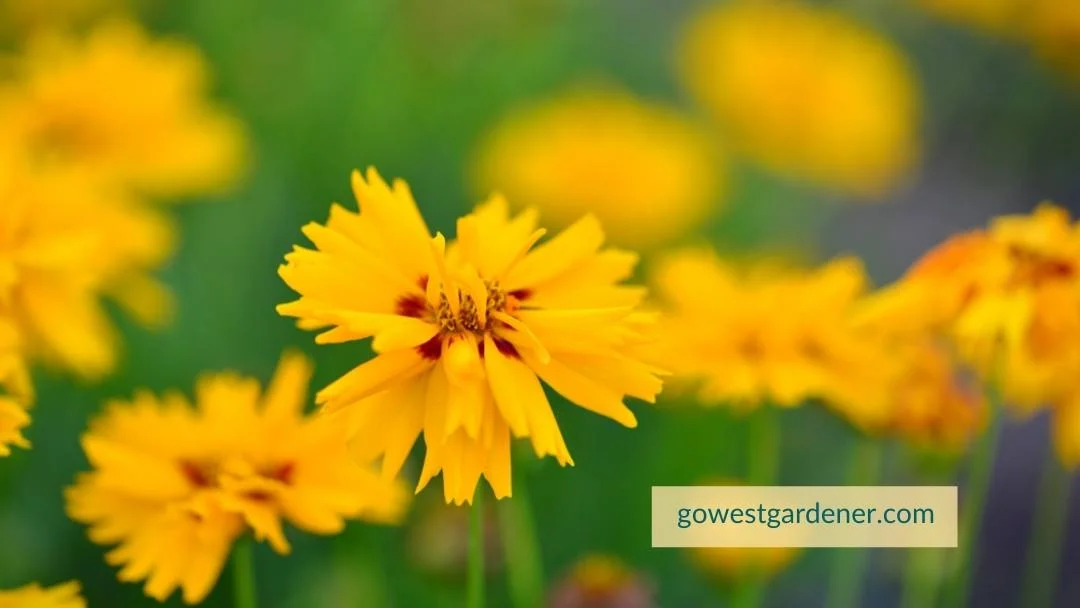
In the photos below, you’ll find examples of drought-tolerant, hail-resistant plants.
Hyssop (Agastache)

Salvia (Salvia greggii)


Ice plant (Delosperma)
Salvia or Garden Sage (Salvia nemorosa)
Coreopsis
So, why can drought-tolerant plants resist hail?
Often times, drought-tolerant plants have narrow leaves, small leaves or heavier, waxy leaves.
Many of them also tend to stand more upright in a garden.
On sunny days, these features help protect them from the sun’s intense rays and help the plants hold onto water.
But it turns out these traits also come in handy when it comes to hail.
Typically, drought-tolerant plants don’t get as damaged by falling ice chunks.
This means you’ll have less plant debris to clean up after a hailstorm. (Less work!) It also means these plants bounce back better after hail.
So, as you plan your western garden, think about planting drought-tolerant flowers.
Keep in mind, it all depends on the hailstorm you get. Every plant has its limits. Unfortunately, there is no perfect plant for hail.
Ornamental grasses tend to do better in hail too.
Some ornamental grasses are more drought tolerant than others.
Regardless, ornamental grasses do share traits in common with drought-tolerant plants.

For example, they tend to have really narrow leaves.
You know that expression, “Bend, but don’t break?”
Your grasses may get flattened by hail, but they may not break. This means they may perk back up with some sunshine and water.
Once again, the damage to your grasses depends on how bad your hailstorm is.
Plants that thrive in other parts of the country tend to struggle more in hail.
Plant that are vulnerable to hail damage include:
- Woodland plants with larger leaves
- Plants with big flower blooms and
- Most types of annuals (the colorful flowers that bloom through the summer but won’t return next year)
They’re easily shredded by hail stones. This means you’ll have more clean-up, and you may need to replace destroyed plants.
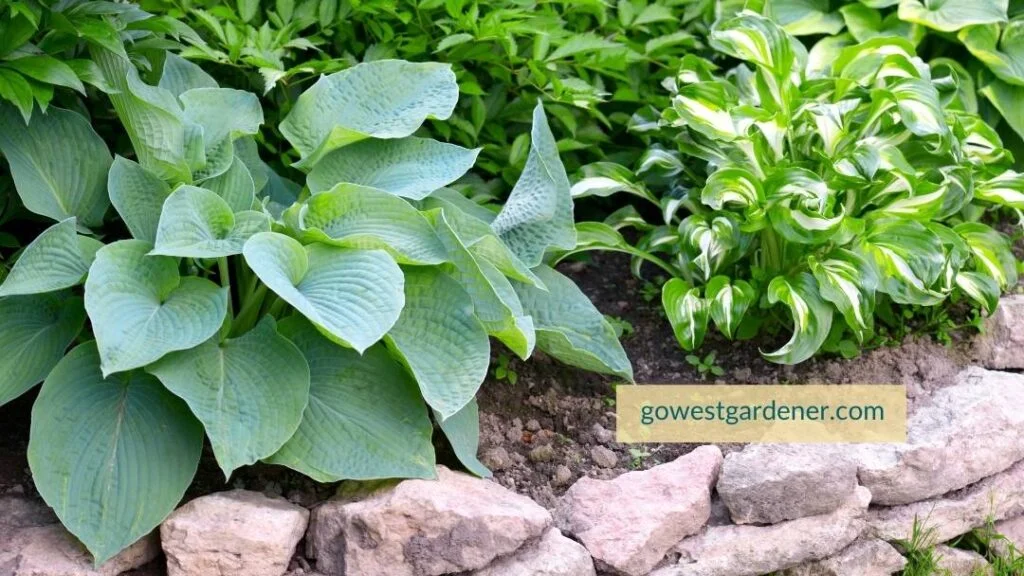
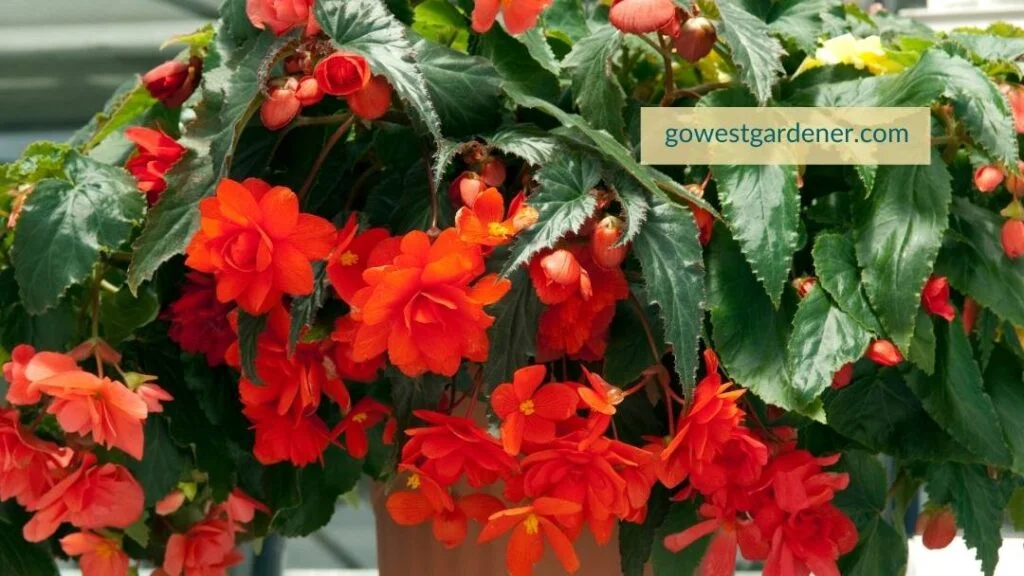
Below you’ll find examples of plants that are vulnerable to hail damage.
Hostas
Begonias
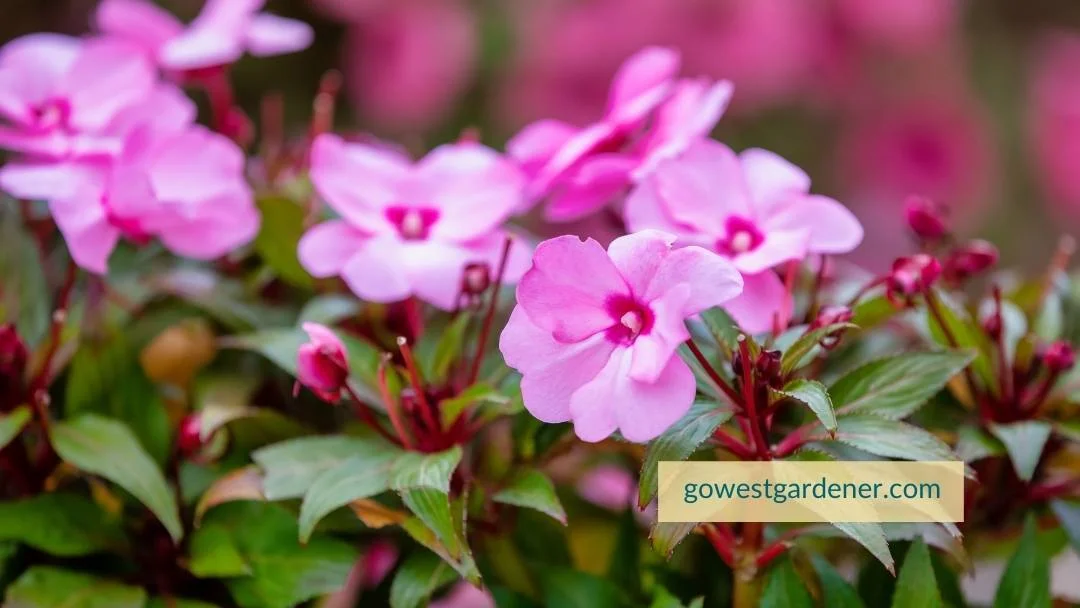
New Guinea Impatiens
What does hail damage look like?
Check out the flowerpots below: pre- and post-hail. I took these photos one week apart. Ugh!
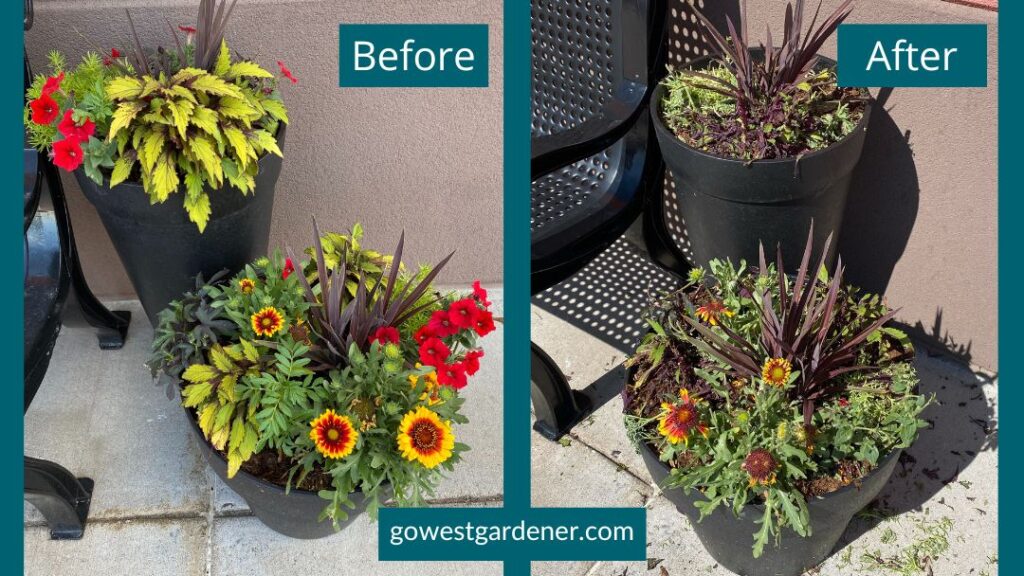
The flowers that held up the best are the center red plants (Cordyline Spikes) and the red and yellow flowers in the foreground (a perennial known as Blanket Flower or Gallardia). But most of the annuals in these flowerpots have been shredded. There is very little left of them.
Related tips that may interest you:
- 9 proven tips to protect your flowers from hail damage
- “Hail destroyed my garden. What do I do now?” (How to help your garden recover)
- “My flowers look sick. What do I do?”