Put your hand up if want a pretty winter garden!
Ornamental grasses can make your winter garden look good. They add visual interest to your winter landscape (aka, “winter interest”), and they’re easy to grow.
But how are you supposed to know which grasses to pick? A lot of grasses look similar, right? And which ones hold up well to snow?
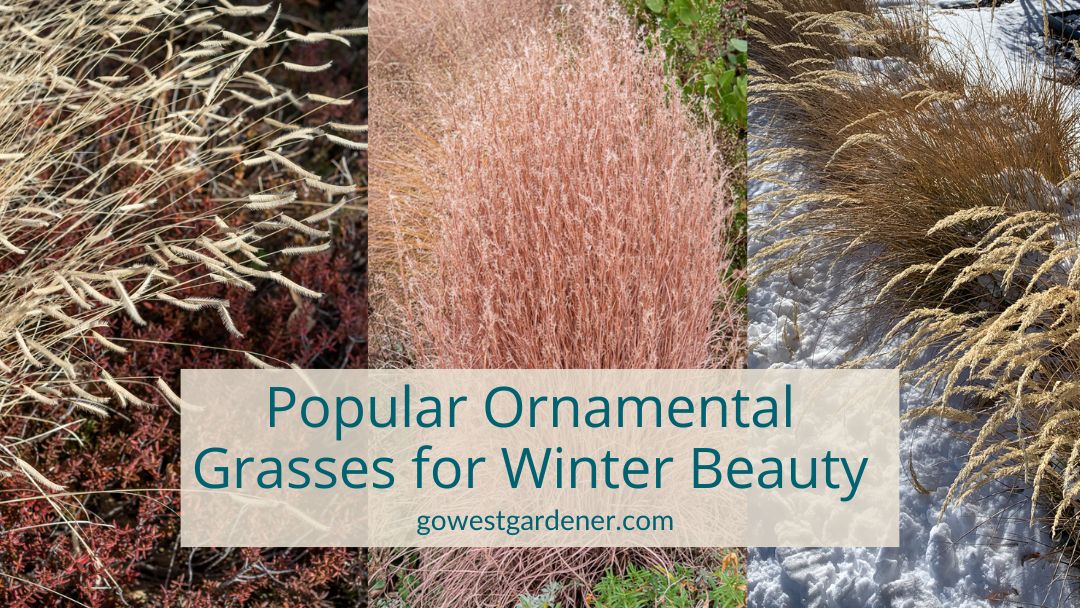
In today’s tip, I want to give you a peek at 5 popular ornamental grasses — and what they look like in winter gardens in the semi-arid West. That way, you can start figuring out which ones you like.
Blue Grama Grass (Bouteloua gracilis)
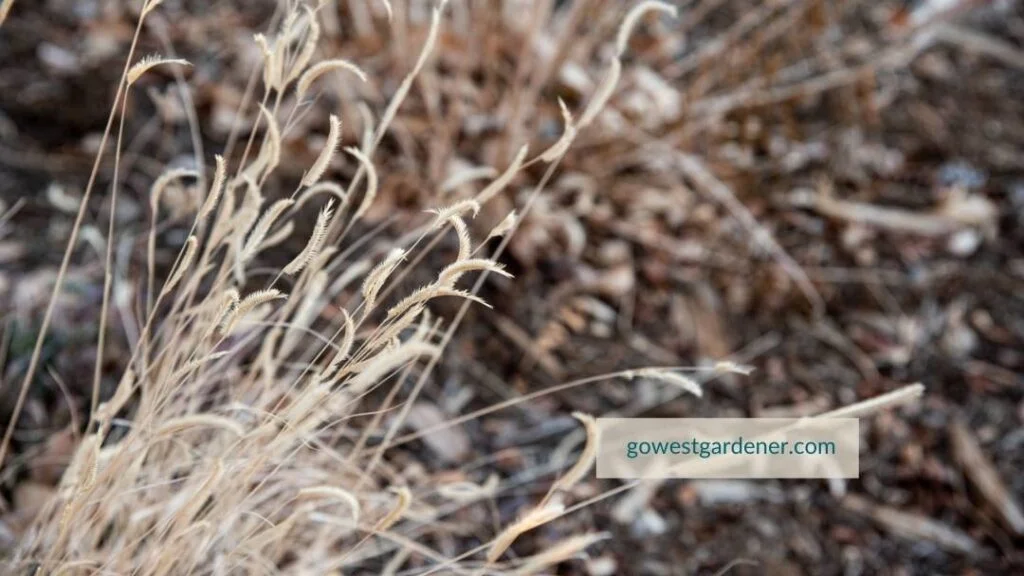
These ornamental grasses have horizontal seed heads that look like eyelashes. Aren’t they so cool?
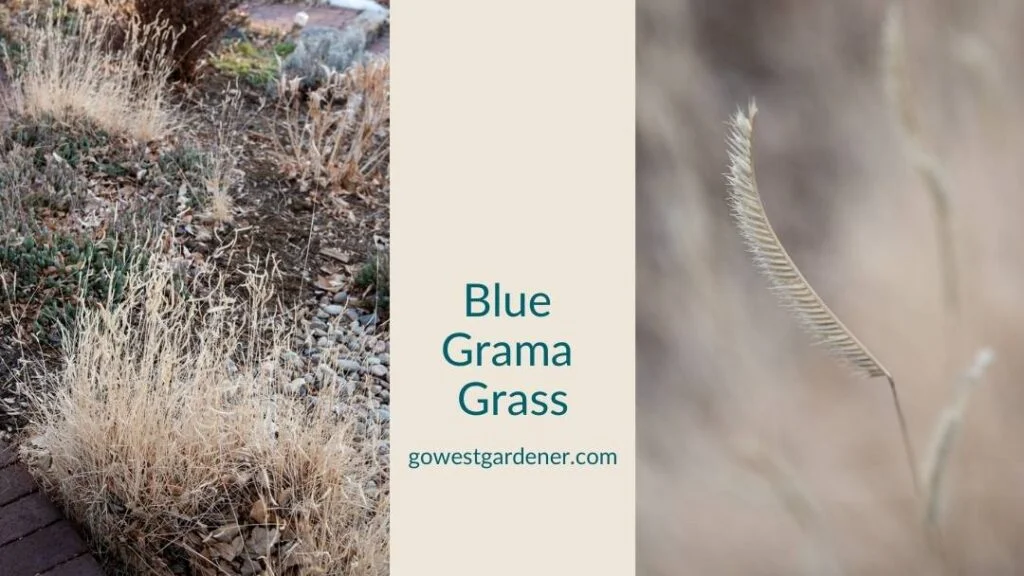
Blue grama grass tends to hold up very well to winter snowstorms, which makes it an awesome grass if you want a prettier winter garden.
Blue grama is the state grass of Colorado, and it’s native to many states. You can see its native range here.
This lovely grass is quite drought tolerant. It happily grows in areas that get just 10 to 15 inches of annual rainfall. So, along the Front Range of Colorado, it shouldn’t need much supplemental watering, if any.
I have a blue grama grass in my landscape called ‘Blonde Ambition.’ It’s a cultivated form of blue grama grass. I like it because it looks pretty across seasons, particularly in winter. It catches the winter sunlight and sways in the breeze.
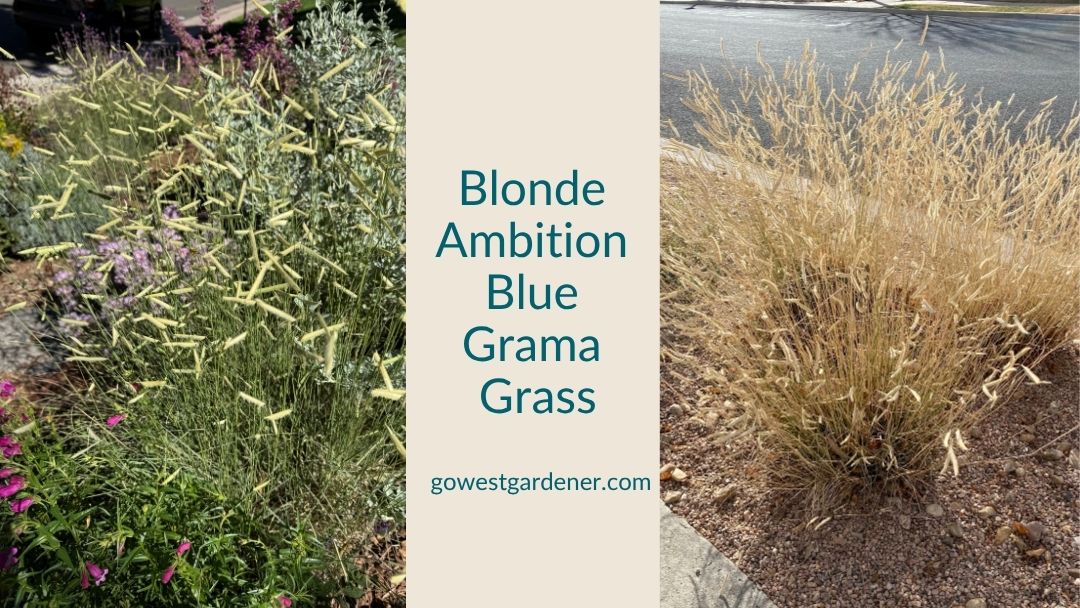
Blue grama grasses could be a great fit for you if:
- You have a dry, sunny spot in your landscape that doesn’t get much moisture
(like a hot, western-facing or southern-facing section of your yard) - You’re planning a low-water landscape (aka, a waterwise garden)
- You’re known to forget to water (no judgment!)
- You want to plant a native grass.
Water this grass well the first season. This helps it get established in your garden. But you should be able to lighten up the watering after that. I water my Blonde Ambition blue grama grass every 10 days in the heat of July and August.
Pro tip: If your garden gets regular moisture or has a wetter area, blue grama grass may not be the right ornamental grass for you. My understanding is moisture can turn it into a happy seed spreader.
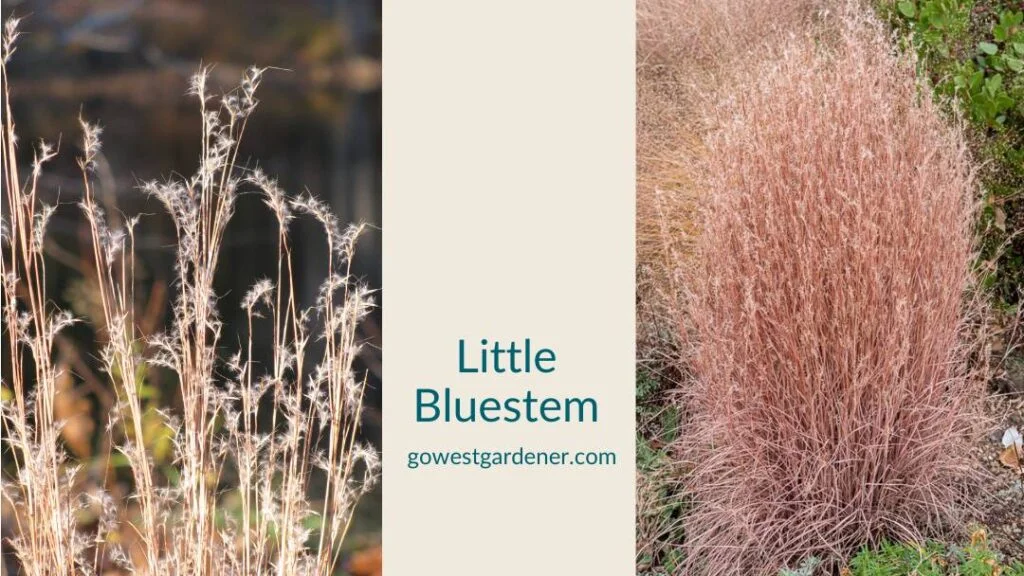
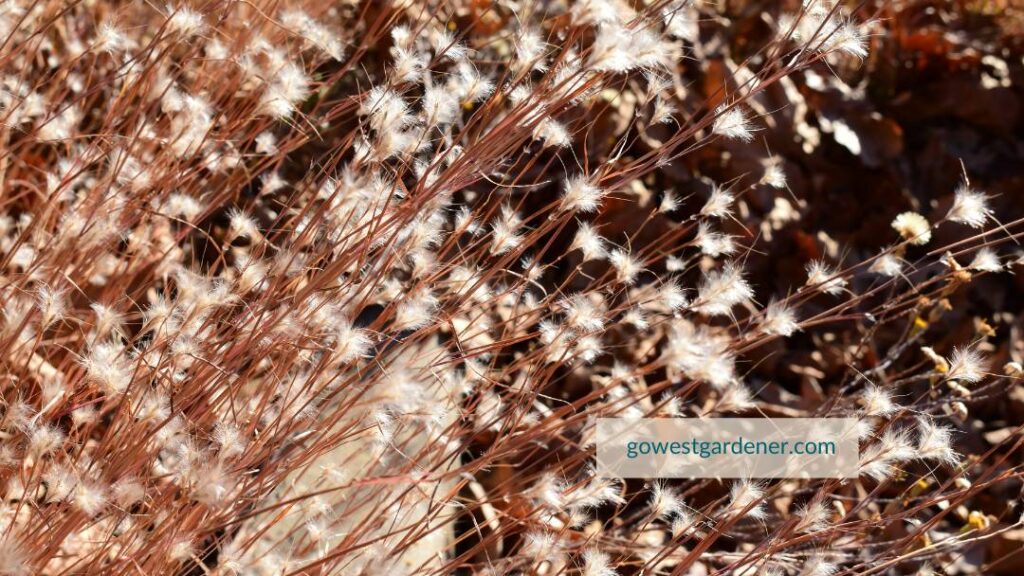
Little Bluestem Grass (Schizachyrium scoparium)
Typically, little bluestem grass grows in an upright shape. This makes it ideal for a variety of smaller settings, like compact gardens.
It doesn’t need much water to thrive, and it can handle clay soils (dirt) like a champ.
Little bluestem has a bluish-green color in the summer. But in the fall and winter, it can turn a reddish-bronze color and get airy seed heads. The winter color will vary slightly by the type of little bluestem you choose. (Some popular selections include: ‘Blaze,’ ‘Standing Ovation’ and ‘Prairie Blues.’)
This lovely grass is native to the majority of the United States, including Colorado, Utah, Wyoming and Idaho. You can see its native range here.
Switch Grass (Panicum virgatum)
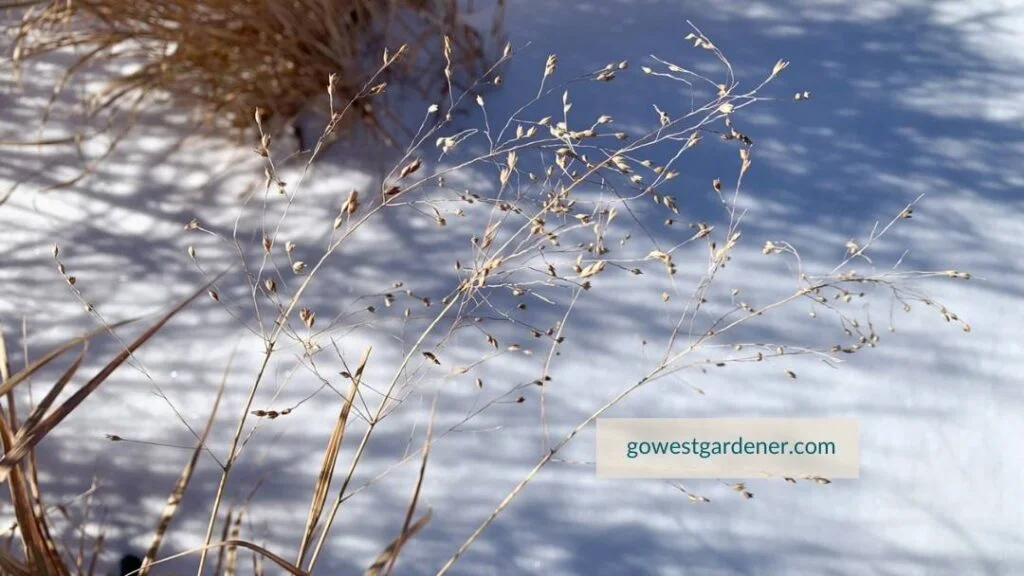
Switch grass may not be the showiest grass for a winter garden. However, it can be really pretty in the summer and fall, so I couldn’t resist including it on this list. It’s also a native grass to Colorado. You can see its native range here.
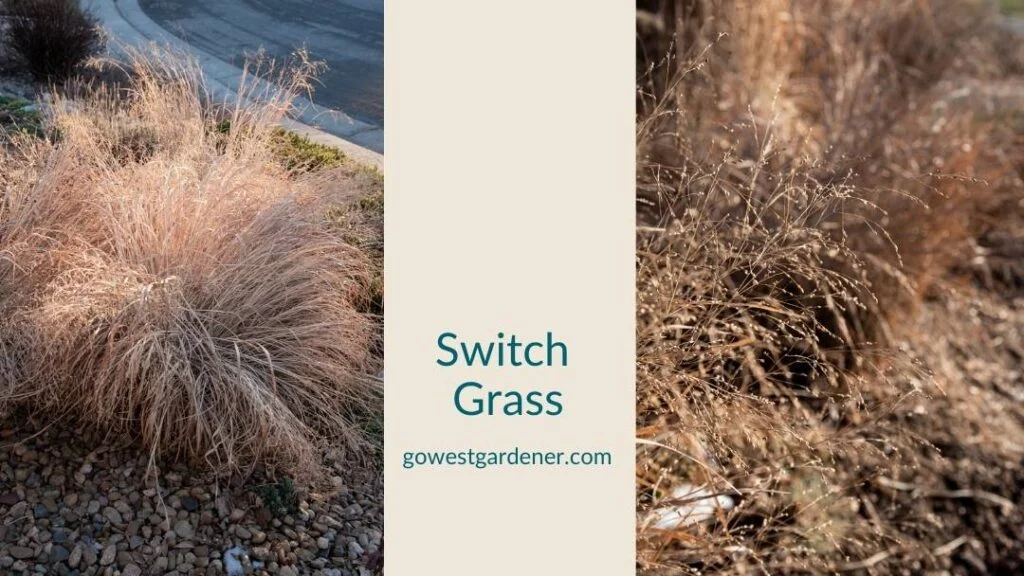
Generally, switch grasses tend to prefer more moisture.
If you’d like a more drought-resistant type, look for the switch grass known as ‘Shenandoah.’ In the fall, its leaf blades turn burgundy. It gets delicate, pink seed heads in the fall. They lose their color in the winter, but they still have a lovely airiness to them.
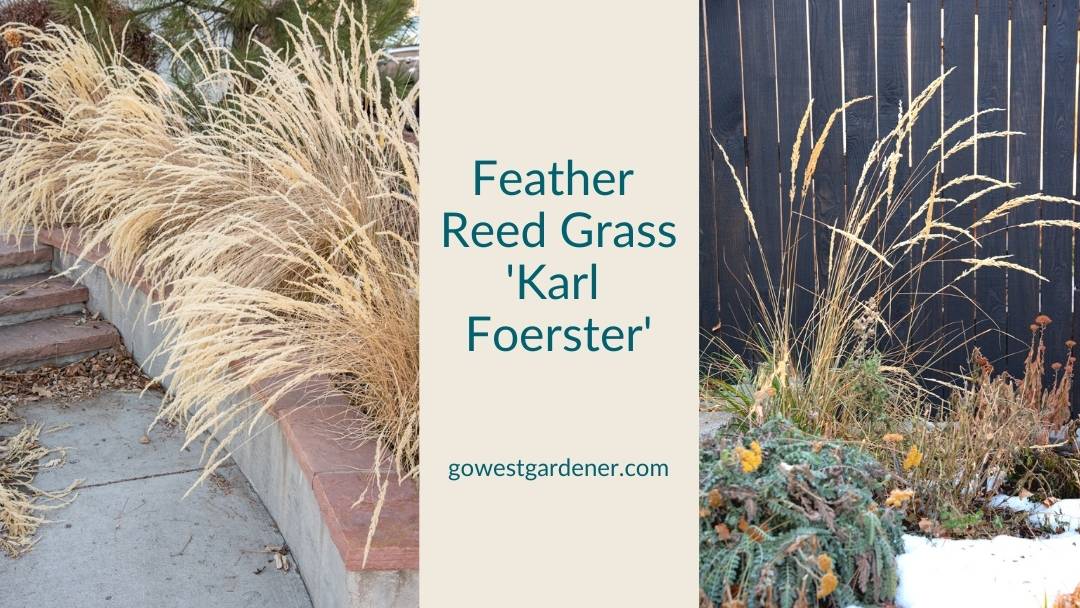
Feather Reed Grass (Calamagrostis)
Feather reed grass is another grass that glows in a winter garden. Similar to switch grass, feather reed grass prefers more moisture than some of the other grasses on this page.

There is one type of feather reed grass — known as ‘Karl Foerster’ (pictured above) — that is very popular. You’ll see it in a lot of landscaping around homes and shopping centers. It holds up really well to heavy snow.
Feather reed grass grows in an upright direction (like a column), making it a good grass for a smaller garden or a garden with limited space. It’s also very pretty against a darker background, like an evergreen tree or a stained fence.
If you like the look of feather reed grass but you want one that’s more unique, look for Korean feather reed grass instead. The seed plumes are soft and pretty. Korean feather reed grass can grow in partly shady conditions too. In winter, the one drawback to Korean feather reed grass is that it doesn’t stand up as well to heavy snows as some other grasses.
Giant sacaton grass (Sporobolus wrightii)
Giant sacaton grass is a big grass that’s native to the Southwest. You can see its native range here.
This grass will take up some real estate. It grows up to five feet wide and up to seven feet tall. And yes, it’s very drought tolerant. It thrives in hot and dry locations that get a lot of sun.
I don’t have a winter image of this grass, but you can see it in summer below.
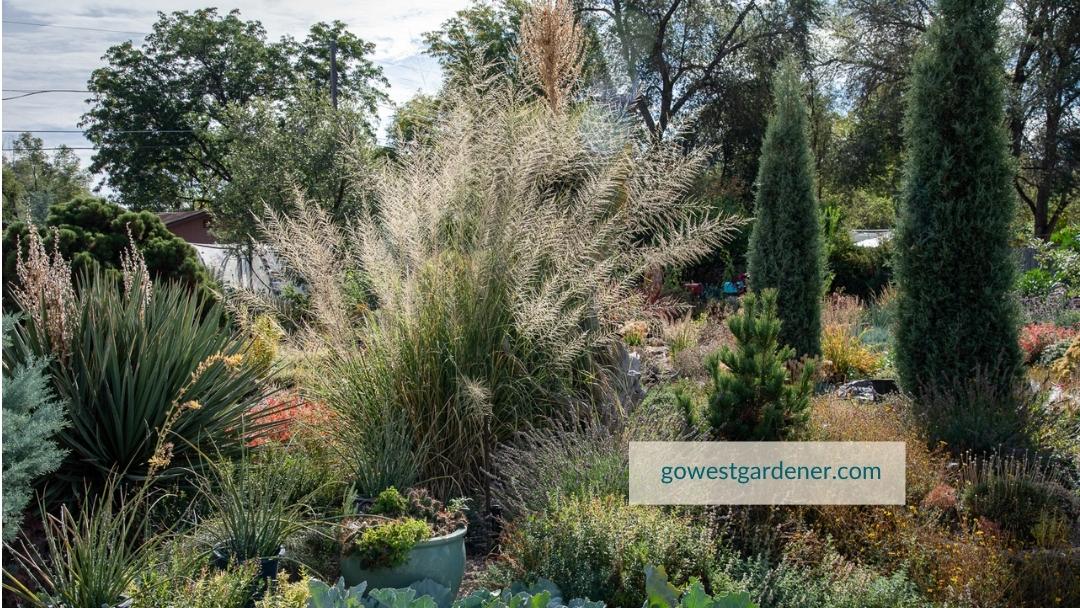
Giant sacaton grass is an interesting grass to consider if you have:
- A big yard that could use a focal point
- A deep garden that could use some height in the back
- An area of your yard where you want to draw your eyes away from something (like an electrical pole)
Giant sacaton grass is also an excellent substitute for large, moisture-loving grasses like maiden grasses (Miscanthus) and pampas grasses. While beautiful, maiden and pampas grasses use a lot of water, and they can be invasive in some parts of the country.
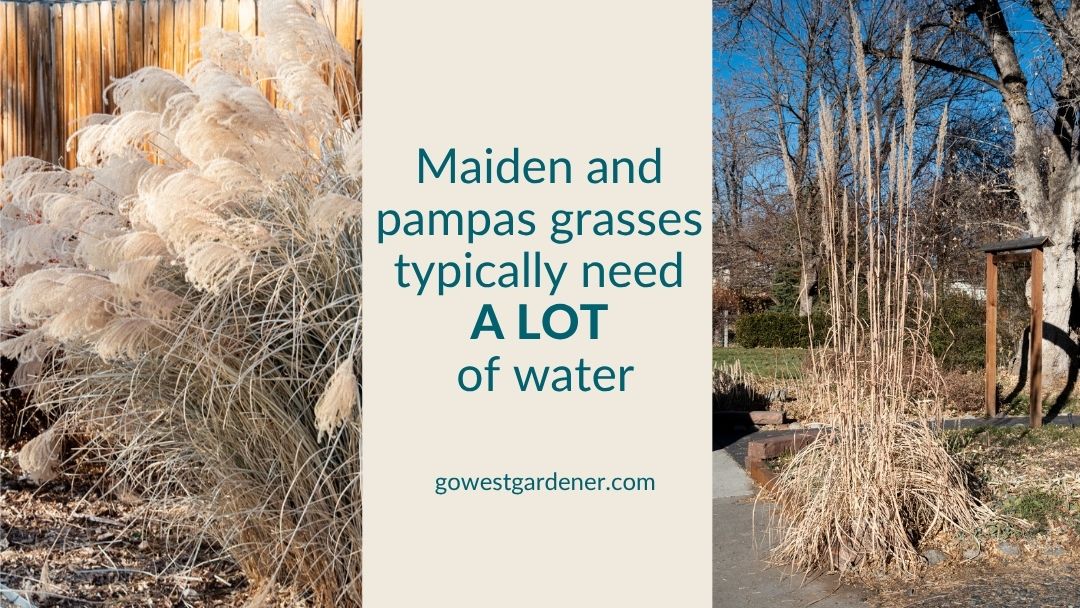
Consider planting giant sacaton grass instead!
Where to learn more about ornamental grasses
The Colorado State University Extension has a useful web page about ornamental grasses, including which grasses like dry conditions versus which grasses need more water, how tall grasses grow, and what they can handle in elevation.
Related tips that may interest you:
- 9 easy ways to make your garden beautiful in winter
- Why ornamental grasses are a great addition to western gardens
- 3 plants that struggle in western winters (what NOT to plant in your Colorado landscape)